

Argentina’s Economic Crisis: U.S. Support and Strategic Implications
Argentina has recently plunged back into a turbulent economic crisis, despite the significant monetary and fiscal adjustments made by President Javier Milei. Following a substantial defeat in provincial elections, a corruption scandal, and a decline in support from Congress, investor confidence dwindled. This led to over $1 billion in reserve sales within three days and pushed the Argentinian peso to the brink of collapse.
However, in a dramatic turn of events, the United States has offered support. The U.S. Treasury Secretary, Scott Besent, described Argentina as a “systemically important ally in Latin America” and stated that “all options” are available to stabilize the market—drawing comparisons to the Whatever It Takes approach of Mario Draghi in 2012. This announcement sparked immediate fluctuations in market pricing and expectations, initiating a broader discussion on the implications and risks of such U.S. support.
The U.S. Treasury is reportedly discussing a swap line with Buenos Aires worth $20 billion alongside the possibility of purchasing Argentine sovereign debt in dollars. This would allow the U.S. to intervene in the foreign exchange market if deemed necessary, employing mechanisms like the Exchange Stabilization Fund, which was used during the 1995 Mexican crisis.
Besent further indicated that the U.S. is prepared to acquire bonds and provide credit support, which former President Donald Trump echoed during his meeting with Milei. Trump stated that assistance shouldn’t be labeled as a “rescue” but rather as providing access to “good debt” and market liquidity. Meanwhile, Milei is seeking immediate internal solutions by temporarily suspend grain export taxes to stimulate commercial dollar flow, while also keeping operational a swap line with China worth about $18 billion.
The announcement from the U.S. Treasury proved beneficial in the short term, as the Argentine peso rebounded. Bonds maturing in 2029 and 2035 saw their value increase significantly, and the yield on 10-year dollar-denominated bonds fell from 17% to approximately 15%. This has given much-needed hope to legislators, although investors are still demanding concrete details regarding the volume, timelines, and conditions of the proposed support.
While the Treasury suggested the absence of further “conditionality,” historical precedent indicates that such arrangements often come with stipulations. Within the U.S. Congress, there is growing skepticism about allocating emergency funds to support a foreign nation’s currency and assets, particularly when it’s perceived that such a move would assist a political ally of Trump.
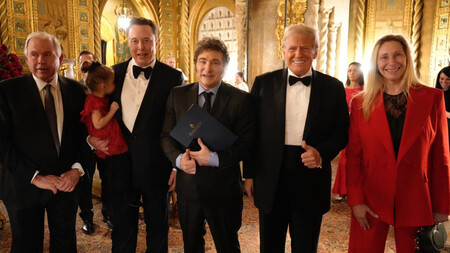
Analysts note several strategic reasons behind this support. Primarily, there is a clear geopolitical motive to reduce Argentina’s dependence on China for financing and vital resources like lithium. Additionally, stabilizing Argentina is crucial in preventing potential regional financial instability, which could affect about 35% of invested resources globally. A successful stabilization initiative could reaffirm the U.S. as a stabilizing force within emerging markets, showcasing financial might amidst fierce international competition.
Moreover, the situation holds electoral implications for the current U.S. administration. Providing support to an ally like Milei prevents immediate financial burdens and serves as a signal of U.S. strength in international matters. The power dynamics shift significantly depending on who is governing Argentina; had it been a traditional Peronist in power, such assistance would likely have been far less probable.
Milei’s polarizing political style and fervent rejection of the political establishment make him a unique ally for the U.S., representing a mutual understanding against typical global governance structures. His recent connections with the MAGA ideological landscape strengthen the narrative that he is more than just a political partner—he embodies a concept of a politically incorrect ally in a world striving towards increasing populism.
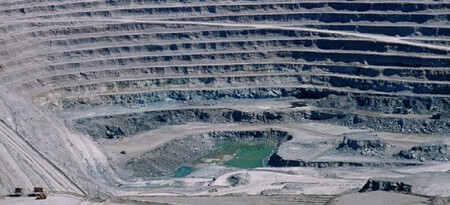
Lithium site
Additionally, there are speculations that the financial backing could pave the way for a potential free trade agreement between the U.S. and Argentina. Such an agreement could solidify access to strategic resources like lithium under a stable institutional framework—crucial for Washington amidst ongoing tensions with Beijing. For Milei, an agreement with the world’s largest economy might position Argentina as a reliable partner in the Western hemisphere.
However, the underlying structural problems within Argentina’s economy cannot be ignored. The persisting dual monetary system renders the economy vulnerable, showcasing an overreliance on the dollar and causing widespread mistrust in the local peso. These challenges complicate any proposals for dollarization or other reforms that could stabilize the economy in the long term.
China’s interests in Argentina also play a vital role in this narrative. The lithium found in Argentina, Bolivia, and Chile is deemed essential for energy transitions and battery technology, and the U.S. is keen on preventing Beijing from solidifying its control over these resources.
In looking ahead, the support from the U.S. emerges as a calculated maneuver to maintain influence and stability in a region showcasing political and economic turbulence. However, the success of this initiative relies significantly on Argentina’s political will and institutional integrity to implement necessary reforms and sustain the complex relationship crafted by Milei.
Ultimately, while the U.S. support may provide temporary relief from immediate economic turbulence, structural reforms, socio-political stability, and a long-term vision are essential for Argentina to emerge from this crisis empowered rather than reliant on external influences.
Image | Government of Argentina, Gage SkidmoreReinhard Jahn.