
The Fascinating Interplay of Language and Espionage: The Role of Basque in Spy History
Espionage stories are fascinating and captivating. Video games such as the Spanish classic ‘Commandos’ include intriguing characters like spies, while franchises like ‘Impossible Mission’ and ‘007’ have set the standard for spy thrillers. A crucial component of these narratives is the encryption of conversations. But one may wonder, why develop a complex system to prevent the enemy from discovering your plans if there are languages spoken by few people? In the realm of Spanish espionage , one language stands out: Basque .
One legend suggests that the Basque language was adopted by spies to communicate covertly, ensuring their messages remained undiscovered. However, like many intriguing stories, this one contains elements of both myth and reality .
Felipe II’s Espionage Networks
To understand the context, we must travel back to the second half of the 16th century when Spain was embroiled in political tensions. Henry III of Navarra , who reigned from 1572, held Protestant beliefs that were in direct opposition to those of the staunchly Catholic Felipe II of Spain . Tensions rose further when Henry III inherited the French throne as Henry IV in 1589. This new development alarmed Felipe, who feared a Protestant leader in a neighboring country.
In response, Felipe II supported the Catholic League and proposed his daughter Isabel , a granddaughter of French royalty, as a potential queen of France. This move intensified the rivalry between Spain and France, complicating affairs in the Pyrenean region.
After much political turmoil, Henry IV reconciled with the Catholic Church in 1593 and was accepted fully as the king of France. Here, the role of a vital Spanish spy emerges— Aimée de Urtubia .
Aimée de Urtubia: The Basque Spy
Aimée, a noblewoman, operated a clandestine espionage network between 1597 and 1598, sending at least 19 letters to the mayor of Fuenterrabía and the Captain General of Guipúzcoa . Her correspondence contained vital military and political intelligence regarding events in France and Navarra during the Wars of Religion . The letters were written in Basque , ensuring that only those fluent in the language could decipher their contents.
This strategy highlights the importance of the information Urtubia provided to the administration of Felipe II. Her intelligence played a role in the delicate political landscape, as evidenced in 1598 when negotiations led to the Paz de Vervins , a treaty that halted Felipe’s intervention in French affairs, although the situation remained complex until Felipe’s death that same year.
The Second World War: Myths and Legends
Fast forward to World War II , where the legend of the Basque language as a tool in espionage resurfaces. Throughout the war, espionage was crucial to military operations, particularly during critical moments such as D-Day . The Enigma machine was the Nazis’ primary tool for encrypting messages, leading various nations to consider utilizing less-known languages for secure communication. The United States explored options for using indigenous languages like Navajo for coded messages, as few Germans would be familiar with them.
There were claims that the Basque language was similarly employed, referred to as Basque Code Talkers . This idea revolved around using the unique language to create utterly indecipherable messages for the enemy. Anecdotes suggest that Basque may have been used in critical operations such as the Battle of Guadalcanal , but many of these assertions are rooted in mythology rather than fact.
Dismantling the Basque Code Talker Myth
In-depth research conducted by historians Pedro J. Oiarzabal and Guillermo Taberilla uncovered that, while the concept of Basque Code Talkers was considered, it never materialized in practice. Their investigation into American and British military archives revealed no documentation supporting the usage of Basque in a wartime context.
Interestingly, Captain Frank Carranza , whose grandfather was a Basque immigrant, may have contributed to perpetuating this myth, fueled by the real historical connections between the Basque Government in exile and American secret services.
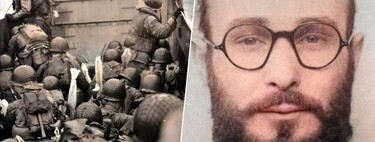
However, it’s worth noting that Basque individuals did play roles in the war effort. One notable figure, José Laradogoitia Menchaca , also known as “Bromo,” served as a double agent , initially providing information to the Nazis before switching sides to aid the Allies.
Despite the falsifications that have surrounded the story, it remains amusing to think of Basque soldiers conversing in their native tongue, leaving any potential Nazi interceptors perplexed and scrambling to make sense of their communications.