
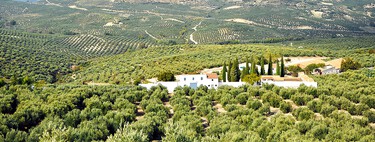
The impulse for clean energy has entered the Spanish field strongly, generating buzz and conflict alike. Across various regions, new energy projects are clashing with the interests of local communities, longstanding landscapes, and traditional life forms. In northern Spain, neighborhood protests highlight concerns over the proliferation of wind turbines that dramatically alter the picturesque landscape. Meanwhile, in southern agricultural territories, solar panels vie for position against traditional crops. Amidst this backdrop, the island of Lanzarote has found a unique way to harness wind energy—not just for power, but for a novel horticultural purpose: water.
Transforming irrigation. The Ministry of Agriculture, Fisheries, and Food recently announced an initiative aimed at modernizing irrigation across 300 hectares in northeast Lanzarote, particularly in the municipalities of Tinajo and Teguise . This project, executed by the public company Seiasa , will primarily focus on supporting horticultural crops and is expected to benefit 667 to 697 irrigators , as reported by local news sources.
The project represents a significant investment of €24.4 million , excluding the Canarian indirect general tax (IGIC). The Lanzarote council has contributed a quarter of the funding and has even acquired the parcel of land where the water storage facilities will be constructed. The remaining financing will come from European funds allocated for the Recovery, Transformation, and Resilience Plan (PRTR).
Watering with seawater. The infrastructure revolves around an inverse osmosis system , which is currently under construction in conjunction with a treatment plant in the area of Aguaviva. Water from this facility will be pumped to agricultural zones, where it will be stored in a 4,000 cubic meter tank and a 38,000 cubic meter reservoir. This innovative method underscores the importance of effective water management in a region where resources are scarce.
Additionally, the new system will incorporate a telemetry and telecontrol system , allowing for real-time monitoring and automation, thus optimizing water use. A portion of the energy required to operate this system will come from a strategically placed wind turbine , creating a renewable energy loop.
It is not the first or the last initiative. The utilization of wind turbines in Lanzarote for irrigation enhancement is not an isolated incident. Instead, it is part of a broader trend throughout the Canary Islands , where the harsh natural conditions are being harnessed to explore innovative technological solutions that could define the future of energy and agriculture. The intersection of desalination , clean energy, and automation positions these islands as living laboratories for sustainable practices.
Other islands in the archipelago are also experimenting with forward-thinking solutions. In El Hierro , efforts towards achieving energy self-sufficiency through renewables have been ongoing for over a decade, even as they still partially rely on diesel. In Gran Canaria , a renewable-energy-powered desalination unit has proven that clean drinking water can be produced without fossil fuels. Moreover, the islands are exploring the potential of wave energy to generate electricity for desalination plants, adding another layer to their renewable pursuits.
An agricultural laboratory. This pioneering infrastructure signifies more than just an upgrade to irrigation systems in a single area. As drought conditions worsen and energy costs soar, the future viability of agriculture will rely heavily on efficient resource management—specifically, how water and energy are utilized.
In this context, Lanzarote acts as an agricultural laboratory , where experiments—successful or not—can set precedents for other agricultural regions in need of sustainable solutions. The blending of unconventional water sources and renewable energy does not completely solve the industry’s challenges, but it does offer a pathway to rethink traditional agricultural models at a time when the current system shows clear signs of strain.
Image | Ignacioromeroperera and Unsplash
Thus, the journey toward a balance between energy consumption and agricultural productivity serves not only as a lesson for Lanzarote but also for other regions grappling with similar environmental challenges. As these innovative projects unfold, they illustrate the potential for synergy between clean energy and sustainable agriculture, charting new paths for resource management that may define our collective future.