
57,374.
These were the electric cars sold in Spain in 2024 . Although the numbers were not outstanding, the country was expected to take a leap forward in electric vehicle (EV) sales, aiming to close the gap with the European average. Yet, Spain barely achieved a market share of 5.6% , compared to 13.6% across Europe, as per recent reports by the European Automobile Manufacturers Association (ACEA).
Interestingly, while Spain’s electric vehicle market grew by over 11% last year, the overall European market contracted by 5.9% . Germany, the continent’s leading market by volume, saw a staggering 27.4% drop in EV sales.
Although Spanish numbers seem bleak, they stand in stark contrast to our Portuguese neighbors, who registered over 41,000 electric vehicles, securing an impressive market share of 19.9% . Austria, despite having a market size significantly smaller than Spain’s, also surpassed 44,000 units sold.
2025: A Year of Change
The landscape of electric vehicle sales in Spain is changing this year. As the numbers trickle in, it’s evident that while Spain remains further behind the European average, growth trends indicate the country could tally around 100,000 electric cars sold by year-end.
As of late June, vehicle registrations revealed that electric vehicle sales reached 46,235 units , which translates to an 83.87% increase compared to 2023 . By this time, electric technology accounted for 7.58% of the market share. While this still lags behind the 15.4% target set by the European Union , it’s worth noting that the growth rate exceeds the common market’s 25.4% expansion.
While we await the end-of-month figures for July, indicators suggest that the 50,000-unit mark will be easily surpassed. In June alone, 11,243 electric cars were sold, leading analysts to optimistically speculate about potentially exceeding 100,000 electric vehicle sales by year’s end.
Previous years have shown a trend where the final months boost sales significantly, often due to promotional efforts or discounts designed to enhance year-end figures. With an influx of more competitively priced electric vehicles entering the market, the outlook for electric mobility is shifting positively.
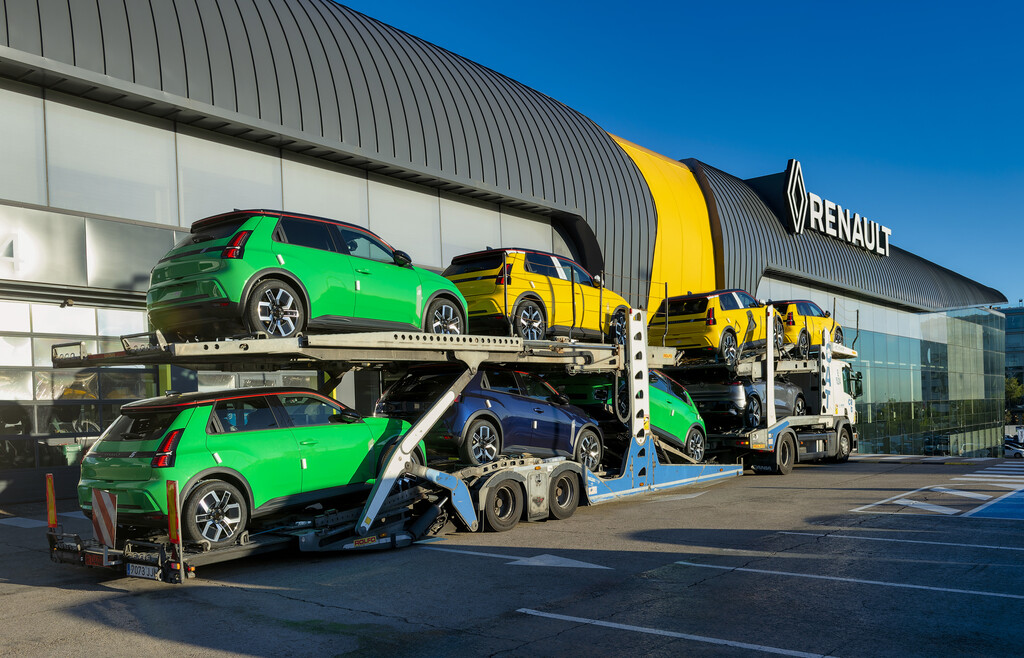
This year, the Renault 5 electric car, priced between €25,000 and €30,000 , has garnered attention for its appealing design and robust performance. Another competitor, the KIA EV3 , is also making waves in the 2025 market for its excellent balance of range and pricing. Not to mention, Tesla continues to dominate with its Model 3 and Model Y being some of the best-selling electric vehicles in Spain.
New entrants like BYD and Hyundai are launching affordable electric vehicles tailored for urban environments, including products like the Dolphin and Surf models. Anticipation is building around larger yet competitively priced electric options such as the Mazda 6E .
Another crucial aspect to consider is the influence of fleet purchases and ridesharing services. The Toyota BZ4X has made notable progress since gaining taxi approval in 2024 , rapidly becoming one of the top-selling electric cars. The company has even collaborated with Uber and Cabify , a clear effort to increase visibility and adoption of EVs on the roads.
It’s crucial to recognize that European manufacturers face mounting pressure to meet electric vehicle quotas. The extension granted by the European Union to avert fines may merely delay the inevitable requirement for more than 30% of their sales to consist of electric cars in order to comply with environmental regulations. Failure to reach these targets could yield far more significant challenges in 2026 and 2027, forcing manufacturers to adapt quickly.
As we look ahead, the challenges and opportunities presented by the electric vehicle market in Spain reflect a broader trend across Europe. With a range of new models and competitive pricing, Spanish consumers are increasingly considering electric cars as viable alternatives. The momentum is building, and with strategic pushes from both manufacturers and the government, the transition towards electric mobility could take a solid hold in the coming years.