
China aims to lead the race for the cars of the future , and to do this, it must excel in several key areas, including battery development , in-house semiconductor production, vehicle software, and autonomous driving . The country, under Xi Jinping’s leadership, is making strides in multiple pillars of this ambitious vision, with Huawei playing a significant role in these advancements.
Over the years, this tech giant has been focused on dominating technologies associated with electric vehicles (EVs) , and autonomous driving is one of the central elements of this strategy. Recent developments reveal insights into how Huawei perceives luxury and functionality in future vehicles equipped with its cutting-edge technology.
A steering wheel that hides away. On June 6, 2023, Shenzhen Yinwang Intelligent Technology Co., Ltd. , a majority-owned subsidiary of Huawei, filed a design patent with the National Intellectual Property Office of China.
This patent refers to a retractable steering wheel that can be hidden within the dashboard. While the patent does not specify the exact mechanics involved, it highlights a crucial aspect of its design: the driver’s seat can slide backward when the steering wheel folds away.
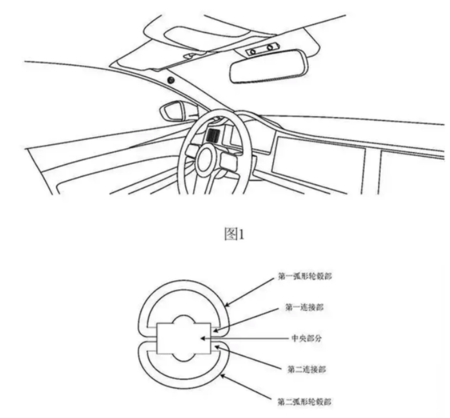
Potential Applications. While Huawei has not disclosed specific usage scenarios, one thing is quite clear: the steering wheel can fold away when entering or exiting the vehicle. Although this innovation is likely associated with autonomous driving , its purpose is also intertwined with maximizing space within the cabin.
In fully autonomous driving scenarios (Level 4 and Level 5), retracting the steering wheel is feasible but is currently limited to select vehicles. There are no consumer vehicles on the market today that possess these capabilities. In China, such technologies are generally exclusive to robotaxis like Baidu’s Apollo Go and Waymo’s vehicles in the United States, which operate under tightly controlled environments.
Who is Yinwang and what do they do? Founded in January 2024, Shenzhen Yinwang Intelligent Technology Co., Ltd. is a subsidiary of Huawei that focuses on electric and autonomous vehicle technologies. The remaining 20% of the company is owned by Avatr—a manufacturer that sells vehicles through Huawei stores in China—and the Seres Group. Yinwang aims to transform Huawei’s Intelligent Automotive Solution (HIAS) division into a leading provider of technology for EVs and autonomous vehicles.
Yinwang specializes in creating and supplying intelligent vehicle systems, such as algorithms, sensors, integration of HarmonyOS tailored for automotive applications, and controlling various car elements including thermal management, suspension, and braking systems. Notable clients include AITO , Luxeed , and Avatr , which benefit from Huawei’s advanced technologies.
How this aligns with Huawei’s strategy. Huawei’s role in the electric vehicle sector is distinct from competitors like Xiaomi . Instead of manufacturing electric vehicles, Huawei focuses on developing the technologies required for China to take the lead in this domain. Ren Zhengfei, the company’s founder, has voiced his disapproval of commercial titles such as “Huawei Aito,” clearly stating that the strategy is to partner with various enterprises and empower them with Huawei’s automotive solutions.
So far, Huawei has successfully collaborated with industry giants such as Chery to equip the Luxeed S7 with autonomous parking capabilities, is in the race to develop the fastest EV chargers, and partners with Aito to integrate its software solutions.
Patents remain just patents. It’s crucial to note that registering a patent does not necessarily translate into an actual product realization of the concept outlined.
Image | Luxeed
In Xataka | China has significantly advanced in another tech field where the U.S. previously held a substantial lead: robotaxis .