
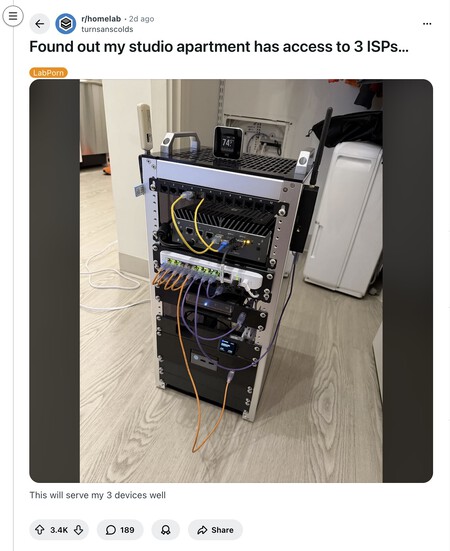
In the world of technology, there are the technological geeks and then there are the tech geeks. For some, creating a powerful PC setup is the ultimate goal, complete with backlighting and high-performance cooling systems. Yet, for others, merely assembling a custom PC doesn’t cut it; they crave something more.
For this enthusiastic group, the pinnacle of tech projects is the setup of a server rack—a “domestic” version of the racks found in professional data centers. These setups allow users to experiment and self-host various services from the comfort of their homes.
Long Live Homelabs
This domestic “homelab” fever that emerged in recent years has led tech enthusiasts and DIY aficionados to create mini data centers capable of performing a multitude of tasks. Many homelabs consist of a Network Attached Storage (NAS) device with multiple hard drives to host various services. Still, server racks elevate this setup to another level.
These racks, available for purchase online, combine an assortment of computers, servers, hard drives, and switches. Users wire it all together—playing into the #cableporn fascination—and leverage these servers for applications such as home automation.
Extensive Possibilities
The applications are extensive. Users can implement their own mail, web, multimedia servers, video surveillance systems, and monitoring solutions, as well as create small (or not so small) private clouds.
Homelabs also serve as environments for experimenting with cybersecurity and pentesting, or even conducting DevOps experiments. The potential is huge—if you’re ready to dive into the complexity of it all.
Showcasing DIY Projects
Reddit hosts the vibrant r/homelab community, where enthusiasts gather to share their projects. The mantra “a homelab is never complete” echoes among users who proudly showcase their finely crafted racks, built with a blend of passion and significant financial investment.
Setting up systems like these is clearly not a walk in the park. For instance, Michael Lynch, a devoted user, documented his journey to creating his first homelab in a detailed blog on his website, outlining the countless factors one must consider for everything to function smoothly. Even when meticulously planned, surprises are lurking around the corner.
Prominent Personalities and Compact Solutions
Internet personalities have also fueled interest in this hobby. Jeff Geerling recently introduced Project Mini Rack, targeted at users who aspire to build a “compact rack.” The outcome is visually pleasing and an excellent entry point for newcomers.
However, a caveat: these setups are complex affairs. The challenges extend beyond simply building and powering them on, with crucial factors like energy consumption and noise levels to manage. Above all, the emphasis is on maintenance and updates. As reiterated in the community, “a homelab is never complete.”
For those ready to embark on this fulfilling journey, each step into the world of server racks, homelabs, and self-hosted services is an adventure waiting to unfold.