
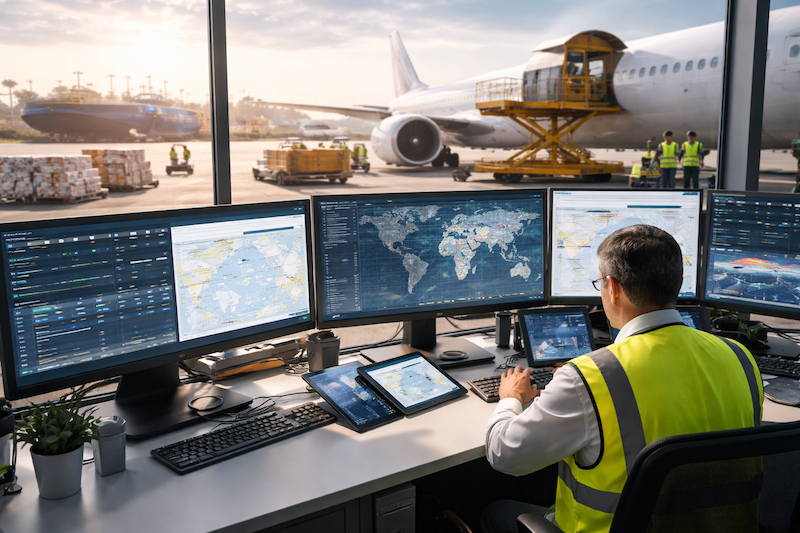
How real-time air logistics works in practice
Modern air logistics depends on constant data exchange. Companies such as ACGC work within a model where each stage of transportation is tracked and updated as the shipment moves through the chain.
This process may include pickup status, warehouse handling, flight changes, customs updates, and delivery progress. Instead of relying only on manual reports, businesses can receive faster and more consistent information about where cargo is and what stage it has reached.
Why visibility matters in global air shipping
International shipments often pass through several checkpoints before reaching the consignee. A delay at any one of them can affect the whole schedule. Real-time visibility makes these risks easier to manage because logistics teams can react earlier.
This matters even more for urgent cargo. In air freight, a missed handoff on the ground can be more disruptive than the flight itself. Better visibility helps companies avoid communication gaps and improve delivery planning.
The role of digital tools in cargo coordination
Real-time management relies on digital systems that connect different parts of the logistics chain. Shipment data can move between warehouses, carriers, brokers, and delivery teams much faster than in paper-based workflows.
Electronic documentation also helps reduce errors. When shipment details are entered and shared in a structured format, there is less chance of mismatch between cargo data, transport records, and customs information. This improves accuracy and saves time.
Why coordination is more important than speed alone
Aircraft move goods quickly, but air freight does not depend on aircraft alone. Cargo must be accepted, processed, loaded, transferred, cleared, and delivered. If one stage fails, the whole route can slow down.
That is why strong coordination often matters more than raw transit speed. Real-time management allows logistics providers to adjust plans when schedules change, documents need correction, or handling priorities shift.
How real-time logistics supports modern trade
Businesses today need more than fast delivery. They need predictability. They want to know when goods are likely to arrive, whether any disruption has appeared, and how quickly a problem can be solved.
Real-time air logistics supports that need. It gives companies better control over international shipments, reduces uncertainty, and helps them make faster operational decisions in a more demanding global trade environment.