
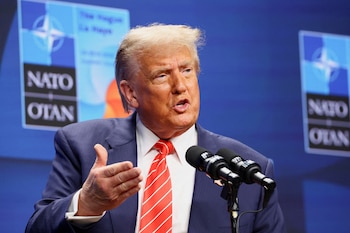
After the last summit of NATO , Donald Trump issued a series of warnings aimed at Spain , stirring significant concerns within the country. The U.S. President expressed his discontent following remarks by Pedro Sánchez , the Prime Minister of Spain, who indicated that Spain would not meet the 5% defense expenditure objective agreed upon by NATO members. “We are going to make them pay double,” Trump stated, alluding to the possibility of economic stringencies.
The Spanish government maintains that a projected expense of 2.1% of GDP is sufficient to meet NATO’s requirements. Notably, Spain has emerged as the only member state to reject the increased expenditure, prompting threats from Trump regarding potential retaliatory tariffs. This has placed Spanish officials in a challenging predicament as they navigate international relations while maintaining domestic stability.
Defending their standpoint, the Spanish Executive clarified that tariff discussions fall under the purview of the European Commission , a position supported by Brussels. Nevertheless, the United States could employ a range of economic methods to implement its discontent. A report from the Chamber of Commerce of Spain , cited by Europa Press, outlines various restrictions that might be enforced on Spanish companies operating in the U.S. One immediate concern is the involvement of Spanish firms in public tenders .
The risk of losing contracts is exemplified by Ferrovial , a Spanish company specializing in infrastructure and services. Ferrovial has secured various projects in the U.S., including the construction and maintenance of highways and public infrastructure. The company’s operations are now jeopardized by potential restrictions stemming from Trump’s retaliation.
In addition to public tenders, Spanish companies could face restricted access to American technology , covering essential services like cloud computing and encryption systems. Many firms in Spain rely heavily on technological platforms developed in the U.S., a sector long considered a global leader.
Another avenue for U.S. action could involve imposing regulatory obstacles for banks and consulting firms operating in the United States. Spanish banks looking to expand their footprint might encounter new barriers, such as enhanced scrutiny or restrictions on services offered. Notable entities like Santander , with its U.S. subsidiary Santander Bank , may find their operational capacities diminished. Santander Bank conducts various services, including consumer loans and treasury management, threatening their ability to compete effectively.
In terms of investments , the U.S. administration has the option of issuing warnings to American firms regarding political or fiscal risks associated with investing in Spain. US authorities may also press investment funds to decrease their holdings in critical sectors within the Spanish market. These moves could effectively reduce foreign investment in Spain, thereby stunting economic growth.
Moreover, the U.S. might elect to heighten phytosanitary requirements for agrifood products , including fruits, wine, and olive oil from Spain. This could occur under the guise of public health protection, necessitating new certifications and additional checks that would complicate trade relations.