
Challenges Faced by Home Help Service Workers in Santa Cruz de Tenerife
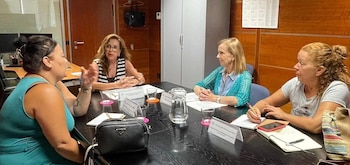
The Deputy of the Common, Lola Padrón, met with representatives of the home help service workers in Santa Cruz de Tenerife on Tuesday to address critical issues affecting the sector. These workers have raised significant concerns regarding the management of services, scheduling, and alarming cases of sexual harassment from certain users.
Verónica González González and Carmen Delia Henríquez Barreto, legal representatives of the union, articulated the precarious reality that these home help workers encounter daily. They highlighted “the failures” in service provision for the elderly and dependent population in the region.
An Increasing Demand for Specialized Assistance
Santa Cruz de Tenerife hosts nearly 4,000 residents over the age of 65, and the demand for specialized assistance is steadily rising. However, the lack of effective service control has led to a concerning decline in quality. The allegations include reduced hours of service since the management was transferred from the City Council to the Autonomous Community, which, according to the representatives, has resulted in decreased attention times from six hours to three without sufficient explanation to families.
Verónica González emphasized that this situation negatively impacts not only the workers but also the elderly who rely on their care. The workers are tasked with providing essential services such as personal hygiene, shopping, medical support, and companionship, yet they report a troubling lack of oversight and inadequate service review. “Many clients just want cleaning services, ignoring the crucial health support that is also part of our job,” she stated.
Calls for Investigation and Accountability
In response to these serious allegations, Deputy Padrón has insisted that the City Council must open an investigation into the claims presented by the workers. This includes evaluating the transfer of service management and whether the contracted company meets the necessary specifications and quality standards.
Padrón underscored the need for rigorous accountability: “It’s crucial to ensure that service delivery aligns with users’ needs without compromising the dignity of those who require assistance.” Moreover, it is vital to address any under-the-radar cuts or policies that threaten the integrity of these essential services.
A staggering 92% of home help service workers are women, and the inability to manage service challenges effectively adds to their vulnerability. These female workers face the additional burden of sexual harassment from some users, a situation that requires urgent attention.
Sexual Harassment in the Workplace
The workers expressed extreme distress over the persistent sexual harassment issues they encounter. A striking report indicates that many women have faced inappropriate advances and aggression in their workplaces. The union representatives revealed shocking details about how existing instances of harassment have led to a repeat cycle of abuse. For instance, when a worker experiences harassment, the standard protocol is to transfer them without informing the new worker about the risks they may face.
The community’s response to these repeated incidents has been insufficient, leaving many workers in a precarious position. González explained, “We are often left alone with stalkers in these homes, creating a climate of fear and intimidation.”
Upon presenting these alarming conditions to Deputy Padrón, the union stressed the importance of serious measures to ensure the safety and well-being of home help service workers.
Quality of Life for Vulnerable Populations
Along with sexual harassment issues, workers have voiced concerns about the unsanitary conditions they frequently encounter in clients’ homes. Those requiring assistance often live in environments that do not meet basic health standards. The lack of adequate support adversely affects the quality of care provided to vulnerable individuals who depend on these services.
Padrón has expressed the necessity for the situation to be rectified. She remarked, “The serious cases of sexual harassment must be addressed with utmost seriousness, and the complaints of inadequate sanitary conditions must be examined to protect vulnerable populations.”
The plight of home help service workers and the elderly in Santa Cruz de Tenerife highlights a fundamental societal issue that demands immediate action. By addressing these grave concerns, we can ensure that both workers and their clients receive the respect, dignity, and quality of care they deserve. It is crucial for the relevant authorities to prioritize these findings and enact policies that guarantee the safety and well-being of all parties involved.