
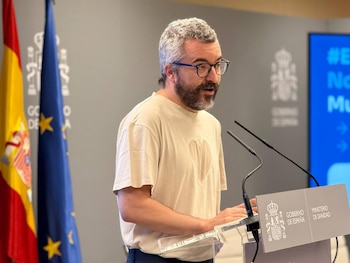
The Secretary of State for Health, Javier Padilla , recently underscored the importance of enhancing public commitment to promoting the presence of women in leadership positions and decision-making spaces. This statement was made during the launch of the #enSaludnosInmujeres initiative.
Launched at the Ministry of Health , this initiative is spearheaded by the Federation of Spanish Medical Scientific Associations (FACME), along with Farmaindustria and Women in Farma , in collaboration with the Ministry. The primary goal is to illuminate the gender gaps that exist in the health sector and to promote a greater involvement of women in crucial decision-making bodies, committees, congresses, and scientific forums.
Padilla articulated that “it is essential not only to claim that power must be redistributed, but we must also demonstrate that this transition is an advance towards a better society.” This sentiment resonates deeply with the work undertaken by the ‘Womeds’ Observatory promoted by FACME . Their data revealed that while nearly 58% of doctors in public health are female, only 33% hold service leadership roles, indicating a significant disparity.
During the launch event, a manifesto was unveiled, emphasizing the urgent need to work towards increasing the roles of women experts in public life. According to the manifesto, “the presence of women in decision-making spaces is not merely a basic right; it serves as a guarantee that the health sector accurately reflects and meets societal needs.” This initiative appeals for increased representation of women in roles with genuine influence over decision-making processes.
Pilar Garrido, the Womeds coordinator and medical oncologist, remarked, “Merely showing data that highlights ongoing inequality is no longer enough. We require concrete actions. This initiative demands proactive commitments from all signatories.” Moreover, Cristina Avendaño Solá , president of FACME, emphasized that expecting change to occur spontaneously is unrealistic. She stated that although the percentage of practicing female doctors has matched or surpassed that of male doctors for decades, representation in leadership roles remains unacceptably low.
Avendaño highlighted that the initiative calls for a collective effort, urging scientific societies, health authorities, and the pharmaceutical industry to commit to these goals. It aims to galvanize various medical and scientific communities to ensure women’s visibility in all relevant forums, committees, congresses, and events associated with health. The focus is also on eliminating the existing gender gap in management positions.
Despite notable advancements, a gender gap persists in the academic field, particularly in leadership roles. The psychiatrist and Womeds member, Pilar López , shared concerning statistics: only 35% of deans in medical faculties are women, and as one progresses through academic ranks, this gap widens significantly, with only 10% of professors and 22% of tenured professors engaged in healthcare activities.
Raquel Yotti , the Commissioner for Vanguardia Health, highlighted a critical moment in Spain’s healthcare landscape where the need for diversity in clinical trials is becoming increasingly evident. She pointed out the necessity of equality plans within healthcare organizations, warning against stigmatization for having such plans. Yotti stated, “This initiative is crucial, as it categorically establishes that certain practices cannot continue.”
Fina Lladós Canela, president of Farmaindustria, emphasized that equality is not just a fundamental ethical principle but also a catalyst for progress and sustainability within organizations. She heralded the #enSaludnosInmujeres initiative as an “ideal tool” to influence, inspire, and transform societal attitudes towards gender equality.
The initiative outlines several objectives aiming to enhance the leadership, participation, presence, and visibility of women in senior management across all healthcare domains. It seeks to promote public policies that advocate for female participation and leadership, especially regarding training and equity in all work environments in the health sector.
Furthermore, it emphasizes the necessity for women to hold positions on technical and scientific committees, forums, conferences, and any event tied to public health. Aiming for equitable representation, it demands that health entities ensure disproportionately high female presence in expert panels involved in scientific, organizational, or healthcare activities based on merit.
Additionally, the initiative disallows participation in health sector events featuring more than two speakers unless at least one is a woman. To emphasize gender perspectives, it will include a gender segment in the accreditation forms of the National Health System (SNS) to recognize and enhance these efforts.
Ultimately, the initiative advocates for gender parity in public materials like promotional content, ensuring that women’s majority status in the health sector is accurately portrayed.