

The world of high-speed rail travel promises comfort , efficiency , and, above all, seamless connectivity. However, recent experiences on the Avant trains operating between Lleida and Barcelona have raised serious questions about this promise. Complaints about extreme vibrations and even reports of physical discomfort have emerged, highlighting what seems to be a growing issue for Renfe, the Spanish state-owned railway company.
“The water of the váter came out”. This alarming remark captures the sentiments of a disgruntled Avant user who traveled this route on August 19. Social media has been abuzz with videos documenting the jarring vibrations experienced within the train—an unsettling sight that left many passengers questioning their decision to travel by train. Kevin Bruque, a spokesperson for Avant Catalunya , noted that the situation is far from exaggerated, reporting that “people get dizzy” during what should be an efficient one-hour journey.
Various social media posts depict the chaotic conditions inside the Avant train, including footage of backpacks moving violently and water bottles wobbling precariously. These visuals paint a picture of a travel experience where comfort is not merely compromised but almost nonexistent.
Many complaints have surfaced regarding the Avant service between Lleida and Barcelona. For residents who frequently rely on this route, the experience has become increasingly intolerable. “An hour that could be used for rest or work is wasted,” Bruque emphasized, highlighting ongoing issues.
These extreme vibrations are just the latest issue among a series of recurring problems plaguing the line. Earlier, in March, local news outlet Segre reported on passengers’ demands for increased service frequencies, citing early train options since the first Avant does not depart until 7:05 AM. Consistent delays and mechanical breakdowns have further marred the service.
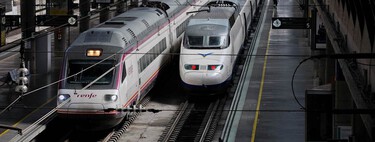
Renfe’s response to these complaints has been somewhat dismissive. According to statements gleaned by Segre, the company claims that the Rodalies service, which is another regional option, suffices. Renfe asserts that the service is adequately covered and therefore emphasizes the presence of the Rodalies as an alternative.
However, users quickly challenged this assertion, clarifying that the Rodalies service takes over three hours to traverse from Lleida to Barcelona. In stark contrast, both the Avant and Ave trains make the journey in just under an hour. Consequently, opting for the Rodalies service results in a longer travel time, and issues regarding punctuality further exacerbate user dissatisfaction.

Renfe’s performance in Catalonia is currently under intense scrutiny. The Rodalies network has been beset with reports of frequent breakdowns , suspensions , and significant delays , with incidents escalating to a alarming frequency of 33 incidents just on August 21.
Prompted by a combination of deteriorating infrastructure and scheduling challenges, the Rodalies service has struggled to regain user confidence. Recent reports suggest that Renfe’s service disruptions are not isolated, forming part of a larger pattern affecting high-speed rail users across the country.
But also high-speed rail experiences are not without their challenges. The end of July marked the abrupt withdrawal of Avril trains from the Madrid-Barcelona route after cracks were identified in their structure. This shocking discovery left travelers feeling anxious about the safety of not only their journey but also future trips on Renfe trains.
In light of the turmoil experienced currently, Renfe seems to oscillate between offering solutions—sometimes effective, sometimes inadequate. During the same turbulent summer, travelers were stranded in the Andalusia region for an extraordinary 13 hours without air conditioning, highlighting further distress.
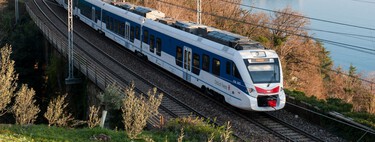
This chaos reached its zenith with train fires leading to complete route suspensions. All these agonizing experiences leave an indelible mark on passengers, who are left feeling that the high-speed travel they once revered may not be as reliable as it appears.
Photo | Kabelleger / David Gubler
In Xataka | “In 1961 it took Bilbao three hours and five minutes; now it takes three hours and ten minutes”: highlighting the ongoing frustrations of rail travel in Spain.