

An Unprecedented Fine for Absence in Cusco’s Judicial System
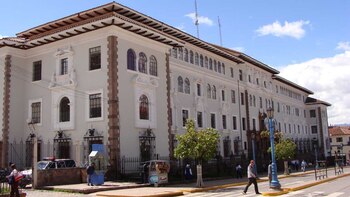
An unusual incident in the judicial field of Cusco attracted the attention of the legal community after the imposition of a fine to a lawyer who, after requesting a special turn to formulate an oral report, decided not to attend the agreed audience. The case, ventilated in the Second Labor Chamber of the Superior Court of Justice of Cusco , proposes a point of reflection on the responsibility and commitment required by professional practice before the Peruvian courts .
Background of the Case
The story, disseminated by LP, dates back to 2019 , when the Sala interpreted pertinent, granting the parties involved the power to request the word with the objective of supporting their positions through oral exposure. The instruction was clear: anyone who wanted to exercise that right should submit their application within three business days after being notified. In the warning, a specific consequence was arranged for the assumption that the lawyer does not present: an economic sanction supported by the Organic Law of the Judiciary and the Civil Procedure Code would be applied.
The file details that on March 26, 2019 , one of the lawyers formalized his request for the use of the word . However, when the time came, the professional did not attend the audience. This displacement did not go unnoticed for the magistrates, who firmed the warning and proceeded to impose a fine equivalent to a procedural reference unit (URP) . The Chamber based this decision on relevant articles of the legal framework, marking a precedent aimed at strengthening the formality and seriousness required by the judicial function.
The Context of the Appeal
The material context of this process involved the appeal of a teacher who, after being ceased from his position as a teacher in 2013 , was looking to reverse administrative resolutions and access differential bonuses due to the rural area where he exercised. The demand, which dealt with the calculation of these benefits, was rejected in the first instance. In this context, the appellant presented arguments in favor of the nullity of those resolutions and defended that the bonus should be calculated on total remuneration, invoking constitutional jurisprudence .
Legal Implications and Ethical Considerations
The Chamber, after analyzing the case and considering the specific regulations, confirmed that the calculation base should be permanent total remuneration and rejected the possibility of a different formula. In the ruling, they referenced Ministerial Resolution 761-91-ED and the jurisprudence of the Supreme Court , which emphasize the distinction in the calculation of different state bonuses.
Outside the technical labor aspect, the episode gained notoriety for the action of the absent lawyer. The magistrates applied the planned sanction and ordered that the fine be communicated to both the Superior Court of Justice of Cusco and the corresponding Bar Association , a measure aimed at enhancing transparency and ethical compliance . The ruling determined that, once the sanction was consented or ratified, the notification should reach both organizations, aligning with the principle of procedural advertising .
After the imposition of the fine, procedures continued to send the file to the Constitutional and Social Law Room of the Supreme Court . Subsequently, when the file returned to Cusco in 2021 , its final file was arranged, and the lawyer sanctioned was reminded to pay the fine within five days, under the warning of initiating forced execution measures.
General News – 2