
## NVIDIA: The Titan of the AI Boom
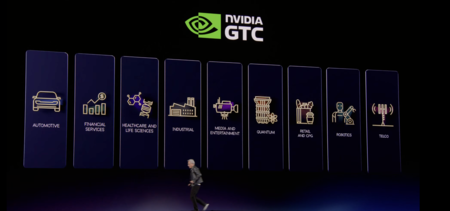
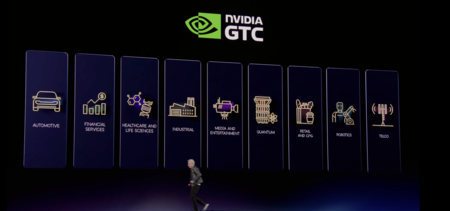
If there’s a company that has capitalized on the artificial intelligence boom, it is NVIDIA. Known for its powerful chips, NVIDIA has become essential for training and executing many of the models behind the current rise of generative AI. At the recent GTC conference held in San José, its CEO, Jensen Huang, projected at least $1 trillion in backlogged orders for its chips. However, a new landscape of competition is beginning to form around the company.
### The Message
Huang detailed the company’s forecast, stating that the expected demand for its Blackwell chips, like the B300, and the Rubin architecture could reach approximately one trillion dollars in accumulated orders by 2027. This is a remarkable increase from just a year ago, when the estimate was around $500 billion. These projections reflect the unparalleled demand for AI-related technologies and the significant role NVIDIA plays.
### The Transformation
Historically recognized primarily for its gaming Graphics Processing Units (GPUs), NVIDIA’s architecture has aligned perfectly with the needs of machine learning. This transformation has driven a substantial revenue surge; according to data from the Associated Press, NVIDIA’s annual revenue skyrocketed from $27 billion in 2022 to $216 billion last year, propelled largely by surging demand for AI infrastructure.
### Changes on the Horizon
While much of the recent growth in artificial intelligence is centered on model training—an area dominated by NVIDIA’s GPUs—the focus is starting to shift toward inference. This is the phase where already trained systems generate responses for users. Analysts cited by Reuters suggest that this shift could open the doors for a variety of competitors capable of handling these workloads.
### The Big Tech Shuffle
Recognizing NVIDIA’s dominance, many large tech companies that have relied on NVIDIA GPUs for years are now investing in their own artificial intelligence accelerators. For instance, Amazon has rolled out its Trainium family of chips for cloud-based model training and execution, while Google continues to enhance its Tensor Processing Units (TPUs). Meta is also in the mix, working on several versions of its MTIA accelerator to meet its AI requirements.
### The Chinese Front
The competitive pressure on NVIDIA extends beyond U.S. shores. Trade restrictions enforced by Washington have hampered Chinese firms’ access to some of NVIDIA’s most advanced chips, prompting a surge in local alternatives. For example, Huawei is preparing for mass shipments of its 910C chip targeted at AI clients, while other Chinese companies are forming alliances to build a robust domestic ecosystem encompassing chips, AI models, and infrastructure.

### The Broader Picture
Ultimately, there’s no denying that NVIDIA remains a cornerstone in the infrastructure powering the AI revolution, and its projections reflect that dominant status. However, the market landscape is evolving. Large tech companies, startups, and national ecosystems are all striving to develop alternatives that reduce reliance on NVIDIA, marking the beginning of a more competitive era in the AI domain.