
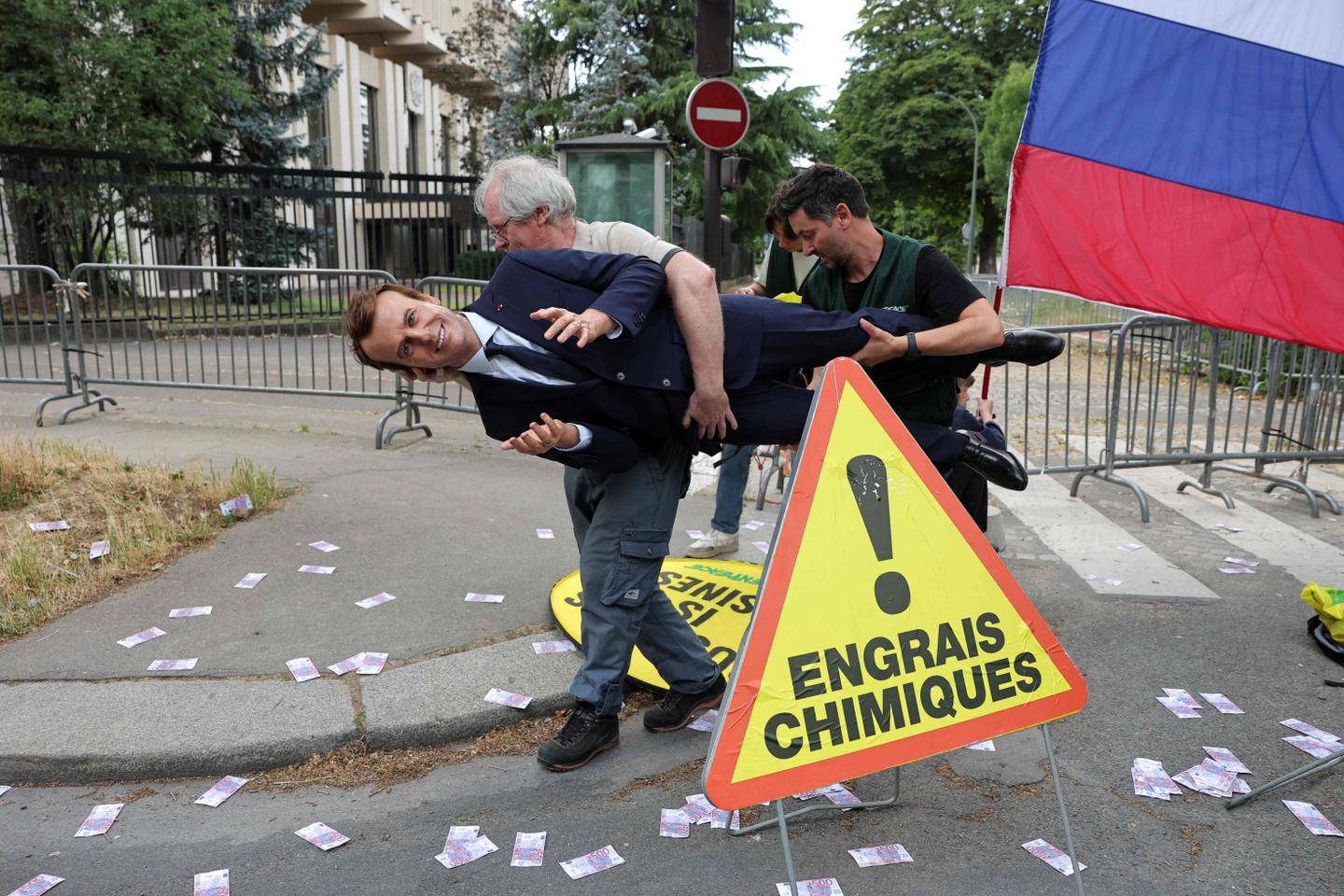
Greenpeace Stages Bold Protest with Stolen Macron Wax Figure

On June 2, 2025, in a daring move, activists from the NGO Greenpeace stole the wax figure of French President Emmanuel Macron from the Grévin Museum in Paris. This bold action was aimed at protesting against France’s continued economic ties with Russia , specifically regarding the Russian military conflict in Ukraine . The stolen figure was later displayed outside the Russian embassy in Paris, accompanied by banners highlighting the economic products involved, such as “chemical fertilizers”, “uranium”, and “gas”.
“For us, France plays a double game,” stated Jean-Francois Julliard , the General Director of Greenpeace France. He expressed that “Emmanuel Macron embodies this double discourse: he supports Ukraine but encourages French companies to continue trading with Russia.” He underscored that it is the President’s responsibility to lead the conversation in Europe to end commercial contracts between European nations and Russia.
According to police sources cited by AFP , the theft was executed by two women and a man posing as tourists. After gaining access to the museum located in the 9th arrondissement of Paris, they cleverly disguised themselves as museum workers and successfully made off with the statue, valued at €40,000 , using a covert exit.
The Message Behind the Protest
Greenpeace’s action serves as a stark reminder of the tension surrounding international relations amid ongoing conflict . The group’s protest, particularly targeting Macron, has sparked discussions around the moral implications of fostering economic relationships with countries undergoing military disputes. Julliard emphasized the necessity for leaders to reflect upon their nation’s values and responsibilities while making economic decisions that might influence geopolitical stability.
The wax statue of Macron, designed to be a symbol of political leadership, now serves as a poignant critique of his administration’s stance. The jarring imagery of his likeness, taken from a museum and transported to a site of contested diplomacy, resonates deeply with the complexities surrounding France’s policy toward Russia. It highlights that while nations often present themselves as champions of human rights and advocacy, their actions can sometimes contradict these ideals, leading to public outcry and calls for accountability.
Public Reaction and Broader Implications
The unusual nature of this protest garnered significant media attention, igniting discussions on social media platforms. Supporters praised the creativity and audacity of Greenpeace’s means of protest, while critics questioned the efficacy of such dramatic actions in achieving political change. Nonetheless, it raised awareness about ongoing economic ties with Russia, pushing the discourse to the forefront of public consciousness.
As the war in Ukraine continues to unfold, the actions taken by organizations like Greenpeace force governments to reconcile their diplomatic stances with their economic practices. The need for transparency and responsibility in international dealings becomes even more pronounced as citizens seek to hold their leaders accountable.
Conclusion
The audacious protest by Greenpeace utilizing the wax figure of President Macron encapsulates a growing sentiment among activists and citizens alike. As international conflicts persist, the necessity for clear and principled leadership becomes paramount. By highlighting the contradictions inherent in current political rhetoric and the economic realities faced by nations, this event serves as a clarion call for greater accountability in global affairs. Whether such protests will alter policy or influence public opinion remains to be seen, but they undeniably spotlight an urgent debate regarding the intersection of morality and politics in contemporary governance.