

On May 20, 2025, we published an article on Bon Pote titled “Change Your Bank to Move Away from Fossil Fuels?.” This investigation into the relationship between banks and fossil fuels began in March 2021. At that time, questions from our readers about banks and their investments in fossil fuels began to escalate, prompting a deeper examination into the financial industry’s practices.
We observed a significant evolution in the communication strategies of various financial entities, ranging from sincere and transparent initiatives to calculated instances of greenwashing . Concerned about misleading narratives, we turned to Julien Lefournier , a finance expert, to help inform our findings. Our approach centered first on bank savings before expanding to cover savings entrusted to insurers and funds placed in financial markets. This focus is crucial for understanding the nuances of the debate.
Before the article went live, we worked diligently to ensure it was accessible and factually accurate. Our article includes a section dedicated to greenwashing practices, specifically citing BNP , which has funded numerous carbon-intensive projects. This critical perspective was documented multiple times throughout the piece, and we anticipated that our revelations might provoke backlash from those involved in greenwashing campaigns.
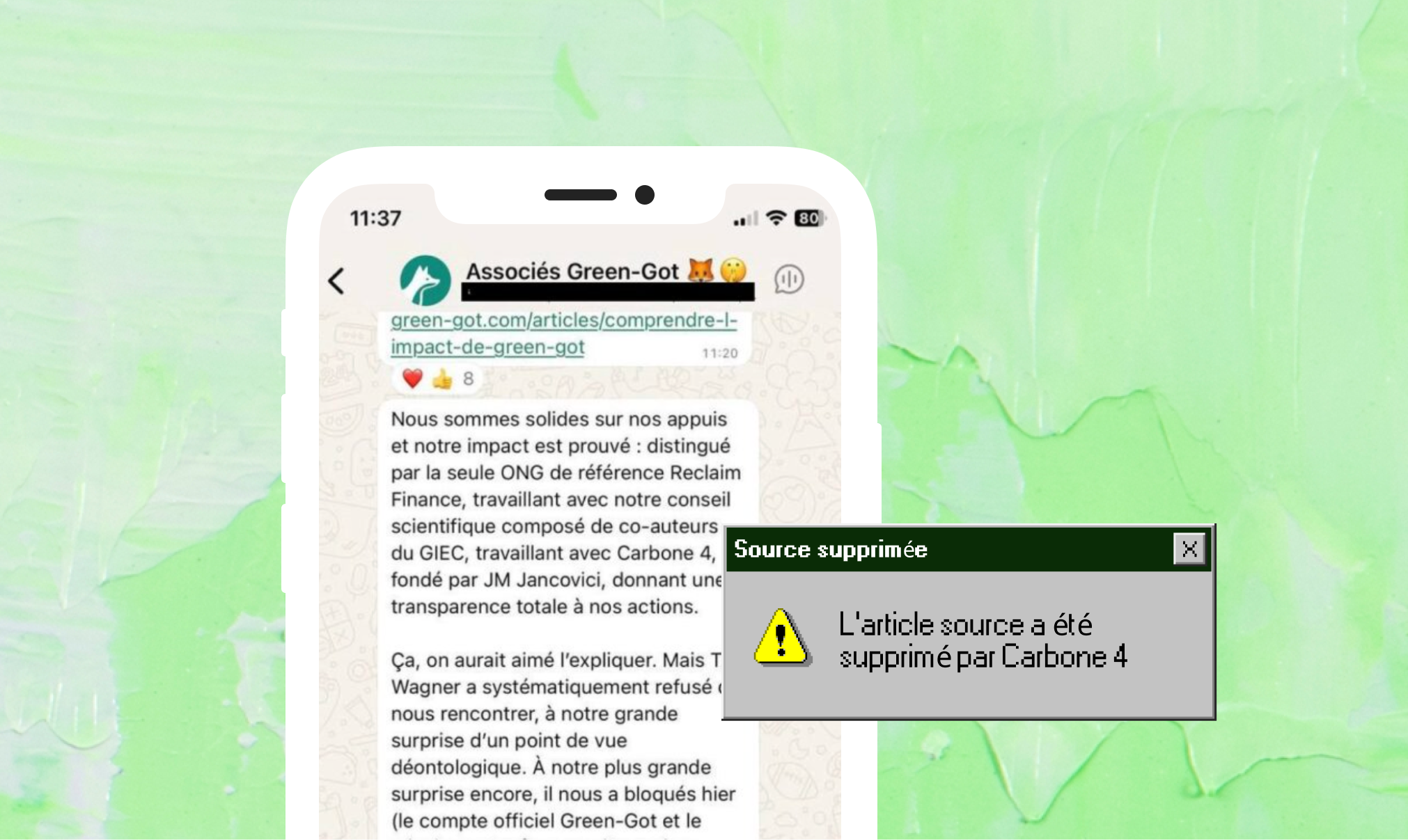
What we did not expect was the vehement reaction from Green-Got , a financial service mentioned twice in our 21-page piece. Shortly after publication, on May 21, 2025, Maud Caillaux , the president of Green-Got, sent a message through a WhatsApp loop to the “Green-Got Associates,” which included pointed allegations against our handling of the story.
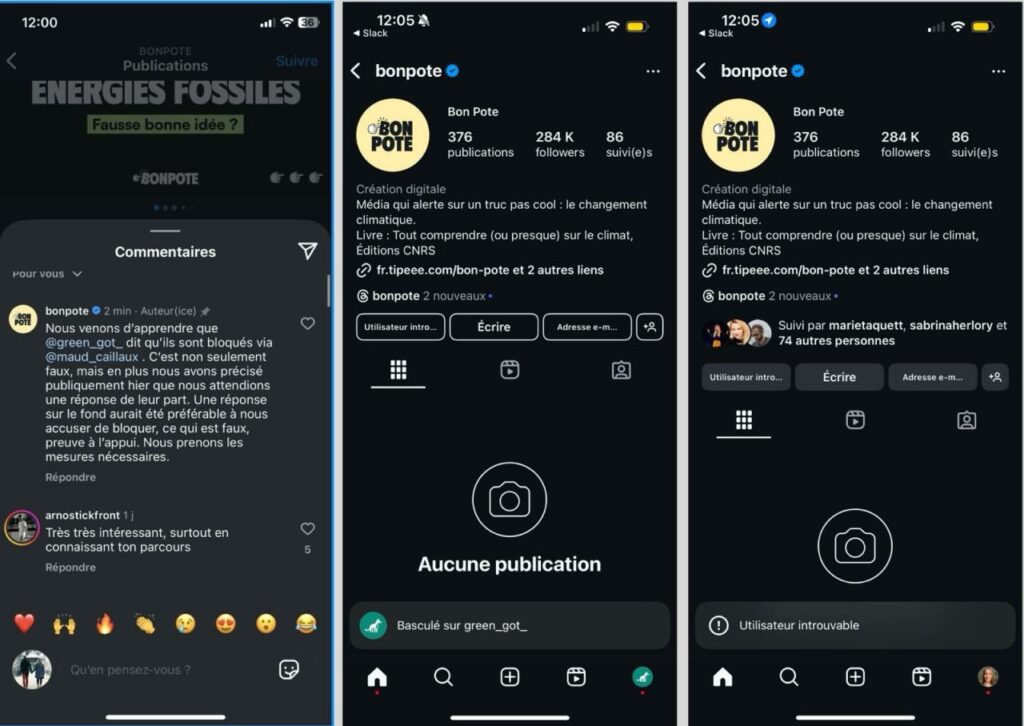
In her message, she stated, “ T.Wagner refused to meet us; to our great surprise, he blocked us before we could respond .” This was a puzzling accusation as we had neither blocked Green-Got’s account nor Caillaux herself. We actively reached out to them across several social media platforms, including LinkedIn and Instagram , and even proposed a public debate with Julien Lefournier, which was declined. The invitation for dialogue remains open.
The screenshot presented as evidence to support their claim is misleading. If someone is genuinely blocked on Instagram, they can no longer view the account at all. This is a clear test anyone can conduct. To illustrate, a well-known actor previously blocked us after we called out their use of private jets; we are unable to access his profile any longer.
Despite the absence of merit in Green-Got’s claims, we received numerous insulting messages from individuals defending the organization, and some even withdrew their support from Bon Pote based on unfounded assertions made by Green-Got. Nevertheless, we maintained that our investigation was thorough, factual, and necessary given the high stakes involved.
The Response from Carbone 4
On a substantive level, Green-Got claimed endorsement from Reclaim Finance , stating they are the only recognized NGO in this space. However, Lucie Pinson, the head of Reclaim Finance, expressed frustration over the marketing exploitation of their organization. On May 26, Julien Lefournier directly addressed the misleading arguments made by André Ganovelli, Green-Got’s co-founder.
In that controversial WhatsApp discussion, Green-Got highlighted Carbone 4 , founded by JM Jancovici, as a supporter of their operations. However, Alain Grandjean, a co-founder of Carbone 4, later clarified that their firm merely offers consulting services and does not validate business models or actions unless expressly stated. This clarification undermined Green-Got’s marketing claims about changing bank accounts and investing ethically.
Recognition for Integrity
It was commendable that Carbone 4 opted to remove their article titled “ Doing Your Part with Your Money ” to prevent further misinformation. By doing so, they reaffirmed the integrity of their work and disassociated themselves from misleading narratives promoted in the financial sector.
In conclusion, this series of events has demonstrated the intense scrutiny surrounding financial practices and their environmental consequences. Despite the backlash we faced, the importance of transparency and accuracy remains paramount in these discussions. We hope that stakeholders involved will consider rectifying their communications to foster a more informed dialogue. Furthermore, the contributions of our readers who supported us during this process reaffirm our commitment to integrity and independence in journalism.
General News – 2