
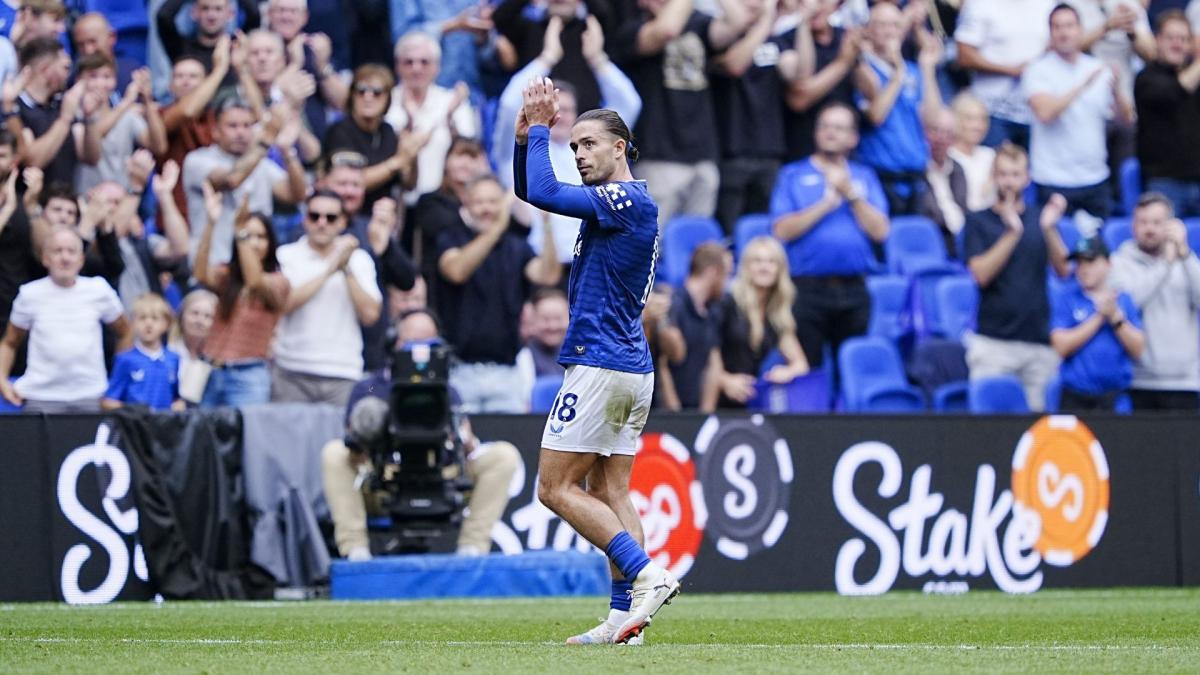
Jack Grealish’s Frustrations Following the Mersey Derby
In the wake of Everton’s tumultuous 2-1 defeat against Liverpool during the Mersey derby, emotions ran high, and Jack Grealish, the English international, did not hold back his feelings. The match, which is always electric, turned into a hotbed of controversy when it came to the handling of the game by officials. Grealish expressed sharp criticism regarding the management of additional time, claiming the decisions were inconsistent and unfair.
The Controversial Additional Time
After the final whistle blew, emotions were still palpable as Grealish shared his thoughts from the pitchside. “Three minutes and a minute of additional time? Come on, it’s been two or three years since we haven’t seen that in the Premier League,” he remarked with palpable annoyance when speaking to the cameras. His frustration resonated not only with fans in the stadium but also with many who watched the match unfold on television.
Grealish argued that Liverpool’s players strategically slowed the game down, and he pointed out that the referees failed to appropriately compensate for this lost time. This was not just an isolated incident; it represents a growing concern among players in the league—the question of whether they are receiving fair treatment in terms of officiating and game management.
A Closer Look at Fouls and Disciplinary Actions
In what seemed like a cascading series of questionable calls, Grealish took particular issue with one specific moment involving Kiernan Dewsbury-Hall. The player was handed a yellow card for supposedly taking a free kick too quickly, a decision that left Grealish baffled. “I have never seen a player take a yellow for that. We lost, we wanted to restart the game, and he takes a yellow card. It’s ridiculous,” he exclaimed. This highlighted a palpable disconnect between player intentions and the officials’ interpretations of the rules.
The Mersey derby is famously intense, yet Grealish felt that the atmosphere of the stadium influenced the officials more than it should have. The fervent support for Liverpool at Anfield was clearly a factor in the overall officiating performance. Grealish’s viewpoint brought attention to a broader topic in football about home advantage and whether it extends into the realm of officiating.
Analyzing Referee Decisions
Grealish was not the only participant feeling the pressure of the match’s officiating. Other players also voiced their frustration, resulting in a widespread discussion about the accountability of referees in high-stakes matches. The referee for this encounter, Darren England, came under scrutiny for several calls that piled frustration on the already tense atmosphere of the derby.
Many fans took to social media to echo Grealish’s sentiments, arguing that inconsistency in officiating is detrimental to the integrity of the game. The discussions ignited a renewed conversation about how matches should be officiated in order to improve the experience for both players and spectators. The goal should always be to create a level playing field, ensuring that external factors like crowd noise do not sway the decisions made by the match officials.
The Bigger Picture
As the season unfolds, the consequences of these officiating debates could ripple through the league. Teams like Everton and Liverpool could find themselves at a disadvantage if games continue to be influenced by contentious officiating. Grealish’s passionate defense of his team and his critiques of referee decisions highlight a critical need for transparent discussion about the standards upheld by match officials.
Grealish has had a fantastic start to the season, and his fiery attitude indicates he is not willing to back down from the fight—both on the pitch and off it. This echoes a sentiment many fans feel: that their teams deserve more respect when it comes to fair play.
Amidst all the drama, one thing remains clear: the spirit of competitive football is built not only on skills and teamwork but also on fair play. As the upper echelons of Premier League football continue to draw global attention, ensuring a fair and transparent system will be paramount for fostering the integrity that the sport aims to uphold. The discourse sparked by Grealish’s remarks serves as an important step toward addressing the ongoing challenges within football officiating.
In what promises to be a dynamic season, all eyes will be on how match officials adapt and respond to the growing scrutiny as criticisms like Grealish’s ring through the stadiums and screens alike. Football is not just a game; it is an emotion, and a fair playing ground is essential for all involved, from players to coaches to fans.