
The Decline of GitHub: A Critical View on the Open Source Hub
When GitHub was launched, it heralded a new era for open-source developers. Providing a platform that integrated version control via Git with social networking features, it transformed how developers shared and collaborated on projects. What once seemed a miracle now appears to be unraveling.
Remembering Pre-GitHub Days
Before GitHub, open-source software resided on platforms like SourceForge or utilized decentralized Subversion repositories. Developer Armin Ronacher reminisces about this era, highlighting how its rough edges made GitHub’s smooth integration a vital solution to many issues. GitHub quickly became the backbone of the open-source community, streamlining collaboration and project management.
The Ghostty Earthquake: A Turning Point
Recently, the landscape shifted dramatically when Mitchell Hashimoto, the mind behind the popular terminal emulator Ghostty, declared he was leaving GitHub. With over 52,000 stars on the platform, Hashimoto’s bold statement that “this is no longer a serious place to work” has sent shockwaves throughout the development community. His departure reflects a growing sentiment of discontent among developers regarding the reliability of the platform.
GitHub Admits Its Problems
In March, GitHub’s CTO, Vlad Fedorov, publicly acknowledged the platform’s ongoing availability issues. Hashimoto’s resignation further amplified concerns, motivating him to issue a follow-up article addressing GitHub’s reliability. He pointed to flaws in the system as the root cause of the problems plaguing users.
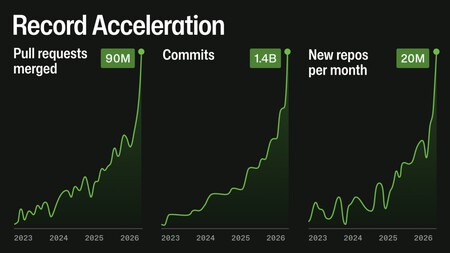
GitHub’s reliability challenges are directly tied to unprecedented growth in software development.
The Rise of Vibecoding and AI Influence
A significant factor in GitHub’s reliability issues stems from a shift in software development practices. The rise of agentic development workflows, or “vibecoding,” along with tools like Claude Code, has led to an explosion of new projects. Unfortunately, GitHub has struggled to keep pace, hampered by infrastructure that needs a dramatic overhaul to support this surge.
A Commitment to Resolve Issues
GitHub has declared its intent to prioritize fixing its availability issues. What remains concerning is the alarming drop in service stability, which fell to a mere 85% in April. Developers rely heavily on the platform, and this decline is alarming. GitHub has vowed to enhance critical service performance and improve availability, but can they deliver on this promise?
Leadership Concerns: The Absence of a CEO
Another layer of uncertainty surrounds GitHub’s future. With the departure of CEO Thomas Dohmke in August 2025, Microsoft has opted not to appoint a successor. Instead, leadership responsibilities were distributed among various executives, which has led to speculation about the platform’s direction and management effectiveness. Dohmke’s new venture, a startup called Entire, aims to address the evolving needs in software development, further emphasizing GitHub’s current shortcomings.
The Fragmentation of Alternatives
While several alternative platforms such as Plastic SCM, CodeBerg, and GitLab exist, the problem remains: GitHub had cultivated a vibrant social network for developers. The potential fragmentation of such a community poses challenges for project visibility, discovery, and contributions. Although alternatives may provide valid solutions, they lack the centralization that GitHub once offered.
Conclusion
The rise of GitHub as a powerhouse in the open-source community now appears to be faltering under the weight of its challenges. Developers are left questioning the platform’s reliability and effectiveness as a workspace. Navigating this uncertain future will require GitHub to adapt dramatically, address its many issues, and potentially restore its reputation among developers. As the cracks in the wall of open-source collaboration widen, the tech community watches closely to see what unfolds.