
Reimagining Solar Energy: Heliostats for Planetary Defense
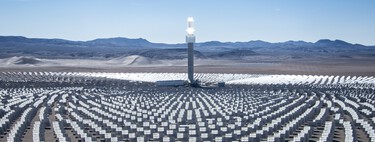
At one time, solar concentration plants were hailed as the future of renewable energy, utilizing heliostats—mirrors that track the sun—to direct sunlight toward a central tower. However, in today’s world, these plants struggle to compete with the rapid decline in photovoltaic prices. As solar technology evolves, it leaves us with a question: can these massive structures find a new purpose in an era focused heavily on sustainability?
A New Chapter for Heliostats
The United States has launched a pioneering project that repurposes these enormous mirrors for more than just energy generation during daylight. By day, they harness sunlight to produce electricity via steam turbines, but at night, these same heliostats play a role in the defense of our planet against potentially hazardous asteroids. This innovative approach could redefine the utility of stagnating solar concentration systems.
The Decline of Thermoelectric Solar Energy
The statistics are eye-opening. In 2023, while the world installed a record 345.5 gigawatts of solar panels, traditional thermoelectric solar energy systems barely added 0.3 gigawatts to their total capacity. Furthermore, no new solar thermoelectric plants have broken ground since then. Even in Spain, where technology had once flourished, projects are being canceled or re-evaluated. For instance, Morocco has opted to replace its thermosolar component of the Noor Midelt Mega-Complex with photovoltaic technology, citing its immaturity. Iconic installations like the Ivanpah plant in California face closure as they can no longer keep pace with the lower costs associated with photovoltaic energy.
Transforming Challenges into Opportunities
Given the bleak outlook for traditional solar thermal energy, it is essential to reconsider how we can utilize existing infrastructure. John Sandusky, a scientific researcher at Sandia Laboratories, has been examining this issue for nearly two decades. He stated, “Heliostat fields do not have a night job. They are simply there, without use.” His proposal is to leverage these costly infrastructures for a second life, utilizing them for the nighttime detection of Earth-bound asteroids.
A Unique Approach to Asteroid Detection
Rather than using heliostats to capture images, which would not yield sufficient clarity compared to telescopes, Sandusky’s innovative strategy focuses on exploiting what these mirrors do best: concentrating light. The 2024 study that Sandusky is pioneering aims to achieve asteroid detection not through traditional imaging techniques, but via frequency analysis.
How the Technology Works
Conventional asteroid detection involves capturing long-exposure images to track moving objects against a fixed star background. Sandusky’s method, however, operates quite differently. The software controlling the solar plant causes the heliostats to oscillate, sweeping a section of the night sky at a consistent, repetitive rate. This oscillation generates a specific frequency signal at the tower’s receiver, establishing a “base tone” of the stars.
Detecting Motion in the Sky
If an asteroid enters that field of vision, its movement will create a slightly altered frequency signal compared to the base tone. This distinction, albeit minor, can be seized upon with current technology, allowing for the detection of these celestial bodies based on their relative speed to the stars.
From Concept to Reality
A team has already demonstrated the feasibility of this method using a single heliostat and is currently working to scale the project to a full-scale solar plant. This would not only increase sensitivity but also the capacity to detect smaller, more distant objects, even tracking satellites and other entities within cislunar space. This dual-purpose approach could potentially pique interest from organizations like the U.S. Space Force.
The Future of Heliostat Technology
Sandusky’s conceptualization serves as a brilliant example of lateral thinking. Instead of investing in entirely new and expensive observatories, his proposal makes productive use of existing multimillion-dollar infrastructures that would otherwise see limited functionality. This offers a promising avenue for a technology that seeks to sustain itself in an increasingly competitive energy market.
As we tread further into the age of renewable energy, the reimagining of existing resources is not only imperative but critical for our survival. By turning to innovative solutions, such as Sandusky’s approach, we can transform our challenges into opportunities and harness the brilliance of technology for the benefit of humanity and the planet alike.