
The JEP Investigation into General (R) Alejandro Navas Ramos
Overview of the JEP Charges
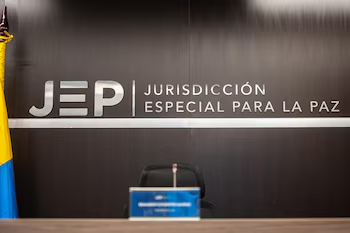
The Special Jurisdiction for Peace (JEP) has made significant strides in investigating grave human rights violations in Colombia’s Urabá region. Recently, the JEP charged 34 individuals—soldiers, ex-guerrillas, and civilians—for their roles in heinous acts that occurred between 1986 and 2002. Central to these accusations is General (R) Alejandro Navas Ramos, who has been linked to massive crimes, including over 54,672 victims identified in the operations known as Génesis and Cacarica.
Key Findings in the JEP Report
The JEP report, encompassing over 1,500 pages, outlines patterns of systematic violence such as homicides, forced disappearances, and land dispossession, disproportionately affecting indigenous and Afro-Colombian communities. Notably, two macrocriminal patterns emerged: one highlighted the coordinated murders by FARC, military, and paramilitaries, while the other focused on forced displacements led by the military and paramilitary alliances from the late 1980s.
Alejandro Navas Ramos’ Allegations
Navas Ramos, who served as the commander of the Military Forces from 2011 to 2013, is accused of orchestrating and executing Operation Genesis while serving as colonel of the Voltígeros Infantry Battalion. His prior relationships with paramilitary groups suggest a disturbing collaboration that endangered civilian lives. Key testimonies from former paramilitary members have further revealed meetings between high-ranking military figures and paramilitary leaders to strategize violent operations.
The Dark Alliance Between Military and Paramilitaries
The JEP’s investigation unveiled a troubling nexus between military forces and paramilitary groups, specifically within Brigade 17. This alliance facilitated a “violent pacification project” that aimed to expel and control civilian populations. The coordinated actions of both military and paramilitary units during Operation Genesis are underscored by profound complicity, indicating that the military did not only fail to protect civilians but actively participated in operations against them.
The Role of Witnesses and Evidence
Witness accounts, such as those from Hebert Veloza (HH), illustrate the intricate links between military and paramilitary commanders in planning armed actions. The evidence collected supports claims that Navas Ramos played a pivotal role in the execution and subsequent cover-up of these atrocities. The JEP holds him accountable not merely for direct participation but also for neglecting his duty to safeguard the civilian population.
The Impact of Navas Ramos’ Actions
General Navas Ramos, celebrated for his military acumen and decorated for his service, is now under scrutiny for orchestrating horrendous acts against innocent civilians while simultaneously using his position to promote impunity within the ranks. This situation raises serious ethical questions about leadership in the military, especially for someone trained in human rights.
Conclusion and Implications for the Future
The revelations surrounding Alejandro Navas Ramos and the broader investigation into military collusions with paramilitaries highlight a darker chapter in Colombia’s history. As the JEP continues its work, the hope remains that justice can be served for the thousands of victims and that similar atrocities can be prevented in the future. The accountability of military officials like Navas Ramos is crucial not only for rectifying past injustices but also for fostering a more peaceful and just Colombia moving forward.