
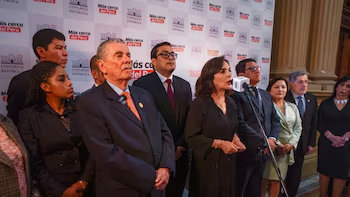
Fujimorism and the Road to 2026
As Peru gears up for the 2026 General Elections, the political landscape is taking shape, highlighting the Fuerza Popular (Popular Force) party as the frontrunner in terms of congressional re-election. The party, originating from the vision of Alberto Fujimori, is set to launch 19 candidates for the new bicameral parliament, significantly outnumbering competitors. This includes Popular Renewal with 11 applicants, Alianza para el Progreso with 9, and both Perú Libre and Podemos Perú fielding 8 candidates each.
Current Congressmen and Their Aspirations
Fuerza Popular currently holds 21 congressional seats and is channeling its efforts into securing future roles. Out of the existing members, eleven are vying for the Senate, while eight aim for the Chamber of Deputies. Notably, figures like Luis Galarreta and Miguel Torres lead the party’s presidential team and provide support for the ambitious agenda.
Among the Senate candidates are notable names such as Alejandro Aguinaga and Martha Moyano, both of whom have previous congressional experience. For the Chamber of Deputies, candidates include Arturo Alegría and Rosangella Barbarán, who are backed by their proven track records in Peruvian politics.
The Impact of New Legislative Reforms
These developments come in the wake of legislative reforms facilitated by the Constitution Commission, with strong advocacy from Fujimori legislators, which enabled immediate re-election for congressmen. This reform plays a crucial role in the current electoral strategy, allowing seasoned politicians to maintain their influence.
Leadership and Party Support
Party officials, including Michael Torres, publicly defend the re-election slate, emphasizing the proven experience and dedication of their leaders. He underscored the significance of recently affiliated members, like Fernando Rospigliosi, describing their decisions to join as courageous and indicative of a commitment to the party’s values.
Historical Figures Resume Their Roles
Fuerza Popular is also gearing up for the return of historical political figures, including Martha Chávez and Patricia Juárez, who are poised to carry forward the party’s legacy into this new electoral era. Torres has expressed confidence in these established leaders, emphasizing their essential roles in navigating the challenging political landscape ahead.
Notable Challenges Ahead
Fuerza Popular faces both internal and external challenges. The impending election is fraught with potential pitfalls, including ongoing anti-corruption investigations related to past administrations. The party must tread carefully, as any misstep could impact voter trust and electoral outcomes.
In conclusion, as a dominant player in the upcoming 2026 elections, Fuerza Popular aims to leverage its extensive network of experienced congressmen and reform-supported advantages to solidify its influence in Peruvian politics. The party’s strategic planning and candidate selection processes highlight its ambition to retain a significant presence in the new legislative framework.