
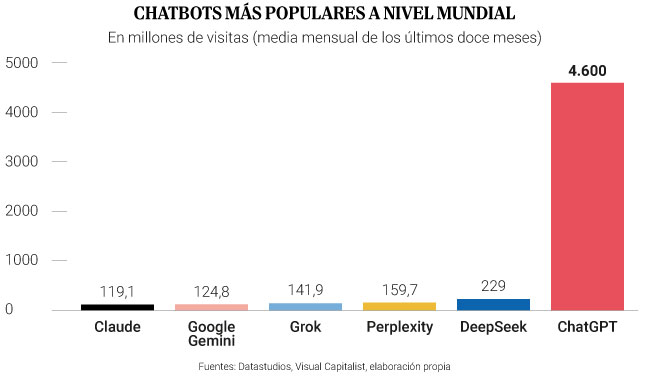
The internet contributes €4.2 trillion annually to the GDP of the United States, yet a mere €141,000 (a staggering 97% less) to the entire African continent, which has a population four times that of the U.S. Given this dramatic scale difference, it is unsurprising that U.S. AI companies show little interest in the African market. However, this business decision raises concerns in both the U.S. and the EU , as Chinese chatbots, particularly DeepSeek , have filled the void left by ChatGPT , Perplexity , Gemini , and Copilot in Africa. With substantial subsidies backing it, Chinese AI has a foothold on the continent, often thanks to companies like Huawei , which are closely aligned with the Chinese military. Moreover, given China’s prior investment in Africa’s telecommunications infrastructure, its products, although inferior to U.S. offerings, are cheaper, consume less energy, and are open source , allowing clients to develop their own models.
The ‘K Economy’ of the U.S.: Some Sleep in Mansions, Others in Cars
Previously, the term K economy referred to the Knowledge Economy . Now, it hints at a significant historical phenomenon: the division of the U.S., the world’s largest economy, into two. The upward leg of the K comprises the top 20% of wealth-holders whose income derives from capital gains, which have been rising since 2009 . The downward trend involves workers, often in desperate situations, exemplified by the 40% to 60% of the homeless in the U.S. who hold jobs but cannot afford housing, resorting instead to sleeping in cars or shelters. Indeed, if this 80% were a nation, it would be in recession. However, the top 20% is performing so well economically that it alone drives the world’s largest GDP upwards. Hedge fund guru Ray Dalio of Bridgewater has noted that the U.S. is becoming an economy reliant on 1% of its population while effectively sidelining the 60% .
Europe Responds to Musk and Trump by Uniting Governments and Semi-Public Enterprises
In light of the capriciousness (to put it mildly) of Donald Trump and Elon Musk , Europe has felt compelled to create its own space giant. The strategy employs its preferred formula: merging the space divisions of various national champions to generate a European titan, enabling governments to have significant influence. The result is a coalition of semi-public enterprises including Leonardo (Italy), Thales (France), and Airbus (Franco-German, with minor involvement from Spain) combining their space divisions. The new entity, yet unnamed and not expected to launch until 2027 , currently generates only 40% of the revenue that SpaceX , run by Elon Musk , garners, clearly the leader in the emerging space industry. Furthermore, the European Commission harbors suspicions, fearing that they may be witnessing the birth of a monopoly supported by governments which could crush any emerging private competitors.
Vulture Funds to Build Future Barracks for the U.S. Military
Is it modernization, pragmatism, or the birth of a new oligarchy ? The jury is still out. The facts are as follows: the U.S. Deputy Secretary of Defense, Steve Feinberg , who wields real power in that department, has never held a public office. His career has been entrenched in private equity , where he co-founded the giant Cerberus , which reportedly owns over 4,000 rental properties in Spain. Currently, the Pentagon is negotiating with multiple funds, such as Carlyle , KKR , Blackstone , and, of course, Cerberus, on infrastructure projects worth €130 billion . The aim is for these funds to finance the construction of military bases, AI computing centers, or rare earth mines that the military would lease or procure materials from.
The ‘CRINK’ Economy: Ditching the Dollar and Bartering Peanuts for Cash
Iran swaps oil , copper , and zinc for cars and cashews from China, receiving medical equipment and food from Pakistan in return for its oil. Sri Lanka settled a debt to Iran by paying in tea, and there’s an official barter agreement with Armenia. With Russia, Iran exchanges arms, industrial machinery, food, and oil. These practices violate the sanctions imposed by the U.S. on Iran but are difficult to monitor. Consequently, they also provide Vladimir Putin a blueprint on how to circumvent potential sanctions targeted at his oil companies, Lukoil and Rosneft , starting from November 21 . Thus the CRINK economy (standing for China, Russia, Iran, and North Korea ) evolves, as named by the Washington Atlantic Council , representing a coalition poised against the U.S. and its Western allies.
China Begins to ‘Bake’ Its Own Wafers to Develop Its Industry
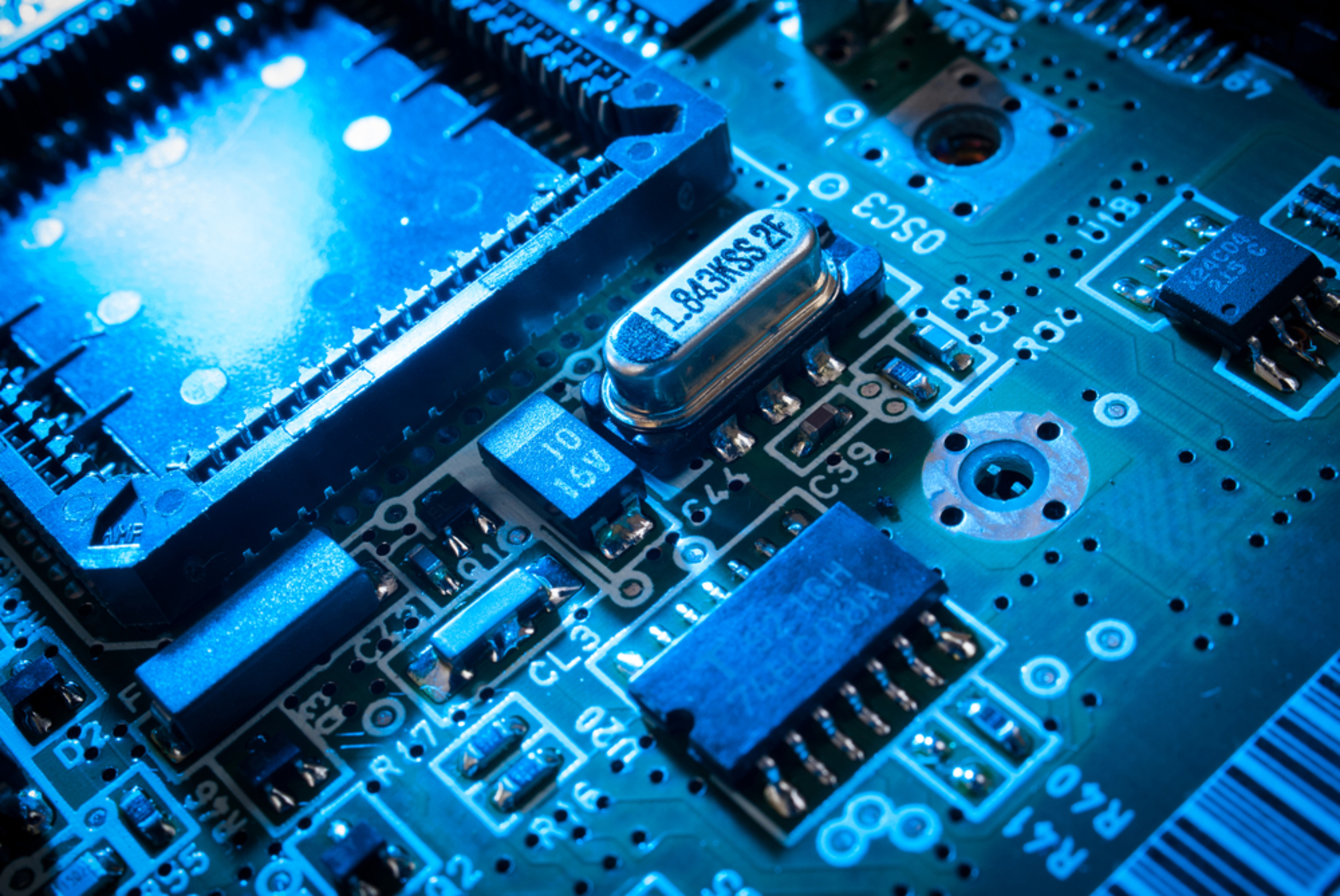
On Tuesday, the day after Donald Trump and Japanese Prime Minister Sanae Takaichi strengthened their alliance in Tokyo to contain China, the Chinese company Eswin , specializing in wafer or silicon substrate manufacturing, began trading on the Star market (China’s equivalent to Nasdaq). This underscores China’s push towards self-sufficiency in a market dominated by Taiwan , Japan , and Germany —critical for Beijing’s plan of developing its own AI that operates independently from the U.S. and its allies. Currently, China produces 50% of the wafers it needs, while Eswin manufactures 7% of the world’s total. Despite being in the red, the company’s shares surged by 198.7% on its first trading day, highlighting the AI boom that is not just confined to the U.S.