
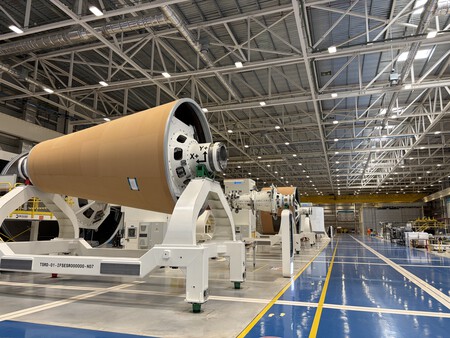
When we think about aerospace materials, images of cutting-edge composites like titanium, high-strength aluminum, and carbon fiber often come to mind. This is not just a perception; many modern technologies claim these materials as their hallmark, promising durability and lightweight properties. However, during a recent tour of Airbus facilities in Getafe, an unexpected revelation emerged about the Ariane 6 launch vehicle—cork is being utilized as part of its thermal protection system. Veronica Villanueva, responsible for Manufacturing, Assembly, Integration, and Testing at Airbus Space Systems in Spain, highlighted this unique feature by saying, “What you see here is yellowish; this is cork.”
The Role of Cork in Launch Vehicle Design
The use of cork might seem surprising in high-tech engineering, but its inclusion in the Ariane 6’s thermal protection underscores the practical realities of aerospace manufacturing. Every element must withstand extreme conditions during flight. This European launcher, primarily designed by ArianeGroup with significant contributions from Airbus, demonstrates innovative uses of everyday materials in sophisticated applications.
From Composite Materials to Cork
Before cork is applied, many structural components undergo a complex manufacturing process. Primarily composed of materials such as carbon fiber and fiberglass, these components start as prepreg materials, pre-mixed with resin. The manufacturing process involves layering these materials onto molds, followed by curing and inspection to ensure the robustness needed for a launch vehicle.
Weight considerations are crucial; every kilogram counts before a rocket reaches orbit. Villanueva emphasizes that the lightweight nature of composite materials is particularly advantageous, despite their higher cost and complexity compared to traditional metals.
Airbus production area in Getafe, where cork is part of the thermal protection for some Ariane 6 structures.
Cork: An Unexpected Thermal Insulator
Once the structures are formed and inspected, cork is added to specific areas as a heat shield. Raúl Medina, head of launchers at Airbus Space Systems in Spain, clarified that the thickness of cork can vary from 2 to 5 millimeters, tailored to the thermal requirements of each component. This intricate process necessitates thermal analysis conducted by specialized engineers, determining how much cork is needed to protect against extreme temperatures.
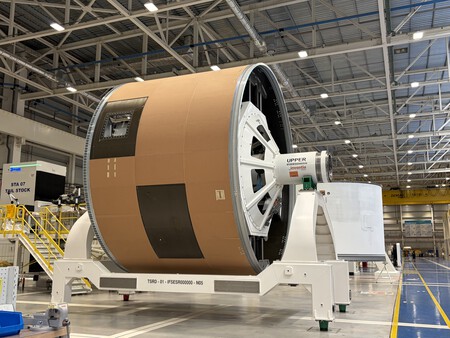
Detail of an Ariane 6 part showing the applied cork thermal protection.
Cork in Aerospace Engineering
Interestingly, cork isn’t new to the aerospace industry. For example, the European Space Agency (ESA) used a specialized aerospace variety of cork in the Qarman CubeSat, which was designed to study atmospheric reentry. In this application, cork’s ability to swell, char, and eventually flake off under heat is exploited to protect sensitive components from high temperatures.
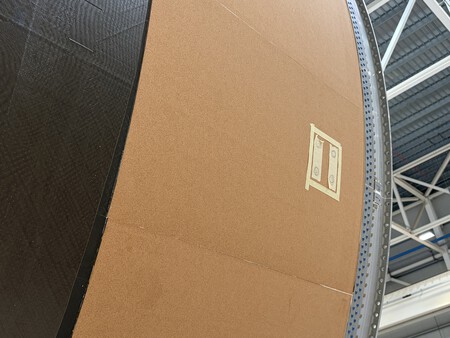
Detail of an Ariane 6 structure highlighting the areas with and without cork protection.
Conclusion: The Surprising Intersection of Nature and Technology
The introduction of cork in the realm of aerospace engineering defies the expectation of only using advanced, synthetic materials. Instead, it perfectly illustrates how innovative solutions can bridge the gap between everyday materials and high-tech applications. As we look to the future, the synergy between natural materials like cork and advanced manufacturing techniques will continue to inspire developments in space technology.