
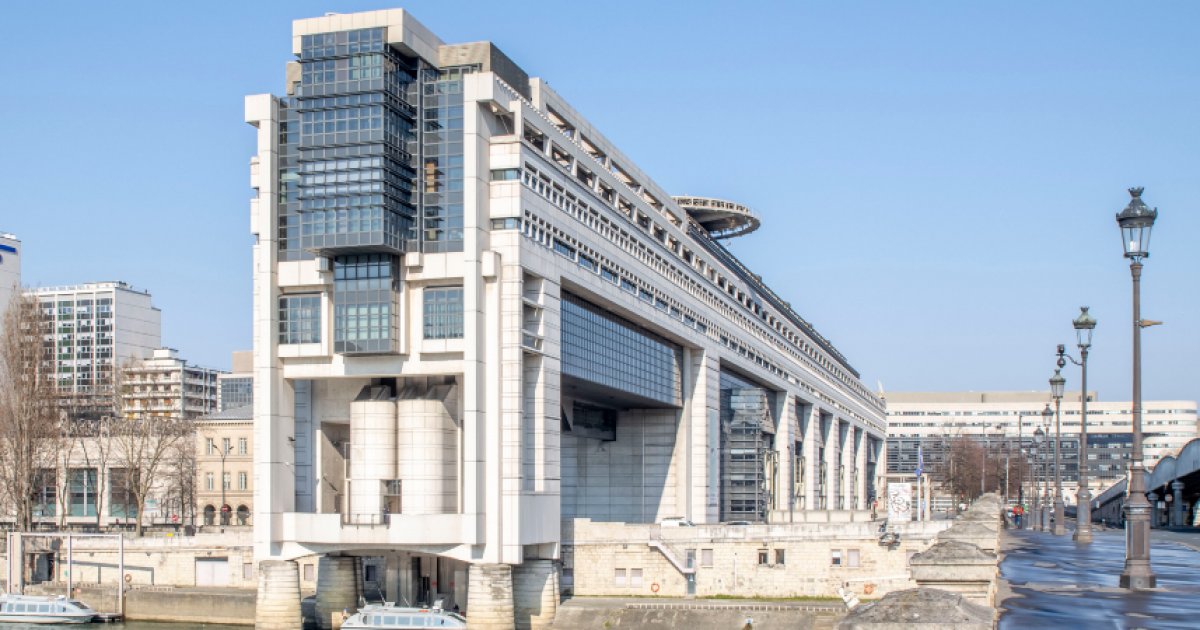
The economic landscape in France has been a topic of concern lately. However, amidst these challenges, the country has successfully maintained its credit rating of “AA-“, which is categorized as “good quality” by American rating agency Standard & Poor’s.
This news is particularly positive as many feared a downgrade due to the deteriorating economic situation. As reported by our colleagues from Le Parisien, France managed to keep its credit rating of “AA-, with a negative outlook”, announced on Friday, May 30.
Maintaining this rating, identical to that in February, raises eyebrows. A financial expert noted that the country’s rating should have been lowered. “If we consider only macroeconomic criteria, a downgrade should have happened. The economic conditions have worsened and growth will be lower than last year,” stated Anne-Sophie Alsif, Chief Economist at consulting firm BDO.
Indeed, the current situation, paired with recent statements, does not bode well. “Given the divisions in the National Assembly, the proposed €40 billion in savings by François Bayrou in the 2026 budget are unlikely to be achieved,” she added. Furthermore, the Prime Minister’s call for “efforts from all French people” has not sat well with many in the nation.
Questioning the Credit Rating
With the country’s economic situation being far from ideal, a pertinent question arises: why has the rating not decreased? Anne-Sophie Alsif provides an insight: “Rating agencies have become political. They tend to avoid criticizing too harshly,” she explained in Le Parisien, concluding with an observation that they wait for a genuine deterioration in economic conditions before slashing ratings.
On a more optimistic note, Eric Dor, Director of Economic Studies at IESEG School of Management, underscores France’s “highly diversified ” economy, which is bolstered by “very strong banks .” This resilience might be one of the factors contributing to the retention of the credit rating.
The Economic Context in France
The economic context in France has been quite complex. With inflation rates increasing and consumer confidence dwindling, many are left questioning the sustainability of the current financial policies. The government’s efforts to stimulate growth have been met with skepticism from both economists and the public.
Another major concern is the public debt , which has been a significant issue for years. Critics argue that the continual rise in debt could pose risks for the country’s long-term creditworthiness . Moreover, as economic indicators fluctuate, so does the optimism surrounding the rebound of the French economy.
Public Reaction and Government Challenges
Public sentiment towards the government’s economic strategy is one of apprehension. Many French citizens are feeling the weight of economic policies that seem to demand more from them, while the government itself is embroiled in political disputes. This tension has led to protests and calls for better transparency and accountability from policymakers.
Furthermore, the upcoming budget discussions are expected to be contentious. With plans for substantial savings proposed, dissent among lawmakers signifies that political instability could further complicate the country’s economic recovery trajectory. The political divisions at the National Assembly are creating an environment where collaboration and compromise appear increasingly challenging.
Future Outlook
Looking ahead, analysts speculate that sustained political infighting and economic instability may threaten France’s ability to maintain its credit rating. Should conditions significantly worsen without decisive government action, a downgrade could be inevitable. However, if the economy stabilizes and growth resumes, these fears might be alleviated.
Ultimately, the outlook for France hinges not only on its economic performance but also on the government’s ability to unite and implement effective solutions. Maintaining the current credit rating amidst such turbulence is commendable, yet it underscores an urgent need for comprehensive strategies that address both immediate economic challenges and long-term stability. As the situation unfolds, stakeholders from all sectors will be watching closely to see how the political landscape and economic policies will shape the future of France.
Published on May 30 at 22:42, NG, 6Medias