
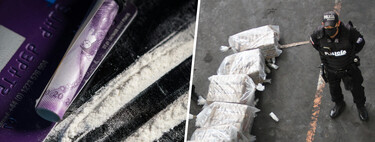
Francia’s Counter-Narcotics Strategy: A New Prison in French Guiana
In recent years, France has faced an alarming surge in drug-related violence. In 2024, 110 people lost their lives due to narcotics-related incidents in the country, with an additional 341 suffering injuries. Although this marks a decline from 2023’s statistics of 139 deaths and 413 injuries, French officials, particularly from the Interior Ministry, deem these figures unacceptable. Their proposed solution? To tackle the problem at its roots.
A New Maximum-Security Prison in French Guiana
Gérald Darmanin, France’s Minister of Justice, recently announced plans for a new maximum-security prison scheduled to open by an estimated 2028. Surprisingly, this facility will not be located on mainland Europe but instead in French Guiana, situated approximately 7,000 kilometers away across the Atlantic Ocean.
“The goal of this new high-security prison is to neutralize the most dangerous profiles within the narcotics trade,” Darmanin stated in an interview, suggesting that the isolation provided by such a distance will effectively sever offenders from their criminal networks.
Understanding the Cocaine Route
French Guiana is an overseas territory that has historically served as a pivotal platform for cocaine trafficking from Brazil and Suriname into Europe. Estimates suggest that 15% to 20% of cocaine entering France does so via this Guiana-to-Paris route. This illicit movement often relies on “mules”—individuals, particularly young, single mothers, driven by abject poverty to smuggle cocaine in exchange for amounts around €7,000 per successful trip.
The flow of cocaine is significant; flights from Cayenne, the capital of French Guiana, often carry 20 to 30 mules, with about a third managing to evade detection.
Details on the Planned Prison
The new prison facility is proposed to be built in the Saint-Laurent-du-Maroni commune, approximately seven kilometers from the urban center and located close to Suriname’s border. The estimated budget for this €450 million project is intended to encompass not only the prison itself but also a court to facilitate the quick processing of associated judicial matters.
Expected to house 500 inmates, the prison will classify 60 as "maximum security" and an additional 15 as "terrorists," allocating special sections for these high-risk individuals. Beyond combating narcotics, this facility aims to relieve pressure from the existing Rémire-Montjoly prison, currently housing nearly 1,000 inmates—a facility designed for only 614.
Ghosts of the Past
While the proposition of a maximum-security prison in the heart of narcotics trafficking might seem straightforward, it carries complexities and echoes of a painful history. Echoing a practice reminiscent of British penal systems, Napoleon III established a penal colony in French Guiana, functioning from 1852 until 1953.
During that century, infamous locations such as the Islands of Salvation and Devil’s Island became notorious for housing both common criminals and political prisoners who endured forced labor, harsh punishments, and mortality rates as high as 75%. The harrowing accounts of those few who returned home stirred public sentiment, paving the way for the eventual closure of these facilities, which are now tourist sites.
Public Sentiment and Concerns
As reported by BBC, the notion of reinstating Guiana’s status as an "overseas prison" has incited resentment among locals. Davy Rimane, a local deputy, criticizes the decision as unilateral, asserting that “relocating high-profile criminals to Guiana revives memories of a terrible past filled with suffering.”
Among those displaced will not only be drug traffickers but also Islamic terrorists, which raises eyebrows among the populace. Criminologist Marion Vannier from the University of Manchester echoes these sentiments, calling the new plan a “bad idea,” arguing that moving dangerous offenders from one under-resourced facility to another not only perpetuates a flawed system but also risks public safety.
While France aims to roll out this new prison by 2028, the significant local dissent and apprehension surrounding the return to a dark chapter of history suggest that achieving this timeline may pose significant challenges.