
Ford’s Electric Future: Collaborating with Renault
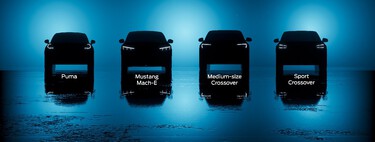
Ford will have at least six electric vehicles (EVs) on the market shortly. However, notably, four of these will not be traditional “Ford” models. The American automaker has confirmed a partnership with Renault to roll out two budget-friendly electric cars, marking a significant shift in Ford’s strategy in Europe.
Expecting Ford’s New Offerings
The partnership will utilize Renault’s Ampere platform to introduce two “affordable” EVs to the marketplace. According to Ford, the first model is expected to hit dealership lots by early 2028, indicating a shift in the brand’s focus to capture a wider customer base in Europe.
It is highly likely that one of these models will feature some aspects of the Renault 5, while a second car may be based on the Renault 4 or Twingo, offering consumers a variety of selections. This collaboration hints at Ford’s increasing reliance on external resources to broaden its offerings.
Manufacturing in France
Ford’s new models will be produced at Renault’s factory in France, which also manufactures the Renault 5 and 4. This facility is well-equipped, with an annual capacity of assembling up to 620,000 vehicles, making it a perfect setting for Ford’s new electric offerings.
The introduction of these new models will boost the existing factory workforce while reinforcing Ford’s commitment to supporting the local automotive industry. As a part of this strategy, the plant may also produce electric variants of vehicles from other Renault Group brands like Nissan, Alpine, and Dacia.
What Does This Mean for Ford’s Identity?
Ford has publicly emphasized that despite the shared platforms, the new electric vehicles will retain “distinctive driving dynamics and authentic Ford brand DNA.” Yet, it raises a pertinent question: how diluted will the Ford brand become in Europe?
Currently, with only the Puma Gen-E and Mustang Mach-E as purely Ford designs, the remaining models—including the upcoming Ford Explorer and Capri—are based on Volkswagen’s MEB platform. This raises concerns about brand identity; will consumers see Ford as merely a badge on externally developed models?
The Two-Speed Strategy
Ford’s approach appears to be a two-speed strategy, focusing its most significant investments on high-margin vehicles that carry established brand recognition like the Raptor and Bronco. Meanwhile, lower-cost, high-volume models, such as the new electric ones, are handed off to third parties.
This strategy, while financially prudent, risks weakening Ford’s brand image in Europe. It could potentially make it more challenging for the company to reclaim its position in the EV market should it choose to pivot back to self-sourcing its models in the future.
The Road Ahead
The recent announcement has also sparked discussions about the future production of the Ford Bronco Sport in Valencia, Spain. This move reflects Ford’s aim to maintain its presence in the European market while integrating more “locally relevant” features into its American models.
Overall, while the impending collaborations with Renault can be seen as a beneficial expansion for Ford’s EV initiative, it undeniably adds layers of complexity to its brand identity. Moving forward, only time will tell how these changes will be received by consumers and how they will affect Ford’s legacy in the automotive industry.