
Ford’s Electric Vehicle Strategy: A Cautionary Tale
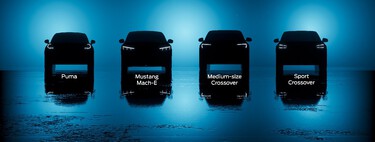
Three years ago, Ford unveiled its road map for Europe , showcasing ambitious plans to electrify its vehicle lineup. Among the announcements were seven all-electric models , aimed primarily at the commercial vehicle segment. However, only one of these vehicles, the Ford Puma , emerged as a true Ford brand model. This electric adaptation was grounded in challenges due to platform restrictions of its combustion-engine predecessor, leaving room for only a 43 kWh battery . Priced above €34,000, the Puma has struggled with a modest highway range of 200 to 250 kilometers , making it a tough sell for consumers who expect more from a modern electric vehicle.
The remaining two models, the Ford Explorer and Ford Capri , are noteworthy for not being native Ford cars. Both utilize the Volkswagen platform and feature tuning that deviates slightly from the German standards, offering a more engaging driving experience. However, this also casts a shadow over Ford’s identity as both models bear a striking similarity to their Volkswagen counterparts, with interior interfaces that scream of pure Volkswagen DNA .
<img alt="The alliance between Ford and Volkswagen points to a problem: all electric cars will be the same" width="375" height="142" src="https://i.blogs.es/2f5159/all-electric-passenger-cars/375_142.jpg"/>Unfortunately for Ford, this reliance on Volkswagen’s MEB platform has backfired. As sales have struggled, the decision to rely on a shared platform has led to cost-cutting measures that have not translated into consumer enthusiasm. Ford faces significant challenges ahead, as the market for electric vehicles has not caught up to the ambitious expectations set by the company.
<img alt=""Motors no longer define cars": Ford is determined to put aside its hallmarks to fight the Chinese car" width="375" height="142" src="https://i.blogs.es/20fe49/ford-motores/375_142.jpeg"/>The Results of a Failed Strategy
Ford’s struggles have culminated in the announcement that it will lay off 1,000 employees at its German plant. Company officials cite lack of demand for electric vehicles as a key reason for the layoffs. They plan to reduce plant operations to a single shift by 2026, citing that so far this year, Ford has sold only 19,000 units of the Explorer, with Capri sales trailing behind. In fact, both models rank poorly on the list of best-selling electric cars in Europe , overshadowed by competitors like Cupra , BYD , and Peugeot .
Despite investing a staggering €1 billion in modernizing the Cologne plant, Ford’s production capacity of 250,000 vehicles per year remains underutilized, operating at just half capacity. This situation is compounded by financial losses in the United States and external economic pressures such as tariffs. In a stark contrast to last year’s profits of $1.8 billion , Ford is now in the red.
This poor performance can be traced back to a risky strategy focusing on two distinct product lines—one targeting the luxury and iconic market , while the other aims for the more affordable segment . Ford’s CEO, Jim Farley , expressed a desire to focus on a market dominated by “iconic cars” rather than “boring” options. While cruising into the EV market, Ford has abandoned established names like the Mondeo and Focus . He stated, “We can face Porsche with the Mustang…be stronger and stronger.”
However, the tightening European emissions regulations—expected to impose hefty fines by 2027—have put pressure on Ford to vastly increase its EV sales. Consequently, the decision to adopt Volkswagen’s MEB platform seemed prudent, yet has yielded criticisms regarding the models’ usability and driving experience.
<img alt=""It is the most humiliating I have seen": Jim Farley's conclusion, Ford CEO, after months studying Chinese cars" width="375" height="142" src="https://i.blogs.es/bc277a/jim-farley-coche-chino/375_142.jpeg"/>Despite reaping the benefits of a ready-to-sell electric vehicle lineup with minimal investment risk, Ford’s design and marketing approach have left consumers unimpressed. The Explorer and Capri might be functional electric cars, but they suffer from being mere copies of their Volkswagen counterparts . Consequently, they have struggled to capture consumer interest in a highly competitive market.
Sales data indicates that only 649 units of the Explorer and Capri have been purchased in Spain, a minuscule fraction compared to Ford’s total registrations of around 21,000 vehicles by the end of August.
<img alt=""It does not hold in the electric era": Ford clarifies why he wants or selling very dark or electric gasoline cars" width="375" height="142" src="https://i.blogs.es/a68b53/2024ford_electricexplorerproductionstart_e-factory_hero_hor/375_142.jpeg"/>The stark reality is that Ford has not succeeded in aligning its brand identity with its electric offerings, resulting in a lack of consumer recognition. The situation is particularly acute in Germany , where the Volkswagen ID.3 has not only survived but flourished to become the best-selling electric vehicle. In contrast, both the Explorer and Capri languish outside the top ranks.
Despite the promise of an electric vehicle market that could be lucrative, Ford’s branding and strategy have faltered, leading to a significant loss in market share and the difficult decision to part ways with a workforce that has invested in the company’s vision.