
The Significance of Camera Trap Findings
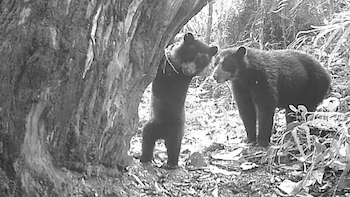
The department of Huila has recently reported two significant findings in the ongoing conservation efforts for the Andean bear (Tremarctos ornatus). Using camera traps, researchers captured images of two female Andean bears with their cubs in different protected areas. These findings highlight the reproductive success of the species and reflect the dedicated teamwork by environmental authorities and community monitoring groups.
Celebrating New Births in Huila
Katherine Arenas, a biologist with the Regional Autonomous Corporation of Alto Magdalena (CAM), expressed her excitement: “We celebrate the birth of spectacled bears in our territory, marking a historic moment for both northern and southern areas, including a municipality where this evidence has never been recorded before.”
Key Discoveries of Andean Bears
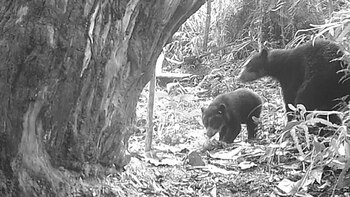
The first notable sighting occurred in the Serranía de Peñas Blancas Regional Integrated Management District, located within Palestine. Here, the South Andean Conservation and Monitoring Ecotourism Service Providers Corporation (Conmosur) recorded a female Andean bear with a six-month-old cub. The footage shows the mother guiding her cub along a nature trail, a critical behavior for their survival.
Ecological Importance of Tree Climbing
Notably, the young cub was observed climbing a tree traditionally used for marking territory and communicating with other Andean bears. These trees serve essential ecological functions, allowing the bears to leave olfactory signals and establish their presence within the habitat.
Continuing Monitoring and Connectivity
The same female bear was recorded in 2024 by another monitoring group through camera traps in the Guácharos-Puracé Biological Corridor. Identification of the bear was made possible by the comparison of facial spot patterns and body markings, ensuring that the same individual was confirmed.
This continuity of monitoring underscores the critical importance of ecological connectivity between protected areas in Huila, essential for the mobility and survival of Andean bears.
Evidence of Reproductive Success
The presence of a mother and her cub signifies a substantial indicator of population health. A thriving ecosystem provides the necessary resources for reproduction and survival.
“It reflects that the ecosystem still offers food, shelter, and safety, which are vital for the Andean bear to successfully complete key life processes,” Arenas explained.
A Historic First in Íquira
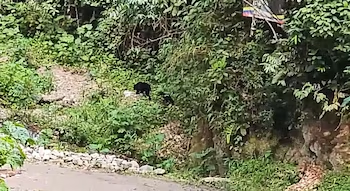
The second significant finding was made in the Cerro Banderas – Ojo Blanco Integrated Management Regional District in Íquira, where the Briodiverso Community Monitoring Group captured an Andean bear with her cub. This marks the first known recorded reproductive event in this area.
The discovery affirms that protected areas are vital for not just the mobility of Andean bears but also the safe reproduction needed to sustain future generations. Each new record contributes crucial insights into the distribution, behavior, and reproductive habits of this endangered species.
The Role of Local Communities
The success of these findings underscores the collaborative efforts between CAM, the South Andean Conservation and Monitoring Ecotourism Service Providers Corporation (Conmosur), and local community groups. By maintaining camera traps and continuous wildlife monitoring, these organizations are playing a vital role in the conservation of Andean bears in Huila.