
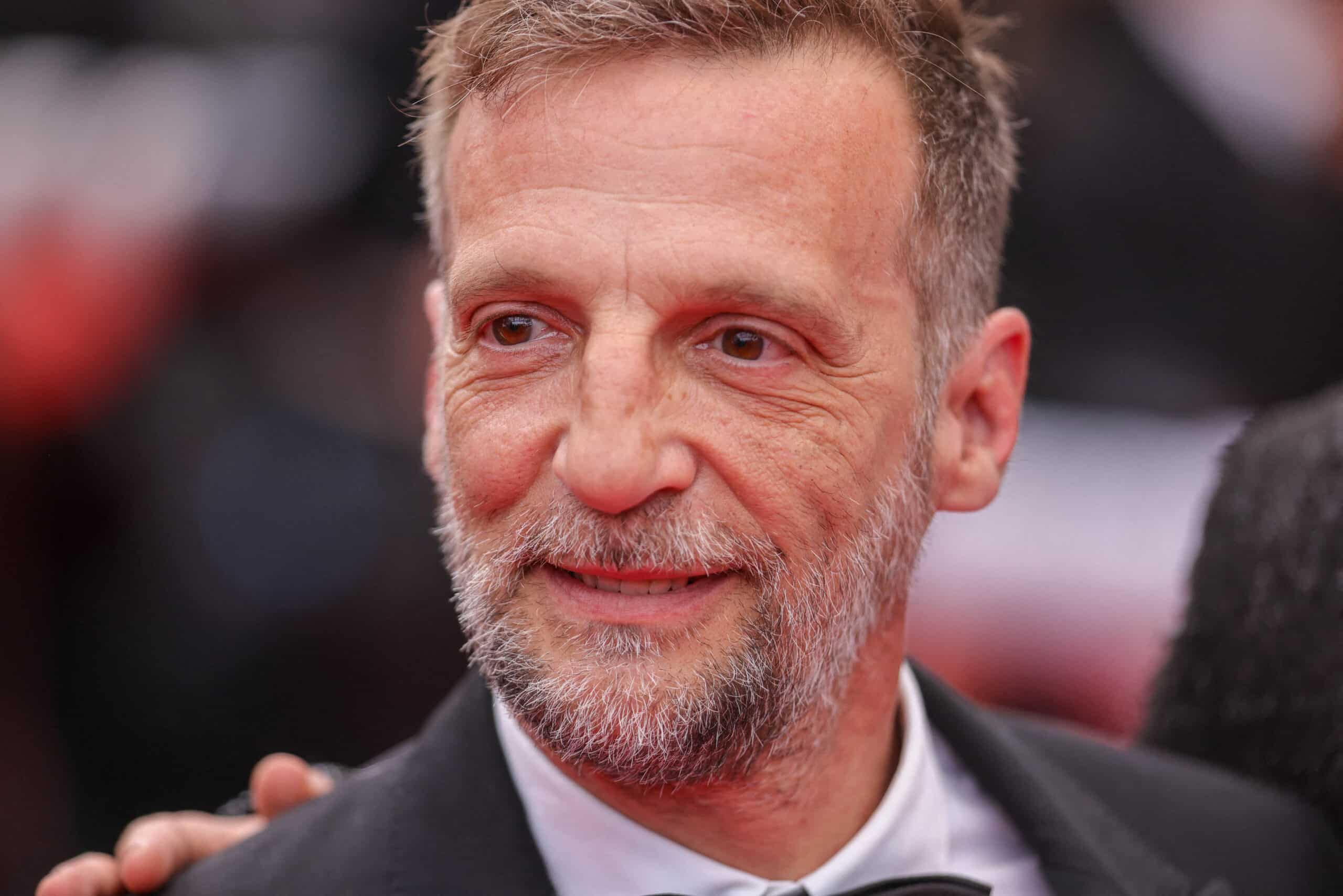
“Il vaut mieux tourner sept fois sa langue dans sa bouche avant de parler”… This is a saying that Mathieu Kassovitz will not forget anytime soon. His recent appearance at the 78th Cannes Film Festival certainly left its mark. After beaming on the red carpet during the screening of Spike Lee’s latest movie, Highest 2 Lowest, the initial excitement quickly subsided for the 57-year-old filmmaker. His remarks during this global event, however, stirred significant controversy.
While the seventh art was being celebrated, the director of La Haine boldly declared that there was a “problem of racism in France.” Later, appearing on LCI, he doubled down by stating, “I believe there are no longer any French of pure descent; instead, they are simply ‘end of race’ as they will blend with others.” This resulted in an immediate wave of reactions across social media, followed closely by some prominent personalities.
Among those reacting was Patrick Sébastien , who didn’t hold back during a CNews interview. The entertainer, known for his song “Petit bonhomme en mousse,” was critical of Kassovitz’s comments, saying: “I have three children: two are white and my daughter is mixed race . I can’t possibly explain to two of my children, ‘You are of the end of race’ while telling the other, ‘No, no, you are superior.’ That just doesn’t make sense.” To stem the rising tension, Kassovitz eventually chose to speak up.
Mathieu Kassovitz: The Actor and Director Apologizes
On May 28th, Kassovitz took to Instagram to address the uproar in a heartfelt video. He began, “ French people, let me immerse myself in your lives for two minutes to discuss a topic that has apparently caused a controversy following an interview that was rather cheerful on LCI. ” He further lamented that it was a “truncated interview that has become insulting for many people.” In light of the backlash, he openly apologized.
Following his apology, Kassovitz took the time to detail his family background to reinforce his identity, emphasizing that he feels he is indeed “French of pure descent.” He assured that he “respects all French people, whether of pure descent or immigrants, whether mixed, imported, or here for a long time.” Yet, he concluded his statement by reiterating: “Technically, yes, the French of pure descent will soon fade as they blend with foreigners.” Whether he will manage to win over critics remains to be seen, but many comments expressed support for his latest statements.
In an age where social media can shape narratives and blow comments out of proportion, Kassovitz’s journey through this controversy shines a light on the sensitive nature of racial discussions in France. It’s important to approach race and identity with care, as the responses triggered by his statements clearly indicate a divided public opinion. The conversations emerging from this situation might serve as a reminder of the complexities of multiculturalism in modern society.
It is no secret that France’s social atmosphere is often charged with discussions on race, immigration, and identity. Kassovitz’s comments opened up avenues for dialogue, reflecting not only individual perspectives but also a broader cultural tension. By sharing his thoughts, he unavoidably painted a target on himself, navigating the often treacherous waters of public opinion.
As the world continues to grapple with these issues, the repercussions of public figures’ words draw attention to the importance of mindful communication. Whether promoting understanding or inciting backlash, statements like those of Kassovitz remind us of the power of language and the influence it holds within societal discourse.