
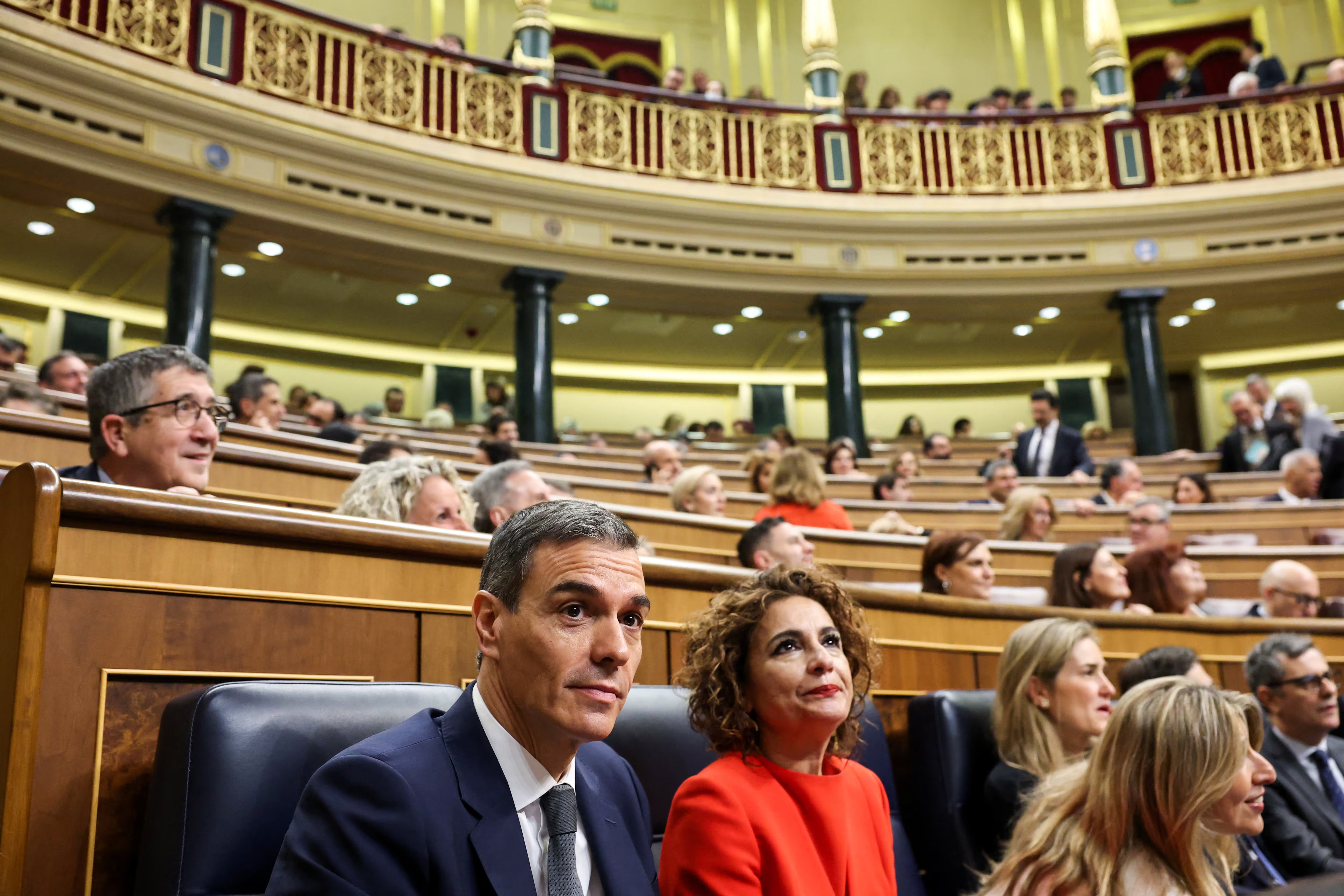
Political Showdown: Feijóo vs. Sánchez
A recent session in the Spanish Parliament saw a heated exchange between President Pedro Sánchez and opposition leader Alberto Núñez Feijóo. The session was framed by ongoing turmoil stemming from the war in Iran and the implications of the Castilian-Leonese elections.
Feijóo’s Accusations and Critique
Alberto Núñez Feijóo, the leader of the People’s Party (PP), initiated his remarks by targeting the coalition party Sumar and their unconditional support for Sánchez’s PSOE. He pointedly criticized Sumar for their electoral defeats, saying, “Congratulations for swallowing everything, with the lies, with the incompetence and with all kinds of corruption. There you have the result: zero seats.” His opening gambit set the tone for an adversarial session, positioning Sánchez as struggling.
Feijóo ramped up his critique by questioning Sánchez’s credibility, referencing the government’s record of suffering “ten electoral defeats of the last twelve.” He referred to Sánchez derisively as “a loser,” mocking the notion that he is a “superhero of democracy,” a title attributed by his minister, Ana Redondo.
Sánchez’s Defense: Credibility in Crisis Management
Sánchez responded robustly, asserting that his government is equipped to manage grave crises, particularly in relation to the war in Iran. He challenged the opposition to clarify their stance. “What are you going to do? Yes to war and no to aid? Or will you do just the opposite?” he demanded, redirecting the focus onto the opposition’s lack of concrete policies.
The PSOE stands in contrast to positions commonly associated with Donald Trump in Europe, with Sánchez seeking to illustrate the complexities of the situation. The PP has taken a lukewarm stance, labeling the incursion as an “illegal war” but suggesting that it may be the lesser evil against a “lousy Ayatollah regime.” Sánchez maintained that Feijóo’s silence, especially after “18 days,” was tantamount to negligence.
Economic Implications and Political Maneuvering
Feijóo also accused Sánchez of leveraging the war for political gain and highlighted the lack of an economic shield, stating, “20 days have already passed,” implying the need for urgency. Various investiture partners criticized the government’s transparency regarding any measures aimed at alleviating the war’s effects, with PNV spokesperson Maribel Vaquero warning, “Don’t risk it.”
Further complicating the political landscape, Feijóo signaled that his party would vote against any omnibus decree concerning the economic shield if it resembled previous failed proposals. He encouraged the government to carefully consider the fiscal plan submitted by the PP.
Sánchez’s Counterattack
Sánchez was quick to dismiss Feijóo’s positioning, stating, “He is already putting the bandage on before the wound,” accusing him of predetermining a ‘no’ vote without full knowledge of the government’s proposed measures. The president reiterated that the PP has consistently resisted measures aimed at protecting the public throughout various crises.
Conclusion
This exchange is emblematic of the fraught nature of Spanish politics where crises provide fodder for intense partisan conflict. As Sánchez and Feijóo continue to exchange barbs, the impact of their dialogue on the public perception of their respective parties remains to be seen. The evolving situation in Iran and the impending economic challenges could not only define their political trajectories but also influence Spain’s broader domestic policies.