
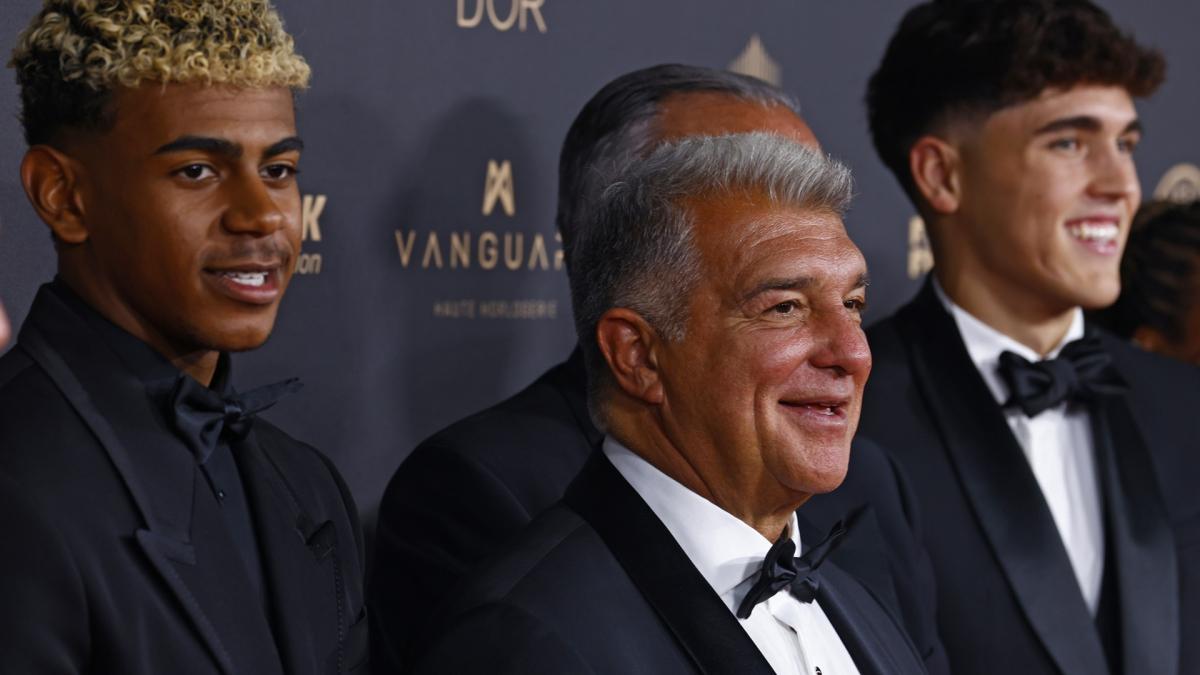
Controversial Refereeing Decisions Ignite Outrage
Barcelona’s recent elimination from the tournament left a storm of frustration and anger among players, fans, and club officials alike. Raphinha, one of the team’s standout players, bluntly declared, “For me it was a stolen match… The refereeing was very bad, the decisions taken were unbelievable.” His passionate remarks come in light of critical officiating by referee Clément Turpin, which included pivotal moments such as the expulsion of Éric García and a disallowed goal for Ferran Torres, raising considerable questions about the fairness of the match.
Joan Laporta’s Fiery Response
Club president Joan Laporta followed suit, expressing his outrage in a press conference focused on the controversial officiating that marred Barcelona’s return leg against Atlético Madrid. Heavyweights like El Chiringuito gathered to witness Laporta’s fiery indictment as he described the match as unacceptable.
Key Issues Raised
Laporta did not shy away from addressing specific issues:
Penalty for Dani Olmo: He emphasized that a clear penalty should have been awarded for an incident involving Dani Olmo, deeming it intolerable.
Éric García’s Red Card: Laporta asserted, “There was no red card for Éric García,” pointing out that Koundé was in position to intercept the ball, meaning García was not the last defender. The initial yellow card shown was in fact, the right call, but he argued that VAR had completely ruined the situation.
Ferran Torres’ Disallowed Goal: Laporta claimed that Torres’ disallowed goal was a decision that should have never been made.
The president’s fallout not only highlighted the contentious decisions but also demonstrated the depth of disappointment that has set in following the team’s early exit from the tournament.
Seeking Answers from UEFA
In his firm stance, Laporta revealed, “We filed a complaint and the response was that it was inadmissible. Now we demand explanations.” This statement encapsulates the frustration that has built up in Catalonia, as the club’s earlier complaints to UEFA went unheard. The undercurrent of dissatisfaction from the management level hints at broader implications for Barcelona’s relationship with governing bodies.
The Aftermath
Laporta’s vehement condemnation is more than just a post-match outcry; it’s a call to action that resonated through the football community in Spain. His comments underline the broader strategic importance in securing fair officiating in high-stakes matches, especially for a club with Barcelona’s storied history.
The contentious nature of the match has put both the players and president in a position where the implications run deeper than mere frustration; it touches on the integrity of the game itself. As fans and stakeholders alike demand better, this incident may just be the catalyst for necessary changes in how officiating is handled in high-pressure environments.
In conclusion, the uproar surrounding Laporta’s remarks and the match itself illustrates the fraught relationship between teams and officiating bodies, drawing attention to the necessity of transparency and fairness in football officiating. As the dust settles, all eyes will remain on UEFA and FIFA to see if they will respond to the mounting calls for scrutiny and reform.