
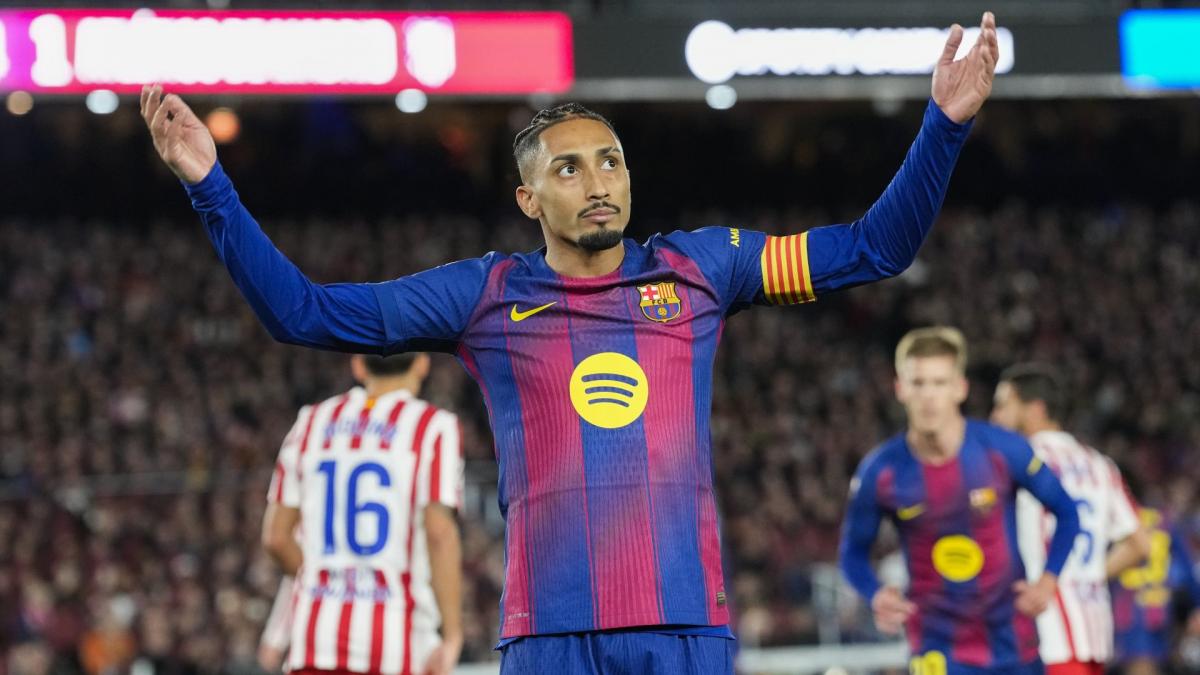
Raphinha’s Gesture Sparks Controversy
FC Barcelona’s recent exit from European competition has left fans and players alike reeling. Despite a triumph against Atlético Madrid in the quarter-final return match, the Catalan giants were eliminated on aggregate. Emotions ran high during and after the match, leading to an unsavory incident involving Brazilian winger Raphinha.
The Incident
Raphinha was not on the pitch during the match but nonetheless became a focal point of criticism. Following the game, he made a controversial gesture aimed at Atlético fans, which was interpreted as taunting them about their progression in the tournament. This behavior was seen as uncharacteristic for a player of his stature, and it has ignited a storm on social media platforms.
Raphinha’s Apology
In response to the backlash, Raphinha took to his social media accounts to address the situation. The striker expressed remorse for his actions, stating, “I ask for forgiveness for my action, which does not correspond to my values or my way of being. It was a gesture made in a moment of tension, in response to a supporter who disrespected me.”
This statement aimed to clarify his intentions while acknowledging that his gesture was not appropriate. However, it remains to be seen whether this apology will quell the controversy surrounding the incident.
The Role of Pressure in Football
Raphinha’s reaction is a reminder of the immense pressure that athletes face, especially during high-stakes matches. In the heat of competition, emotions can easily overrun rational judgment. Though his actions were indisputably misguided, they stemmed from a moment of frustration and provocation, which many fans can empathize with to an extent.
Fan Reactions and Implications
The fan community is divided in its response to Raphinha’s gesture. Some supporters defend him, arguing that his behavior was a natural reaction to disrespect from rival fans. Others, however, believe that as a professional athlete, he should maintain composure irrespective of the circumstances.
The incident raises questions about sportsmanship and professionalism. Should players be held to stricter standards given their public personas? While it’s human to react emotionally, athletes are often seen as role models. Thus, their actions are scrutinized more than those of the average fan.
Moving Forward
As FC Barcelona seeks to regroup after their exit from European competition, they will need to consider how incidents like this affect team morale and public perception. Raphinha’s apology serves as a potential stepping stone for difficult conversations surrounding behavior on and off the field.
Ultimately, Barcelona fans will hope that Raphinha learns from this experience and channels his passion into his performances on the pitch, rather than allowing frustration to boil over in the face of provocation. The club’s reputation—and Raphinha’s—depends on it.
Conclusion
While Raphinha’s gesture may have momentarily overshadowed the team’s accomplishments, his apology is a step toward mending the rift between player perception and fan expectations. The road ahead for Raphinha involves not just technical growth, but also a deeper understanding of his influence within the beautiful game.