
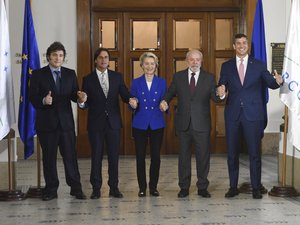
A vote by the 27 member countries of the European Union on the trade agreement with the Mercosur countries will take place this Friday in Brussels. The treaty could be signed this Monday, January 12, in Paraguay. Agricultural anger has not subsided for several weeks, and the signing of this trade agreement between the EU and the Mercosur countries (Brazil, Argentina, Paraguay, Uruguay) has crystallized this discontent.
## What Does This Agreement Contain?
The EU-Mercosur agreement aims to create a free trade zone encompassing over 700 million people and abolishes customs duties on 91% of European exports. This presents a unique opportunity for many EU member states, especially as global economic landscapes shift—partly due to China’s rising commercial power and the unpredictable international policies from the U.S. under Donald Trump.
In such a “geopolitical context marked by instability,” the European Commission emphasizes that trade agreements with allied partners play critical roles in securing economic stability and ensuring access to vital resources. For France, potential benefits include sectors such as electrical equipment, aeronautics, chemicals, and the export of certain cheeses and wines.
## Why Is France Opposed?
France, supported by Italy to a lesser extent, has raised significant concerns regarding the potential influx of cheap imports from Mercosur, particularly beef and sugar. Estimates suggest that 99,000 tonnes of beef could enter Europe annually at a preferential rate of 7.5%. Although this accounts for a small fraction—less than 2%—of Europe’s overall beef consumption, it has prompted fears among farmers about unfair competition.
The opposition to the trade agreement has evolved into a dramatic political issue, garnering unanimous dissent across the French political spectrum. All major agricultural unions, particularly the top three, stand against the agreement. This overwhelming opposition has left the French government apprehensive about possible protests and disruptions in response to a signature. President Emmanuel Macron, a known Europhile, indicated his opposition to the agreement just days before the vote, highlighting the potential backlash from the agricultural sector.
## Will This Agreement Be Signed on January 12?
The agreement is closer to being signed than ever, following recent concessions from the European Commission, including the suspension of a carbon tax on fertilizers—a significant request from France and Italy. While Italy appears more convinced, Ireland remains staunchly opposed, with Deputy Prime Minister Simon Harris labeling the concessions as insufficient.
France is actively engineering a coalition of countries opposing the treaty, seeking support from nations like Poland, Austria, and Hungary. However, the political chess game may not conclude there; Ursula von der Leyen, the president of the European Commission, might still initiate the agreement this January 12 in Paraguay.
Despite this potential progression, the ratification process is far from complete. As French Minister of Agriculture Annie Genevard pointed out, the European Parliament will ultimately decide on the agreement. The intensity of debate ensures that this negotiation saga—a 24-year-long endeavor—remains unresolved, with the situation evolving daily. The agricultural community’s protests and concerns may continue to influence the course of this pivotal trade agreement in the months to come.