
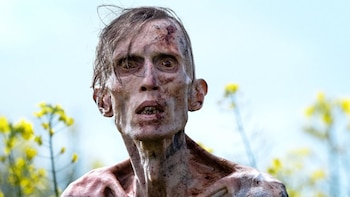
Two decades after the viral chaos that altered the history of modern horror cinema, the apocalypse has returned to screens with 28 Years Later (*Exterminio 3* in Spanish), the third installment of the iconic franchise that began in 2002 with 28 Days Later.
However, beyond its plot, what is generating buzz in Hollywood is how filmmaker Danny Boyle and cinematographer Anthony Dod Mantle decided to film each sequence.
Both utilized iPhones , specifically several models of the iPhone 15 Pro and Pro Max , devices capable of recording video in 4K with professional color profiles like Apple ProRes and log .
“As it is a horror film, we used it in the violent scenes to emphasize their impact. Now that 4K is available on all our phones, you just have to turn it on in the settings, and you can achieve cinematic-quality recordings . That’s why we wanted to use that technology,” Boyle stated in an interview with *IndieWire*.
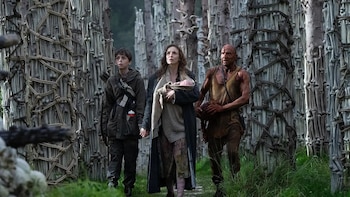
Far from settling for a single device, the team constructed customized rigs holding multiple phones at the same time to capture scenes from various angles.
“It’s easy-to-use technology. It’s a bit complicated to synchronize everything in post-production, but it’s a marvel,” he expressed.
In some shots—especially the more violent ones—they employed up to 20 iPhones simultaneously , something that Danny Boyle defined as “a portable and economical version of the bullet time from The Matrix.”
“It was amazing to be able to film in such remote locations in England and Scotland, without depending on a huge production crew. It’s light, affordable, and allowed us to explore long-abandoned places ,” he explained.
Despite his enthusiasm for the Apple device, the filmmaker pointed out that the movie was not filmed exclusively with iPhones. Additionally, Panasonic cameras, drones , and other equipment were used to complement the cinematic look, especially in larger-scale scenes.
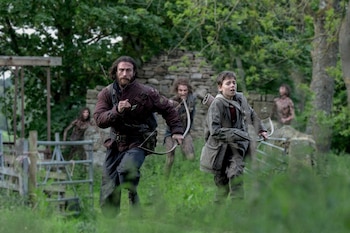
“Sony is desperate for us to say: ‘Don’t let everyone think it was filmed only with the iPhone.’ But the iPhones played a key role, and that can’t be denied,” he remarked.
The choice to film with low-budget digital cameras is not new to the saga. When 28 Days Later premiered in 2002, it was revolutionary for its documentary-like aesthetic .
The grainy and unstable image distinguished it from typical zombie genre blockbusters, giving it an authenticity that made it a cult classic.
“It was impactful and visceral. We weren’t imitating American action cinema, but in the end, we connected with its audience nonetheless ,” recalled Danny Boyle.

Exterminio 3 thus joins a small yet significant group of films shot almost entirely with phones, such as Tangerine (2015), Unsane (2018), and High Flying Bird (2019).
The film continues the legacy of a highly contagious fictional virus that devastated the UK and beyond. This time, the story is set 28 years after the original outbreak.
The few survivors live on a quarantined island off the British coast, but the apparent peace collapses when one of them breaks the rules and encounters a transformed world, altered by both the infected and the remaining humans.
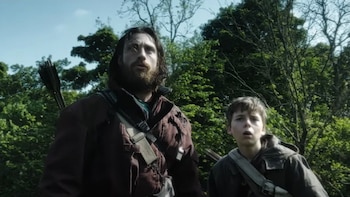
Available since its theatrical release on June 20, 28 Years Later will also be available on Apple TV+ soon.