
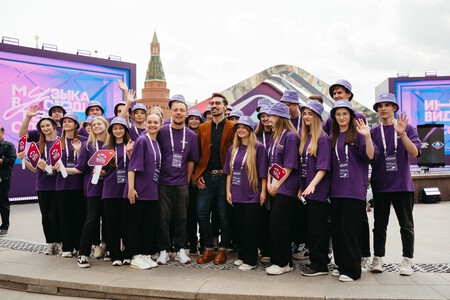
The Rise of “Interview”: Russia’s Alternative to Eurovision
You may have your personal preferences when it comes to music festivals, but one thing remains clear: Eurovision is about more than just catchy tunes and dazzling performances. Historically laden with political undertones, the festival has recently faced particular scrutiny due to geopolitics, especially with Russia’s invasion of Ukraine. In response to being excluded from Eurovision, Russia has decided to launch its own festival – Interview – reminiscent of Soviet-era gatherings.
The Background of Interview
At its core, Interview pays homage to a time when a similar festival thrived during the 1960s and 1970s, serving as a cultural exchange among the socialist bloc nations. This pinnacle of musical expression was shuttered in the early ’80s due to the rise of political movements such as Solidarity in Poland, and with the eventual collapse of the USSR , it faded into obscurity.
This revival has been in the works since February 2023, when President Vladimir Putin ordered the creation of Interview. The launch promises a new cultural spectacle, with the first event set to take place on October 20, 2023 , in Moscow . In June, early participants were announced, including various countries mainly from the geopolitical spheres of BRICS and the CIS , revealing Russia’s aim to assert its influence through cultural means.
Participation and Representation
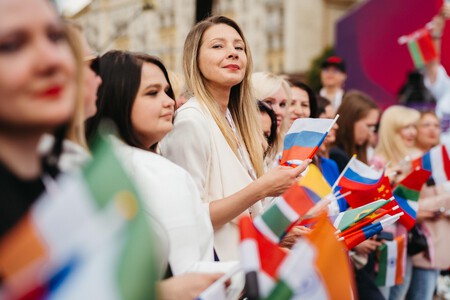
Initially suggested participation included countries like Azerbaijan, Belarus, Venezuela, and Vietnam , among others, totaling around 20 nations . This endeavor not only focuses on entertainment but also serves as a vehicle for geopolitical alliances. One intriguing participant announced is Brandon Howard , the flagbearer artist from the United States, which adds a unique twist considering current relations.
The Geopolitical Undertones
On a deeper level, Interview underscores Putin’s desires for Russia to regain cultural prominence while countering what he terms “Western liberal values.” A Russian senator has touted the festival as a celebration of “real music” as opposed to what they perceive as the superficialities of Eurovision. This commentary hints at a broader cultural agenda, explicitly positioning Interview as a counterweight to Eurovision’s progressive values.
Challenges Ahead
However, Interview faces significant hurdles. The festival’s roadmap reveals logistical challenges, notably in audience engagement. While Eurovision thrives on viewer participation through live voting and a robust online presence, Interview’s digital footprint is nearly non-existent, with a meager social media following. Moreover, the time zone disparities could hinder real-time audience engagement, especially when countries like the U.S. and Saudi Arabia participate, creating scheduling conflicts.
The Cultural Commentary
Despite being touted as a cultural revival, the viability of Interview as a music festival remains uncertain. This inadequacy is underscored by Russia’s disconnection from the independent artistic communities that thrive within the Eurovision framework. The challenge is to appeal to an audience drawn to diversity and openness, contrasting sharply to the conservative values promoted by the Kremlin.
Both cultural and geopolitical agendas intertwine here, and as Interview gears up for its debut, the critical question looms: can it genuinely rival Eurovision’s global reach and popularity?
Ultimately, Interview doesn’t merely represent a quest for cultural revival; it symbolizes Russia’s deeper aspirations in the evolving geopolitical landscape. The festival will be a litmus test for Russia’s cultural ambition, highlighting whether it can foster meaningful engagement, or whether it will evaporate into another fleeting attempt at cultural significance.