
The New Energy Landscape: Europe Turns to North Africa
With the escalation of the war between Russia and Ukraine, Europe has been compelled to rethink its energy dependencies. The continent has severed ties with Russian gas, turning instead to the United States for supplies. However, geopolitical complexities, highlighted by events like the blockade of the Strait of Hormuz, have convinced Europe to seek alternatives closer to home—specifically in North Africa.
Abundant Resources Awaiting Development
North Africa emerged as a promising energy hub due to its rich natural resources. The region boasts abundant solar and wind assets, with vast stretches of available land to harness renewable energy. As Europe seeks reliable and affordable energy sources, the critical question becomes: can North Africa efficiently connect and deliver this power to European markets?
Infrastructure Development in North Africa
Emerging Projects
As part of this vision, several key energy projects are underway across North Africa:
- Morocco aims to increase its renewable energy capacity by 16 GW, investing approximately $16 billion over the next five years.
- Tunisia targets a 50% share of renewables by 2035, having already tendered for 2.3 GW of solar and wind projects. Notably, Norwegian company Scatec has initiated construction on the 120 MW Sidi Bouzid II solar plant, scheduled for completion by 2027. The 600 MW Elmed submarine cable will further enhance Tunisia’s connectivity with Europe via Sicily.
- Algeria plans to connect 15 GW of renewable energy to its grid by 2035, starting with an initial 3.2 GW of solar capacity.
Economic and Strategic Importance
These initiatives are not just vital for energy generation but are also pivotal for the economic growth of North African nations by enabling job creation, infrastructure development, and attracting foreign investment. For Europe, diversifying energy suppliers has become an urgent necessity; the EU is keenly focused on renewable hydrogen, as outlined in its Hydrogen Strategy. If successful, these projects could provide cleaner and cheaper energy options directly from neighboring countries.
The Risks of Dependency
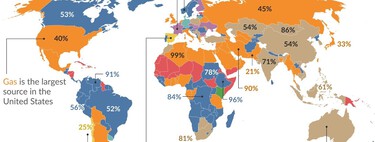
One of the salient lessons from the conflict in Ukraine is the danger of depending on external forces for energy needs. Tunisia, for instance, currently derives 95% of its electricity from natural gas, with over 60% imported. This situation highlights the fragile nature of energy security in the region. According to the International Energy Agency (IEA), despite North Africa being a significant global oil and gas supplier, the region relies heavily on fossil fuels for over 90% of its electricity generation.
The Role of Italian Company Snam
Adding to the dynamics of this energy shift, the Italian company Snam has secured a 49.9% stake in gas pipelines connecting Italy with Algeria and Tunisia. This strategic positioning allows Snam to facilitate potential conversions to hydrogen transportation, making Italy a critical player in the anticipated energy transition.
Technical Considerations: Energy Transfer
Key considerations include whether energy will be transmitted via submarine cables or existing gas pipelines converted for hydrogen transport. While the cable option is progressing—with Italy hiring Prysmian for a 600 MW interconnection with Tunisia—the conversion of gas pipelines remains theoretical. Spain and Morocco also planned an electrical interconnection back in 2019, but progress has been slow.
Challenges Ahead
Though the promise of a North African energy hub appears enticing, it is plagued by challenges. Significant official commitments and billions in investments are yet to translate into operational capacity. Past initiatives like the Desertec solar project serve as historical reminders of the complexities involved.
On the economic front, while North Africa’s sun makes producing green hydrogen cheaper than in many other regions, it still cannot compete with naturally sourced hydrogen priced at $1-2 per kg. A recent study from the Technical University of Munich indicates that only a few African locations may achieve competitive pricing by 2030. Currently, without subsidies, the majority of renewable energy projects lack profitability.
Conclusion
As Europe seeks to secure its energy future amidst global uncertainties, the potential indigenous renewable resources in Morocco and Tunisia appear as a beacon of hope. However, transforming this potential into reality will require overcoming political, technical, and economic hurdles.