
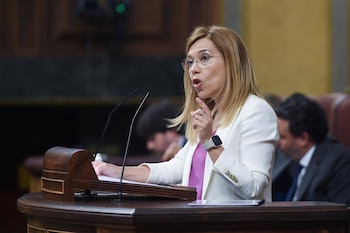
The New Era of Leadership: Ester Muñoz Takes Charge as Spokesman of the Popular Group
The political landscape in Spain is constantly evolving, and the recent changes within the Popular Group in Congress are a testament to this dynamism. Following the transition from former spokesman Miguel Tellado to the new spokesperson Ester Muñoz, the Party has made significant adjustments that reflect a focus on continuity and collaboration.
Continuity Amidst Change
Ester Muñoz has chosen to maintain a substantial portion of the existing team that worked under Miguel Tellado since November 2023. This decision highlights her commitment to stability and reflects confidence in the capabilities of her team. Notably, she has appointed Ana Alós, the deputy from Huesca, as her attached spokesman. Alós previously served as vice-secretary for equality and conciliation within the party until the National Congress that was held last weekend.
The choice to retain veterans like Macarena Montesinos as the general secretary illustrates Muñoz’s strategy of blending experience with new ideas. Montesinos has extensive political experience, having served as a deputy for Alicante for several years, and she is expected to play a crucial role in guiding the group’s direction.
Strategic Appointments
One of the most notable appointments in this new configuration is Ángel Ibáñez, the deputy from Burgos, who has been selected for his “demonstrated capacity” and experience. Ibáñez previously served as a councilor and spokesman for the City Council of Burgos and held the position of Minister of the Presidency at the Junta de Castilla y León from 2019 to 2022 under the presidency of Alfonso Mañueco. His extensive background in governance makes him a key asset in the shadow cabinet.
As highlighted in the official statement from the Popular Party, these moves aim to utilize the strengths of established politicians while also integrating new // perspectives that align with the evolving needs of the electorate. This is particularly crucial as Spain faces pressing issues in economic policy, social justice, and public security.
Adapting to Demands of the Time
The political climate necessitates that leadership be adaptable and responsive to contemporary challenges. With Patricia Rodríguez retaining her role as spokesman in the Social Rights Commission, the focus remains on social issues that resonate with constituents. Meanwhile, Bella Summer from Huelva will channel her efforts into the Road Safety Committee, addressing significant concerns surrounding public safety and legal compliance.
Moreover, the strategy includes a robust presence in the Treasury and Public Function Commission, with the attachment of spokespersons such as Cayetana Álvarez de Toledo and José Vicente Marí Bosó. Their participation lends credibility to the party’s commitment to examining fiscal policies and governance structures. This focus will be vital in the upcoming sessions where economic recovery strategies and social welfare programs will be front and center.
Dynamic Role Assignments
The announcement regarding the adjustments does not just revolve around new appointments; it also indicates a careful reshuffle of roles among existing members. For instance, Sofía Acedo will continue her inquiries directed at the Interior Minister, Fernando Grande Marlaska, in her capacity as spokesperson for migrations. These roles are crucial as migration issues remain a contentious topic in Spain’s political discourse.
The shifts also imply a blend of established members and newcomers, thus ensuring that there is a balance between innovation and tradition. This is particularly crucial for a party that wishes to connect with both younger voters and the more traditional base that has long supported the Popular Group.
In addition, the retirements of certain figures, including Jaime de Olano and Álvaro Pérez, signify a natural evolution in the political ranks, making space for fresh ideas while ensuring that existing expertise remains a part of the conversation.
As Spain moves forward, the implications of these changes may set crucial precedents for future governance models within the Popular Party. With a blend of seasoned politicians and new blood, the Popular Group’s endeavor to resonate with the broader electorate is poised to unfold in the coming months.
In conclusion, Ester Muñoz’s leadership within the Popular Group presents a dynamic and strategic approach towards navigating Spain’s complex political landscape. By choosing to retain experienced members and appoint capable deputies to pivotal positions, she is setting the stage for a comprehensive strategy aimed at addressing urgent societal issues while maintaining a balance between tradition and innovation. As we observe the unfolding dynamics in Congress, it is clear that the choices made in this restructuring will have lasting effects on political dialogue in Spain.