
Eric Schmidt’s Bold Venture into Astronomy
The announcement that Eric Schmidt, former CEO of Google, and his wife Wendy are funding not one, but four space telescopes has shaken the foundations of modern astronomy. Their ambitious project aims to operate independently from the traditional, often cumbersome mechanisms of governmental and academic research funding, presenting a fresh approach to scientific exploration.
A Shift in Astronomy’s Financial Landscape
For decades, astronomical research has relied heavily on public funding and government agencies. Building telescopes, particularly those like Hubble, takes years of preparation with numerous reports and bureaucratic hurdles. However, the Schmidt Observatory System challenges this model. By injecting private capital into the development of cutting-edge observatories, the Schmidts are pioneering a new era where risk and innovation can thrive more freely.
Filling the Gaps Left by Traditional Institutions
The Schmidt Observatory System emphasizes risk, speed, and open science. Rather than competing with existing space agencies, the initiative aims to address the gaps left by lengthy processes and restrictive public budgets. The Schmidts are interested in financing ambitious scientific concepts that struggle to secure funding due to their unconventional approaches or timelines.
Introducing Lazuli: An Innovative Telescope
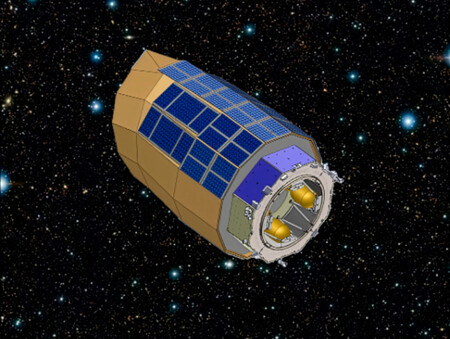
At the heart of this venture lies Lazuli, the only one of the four projects designed to operate in space. This observatory is not merely a comeback for traditional telescopes but is equipped for comprehensive scientific research—from monitoring transient astronomical events to observing exoplanets. Its flexible design allows for rapid observations that larger public observatories may find challenging.
A New Orbital Advantage
Unlike Hubble, which orbits Earth at about 500 kilometers, Lazuli will operate in a lunar-resonant orbit much further away. This position is expected to provide a clearer view of cosmic phenomena, enabling fast and continuous data streaming for scientific analysis.
A Multifaceted Instrumentation Approach
Lazuli will be a unique platform equipped with multiple instruments to conduct various forms of astronomical research:
- Wide-field Optical Imager: Provides high-cadence photometric observations across a 30′×15′ field of view.
- Integral Field Spectrograph: Covers a broad wavelength range from 400 to 1700 nm, optimized for rapid analysis.
- High Contrast Coronagraph: Facilitates direct observation of exoplanets, achieving impressive contrasts for data clarity.
The Era of Distributed Telescopes
Alongside Lazuli, the Schmidt initiative includes multiple array systems, such as Argus and Deep Synoptic Array (DSA). These systems utilize modular technology to manage large arrays of telescopes, enabling them to gather and analyze data in real time.
- Argus Array: Combines 1,200 optical telescopes in Texas aimed at real-time sky observation.
- Deep Synoptic Array: Employs 1,600 radio antennas in Nevada to frequently map the sky and detect transient events quickly.
- LFAST: Aimed at biosignature searches, utilizing 20 large mirrors configured for spectroscopy.
Pioneering a New Scientific Paradigm
Ultimately, the Schmidts’ venture represents an experiment not only in astronomy but in the very fabric of the scientific system. By building and operating large-scale observatories more efficiently and embracing open data sharing, the initiative could set a precedent for how future scientific projects are conceived and executed.
As this ambitious endeavor unfolds, the potential for groundbreaking discoveries—and perhaps a redefined approach to scientific inquiry—remains an exciting prospect in modern astronomy.