
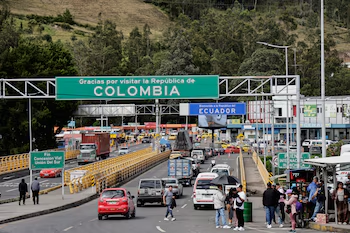
Ecuador Reports Trade Surplus with Colombia Amid Tariff Implementation
Ecuador has reported a surprising trade surplus of USD 62 million with Colombia as of March 2026. This figure marks a notable shift from the historical deficit that had been around USD 1,000 million in recent years. The surplus coincides with the introduction of a 30% tariff on Colombian products, enacted by President Daniel Noboa’s government.
Shift in Trade Dynamics
Historically, Ecuador’s trade balance with Colombia has been characterized by a negative trajectory, largely due to higher imports than exports. However, this recent surplus indicates a significant change. Experts caution that this shift is less about a surge in Ecuadorian exports and more reflective of reduced import activity from Colombia.
The tariff, which took effect in February 2026, was justified as a measure to protect national production and address security risks, such as drug trafficking and illegal mining in border areas. Consequently, the increase in costs associated with Colombian goods has led to a decline in import volumes, resulting in the reported surplus.
Impact on Ecuadorian Exports
While the reduced imports from Colombia have favored Ecuador’s trade balance, it’s essential to note that this does not reflect a proportional increase in Ecuadorian exports to Colombia. The trade imbalance can be attributed primarily to the contraction of imports rather than a robust growth in exports, raising questions about the long-term sustainability of this surplus.
Ecuador enjoys a historically dynamic trade relationship with Colombia, typically involving an annual exchange of around USD 5 billion. The introduction of tariffs threatens to disrupt this balance, especially as Colombia is a key supplier of manufacturing, processed foods, and industrial products.
Colombia’s Countermeasures
In response to Ecuador’s tariff measures, the Colombian government has implemented retaliatory tariffs on over 50 Ecuadorian goods, with potential expansions to other sectors in the future. Additionally, Colombia has taken further steps, such as temporary energy supply restrictions and exerting diplomatic pressure within the Andean Community of Nations (CAN).
This tit-for-tat exchange has raised concerns about a trade escalation that could have broader implications for regional economic integration. The CAN, which promotes free trade among member countries, now faces tensions stemming from unilateral decisions that jeopardize economic collaboration.
Divergent Policy Approaches
The trade conflict underscores the fundamental differences in public policy between Ecuador and Colombia. Ecuador’s more restrictive approach, linked to security and economic control, stands in contrast to Colombia’s commitment to trade openness. This divergence adds a political dimension to the ongoing trade disputes.
Challenges and Future Outlook
Although Ecuador’s reported surplus may be viewed as a short-term achievement in trade policy aimed at reducing deficits, several side effects may arise. Higher prices for imported goods, reduced availability of certain items, and possible inflationary pressures could ensue as a result of these tariff measures.
Furthermore, protectionist policies risk creating market distortions that could adversely affect industries reliant on Colombian imports, impacting production costs and overall competitiveness.
Looking forward, the balance of trade between Ecuador and Colombia will hinge on the progression of this tariff conflict and the potential for bilateral negotiations. A prolonged escalation could drastically reduce trade volumes, while normalization of relations might reverse the current surplus and revert to historical trends. Ultimately, the positive trade balance of USD 62 million should be interpreted within a specific economic context and not as an indicator of a foundational transformation in Ecuador’s foreign trade landscape.