
New Coordinated Efforts for Peace in Gaza, Iran, and Ukraine
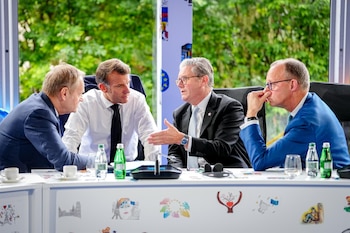
On a decisive day for international diplomacy, the Chancellor of Germany , Friedrich Merz, the President of France , Emmanuel Macron, and the British Prime Minister , Keir Starmer, participated in a critical telephone conversation to establish a coordinated stance regarding ongoing crises in the Gaza Strip , Iran , and Ukraine . This latest communication took place on Saturday, emphasizing the urgent need for a unified approach to global issues that have drawn widespread concern.
The timing of this dialogue is particularly notable, as it follows a recent joint statement issued on Friday, where these leaders collectively stressed that “the time has come to end the Gaza War .” This statement reflects not only a shared sentiment but also a concerted effort to find a resolution to escalating conflicts in the region. It also comes on the heels of new discussions concerning Iran’s nuclear program, which were held in Istanbul, Turkey , highlighting the interconnected nature of global political challenges.
Importance of Coordinated Responses
In a message shared via his X account, Chancellor Merz outlined the primary objective of their latest discussions: to consolidate their positions on these pressing crises. “We will take the following steps very coordinated in the next few days,” he indicated, underscoring the necessity for a strategic approach. This collaboration between the three nations hints at the European Union’s resolve to partner effectively to enhance stability in their regions and beyond.
President Macron further reinforced this commitment, stating the importance of cooperation amid global crises. “Together, we are determined to promote peace and security , with unity, coherence, and responsibility,” he stated, emphasizing the shared goal of the leaders during this tumultuous period. The capability of European powers to leverage dialogue for collective action may indeed serve as a significant force against adversity.
Specific Plans for Humanitarian Assistance
Alongside overarching diplomatic initiatives, the UK Prime Minister , Keir Starmer, has laid out specific plans for humanitarian efforts in the region. According to a statement released by Downing Street , Starmer explained how the UK intends to collaborate with partners, such as Jordan , to facilitate the airlift of aid and the evacuation of children requiring medical attention from the conflict-stricken areas.
This initiative illustrates a proactive approach to addressing not just the political implications of conflict, but also the humanitarian crises that arise in its wake. Starmer’s insistence on creating “solid plans” aims to transform what has been a transient ceasefire into a more lasting peace , ensuring that the needs of vulnerable populations are met even amid geopolitical tensions.
Calls for Lasting Peace in Gaza
Starmer’s message to his fellow leaders highlighted the significance of moving beyond emergency responses to establish a more sustainable peace. He pointedly remarked, “the fire in Gaza, that is so missing,” needs to be addressed through enduring solutions rather than temporary fixes. This focus on comprehensive peace accords may play a crucial role in re-establishing stability in a region marred by years of conflict.
The collaboration among these European leaders underscores the broader implications of unity against common challenges that resonate not only within Europe but also globally. Building alliances based on mutual interests is crucial in today’s interconnected world, where crises in one region can quickly escalate and affect others.
As these nations prepare to undertake the next steps in their coordinated efforts, attention will undoubtedly remain on the global community’s reaction. The sincerity and efficiency of their plans may serve as a benchmark for how modern governance can pivot towards genuinely meaningful diplomatic engagements, promoting not just peace but also a united effort to address humanitarian needs.
In conclusion, as the geopolitical landscape continues to shift, the resolve demonstrated by Merz, Macron, and Starmer may offer a glimmer of hope. It illustrates the power of collaboration and the pressing need for a unified, compassionate approach to real-world problems. The upcoming days will be critical in determining whether these leaders can translate their words into concrete actions that provide relief and pathways to peace.