
Trump’s Message to Petro: A Tense Exchange
The Context Behind Trump’s Remarks
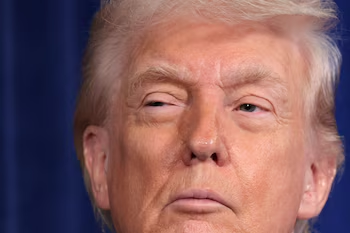
During a press conference, former U.S. President Donald Trump made a striking claim regarding Colombian President Gustavo Petro. In reference to the ongoing drug conflict, Trump asserted, “He has cocaine factories… You have to take care of your ass.” This statement has ignited significant media attention, amplifying existing tensions between the two leaders, particularly following recent political events in Venezuela.
Specific Allegations by Trump
Trump’s accusations are serious. He suggested that Petro is involved in cocaine production and trafficking to the United States. This sort of rhetoric is not new for Trump, who has frequently associated South American leaders with drug trade issues. Trump’s framing raises questions not only about Petro’s administration but also about the broader implications for U.S.-Colombian relations.
Petro’s Response: Defending His Integrity
President Gustavo Petro quickly responded to Trump’s allegations. On December 10, 2025, Petro dismissed Trump’s claims as unfounded and politically motivated. He emphasized, “I have nothing to hide… unlike others,” referencing issues like human rights abuses and political prisoners associated with previous administrations. Petro’s defense underscores his commitment to transparency and accountability while challenging the narrative put forth by Trump.
Political Ramifications in Colombia and the Region
Petro warned of a potential escalation in tensions between Colombia and Venezuela, given the recent missile attack in Caracas. He called for international action, stating that regional security is paramount. His emphasis on diplomatic solutions reflects his stance against military intervention, advocating instead for peaceful resolutions to internal conflicts.
A Call for Dialogue and Respect
In his remarks, Petro also urged Latin American nations to prioritize dialogue and mutual respect. He believes these principles are essential for regional stability, particularly in light of the historical complexities involving drug trafficking and political corruption. His stance seeks to reformulate Colombia’s international image, positioning the nation not as a drug haven but as a partner in democratic governance.
Conclusion
The exchange between Trump and Petro shows the complexities of international diplomacy in the Americas. While Trump resorts to provocative statements reflecting a law-and-order agenda, Petro counters with calls for transparency, integrity, and a diplomatic approach. As both leaders navigate these treacherous waters, the future of U.S.-Colombian relations hangs in the balance, with the potential for significant ramifications across Latin America.