
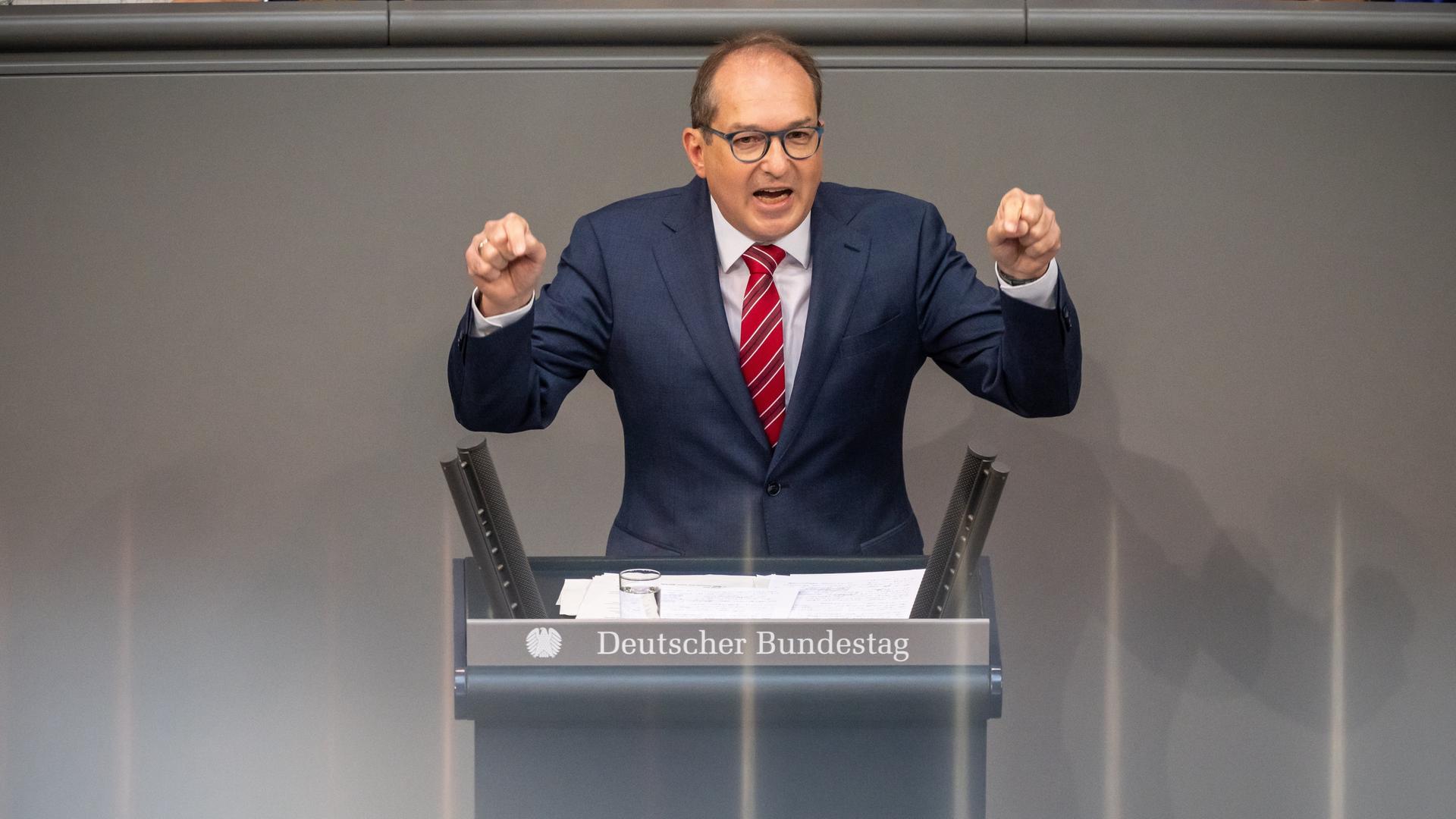
Recent discussions in the Bundestag have stirred heated controversy regarding Germany’s immigration policies , particularly concerning family reunification for refugees. Federal Minister of the Interior, Alexander Dobrindt , defended the government’s proposal to temporarily suspend family reunification for two years for certain asylum-seekers . He emphasized that Germany’s attractiveness to migrants must be balanced with practical measures to alleviate pressure on local communities and resources.
According to Dobrindt, this suspension is expected to reduce the pull factor for those seeking asylum in Germany. He stated, “The attraction of Germany remains high, despite the measures already in place.” While the government seeks to streamline immigration, critics argue that such policies could lead to increased social isolation for refugees who are separated from their families.
Opposition voices, including Green Party parliamentary member Gambir , have expressed concern over the long-term implications of this policy. She argued that the suspension is counterproductive to successful integration , stating, “Those who are permanently separated from their families live in hopelessness and have no chance of properly settling in.” Furthermore, she warned that limiting legal family reunification would push many into the hands of human traffickers .
Counter to this perspective, representative from the Left Party , Bünger , denounced the proposal as “ anti-family ” and morally wrong. She warned that the limitation on family reunification would likely lead to more individuals trying to enter Germany illegally , risking their safety in the process. She added that such measures would disproportionately affect vulnerable groups, particularly women and children, who are more likely to undertake dangerous journeys in search of safety.
Critique from the Right: AfD’s Perspective
Interestingly, the Alternative for Germany (AfD) has criticized the government for not going far enough with its legislation. The AfD’s parliamentary managing director, Baumann , argued that the proposed measures only apply to those with “subsidiary protection” status and do not encompass all asylum-seekers. Curio , another AfD politician, referred to the policy shifts as a “ migration turning point with the brakes applied.” The crux of their argument is that the current policy framework fails to address the broader challenges posed by rising immigration rates.
Currently, Germany issues 1,000 visas per month for family reunification for subsidiarily protected individuals , a designation that primarily includes many fleeing Syria due to ongoing conflict. The AfD’s position is that this should be curtailed or further restricted in light of increasing concerns over national security and economic impacts.
As the debate unfolds, it becomes clear that the intricacies of immigration policy in Germany are a flashpoint for political tensions. While the government grapples with managing incoming refugee flows , pressure from both sides of the political spectrum highlights the difficulty in striking a balance between humanitarian obligations and domestic concerns.