
Approval of New Customs Sanctioning Regime: A Victory for the Dian
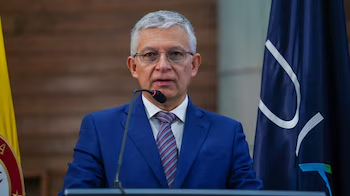
The Colombian customs authority, the National Directorate of Taxes and Customs (Dian), recently celebrated a significant milestone—the approval of the bill for a new customs sanctioning regime in its first congressional debate. This initiative, championed by Director Carlos Emilio Betancourt, is seen as crucial for enhancing Colombia’s strategies against smuggling and foreign trade violations.
Importance of Legislative Progress
Director Betancourt expressed satisfaction with the progress made during the initial debate. However, he issued a clear warning: if the bill is not sanctioned by June 20, the country may face a legal vacuum that could impede the authorities’ ability to address customs irregularities effectively. This urgency reflects a broader concern regarding the gaps in legal frameworks that could foster a climate of impunity for those engaging in unlawful trade activities.
Collaborative Efforts Behind the Initiative
The new customs sanctioning regime is not merely a governmental imposition but rather the result of extensive consultations with various economic and political stakeholders. During these discussions, the government aimed to build a framework that is well-rounded and considerate of the input from both authorities and customs users. Betancourt emphasized the importance of these engagements, suggesting they bolster regulatory support across different sectors involved in foreign trade.
Strengthening Controls Against Smuggling
The Colombian government views the new sanctioning regime as pivotal for reinforcing the control capabilities of customs authorities in their fight against illegal practices. Among its primary objectives are the enhancement of penalties for irregularities and a focused campaign against smuggling—a persistent issue that hinders economic growth across multiple sectors of the nation.
As Betancourt noted, this legislation is essential for ensuring regulatory clarity, which is vital for the integrity and efficacy of national trade operations.
Addressing Legislative Concerns
Despite these advancements, some members of Congress have raised concerns, leading to diverse opinions regarding the bill. The initiative recently faced challenges in four economic commissions, which represents a notable setback for the current administration. This backdrop complicates the path forward, as lawmakers must reconcile these concerns while progressing with the legislative process.
Future Steps and Legislative Timeline
Moving forward, Congress is tasked with the responsibility to continue discussing the bill’s provisions thoroughly. As the deadline approaches, the urgency intensifies to finalize the initiative before the current legislative period concludes. The Dian expressed its readiness to present further deliberations in upcoming sessions, hoping that the momentum established can carry the bill through subsequent debates.
In conclusion, while the approval in the first debate marks a pivotal step for the new customs sanctioning regime, the road ahead remains fraught with challenges. The Dian and the Colombian government are committed to navigating these complexities, aiming for robust legislation that strengthens the country’s defenses against smuggling and enhances the overall integrity of its customs operations.