
Understanding 536 AD: The Worst Year in Human History
The year 2025 hasn’t exactly unfolded smoothly—ongoing trade wars, the conflict in Ukraine, the turmoil in Gaza, and the threats facing Iran paint a bleak picture. Inflation remains a nagging issue, depriving us of simple comforts like delicious chocolates or a good cup of coffee. Yet, despite its trials, 2025 is unlikely to rival the historical devastation of 536 AD, often cited as the worst year to be alive in human history.
Why 536 AD Holds Such a Distinct Title
This daunting title has several contenders throughout history. For instance, 1347 saw the onset of the Black Death, while 1914 marked the beginning of the First World War. 1918 was significant for the rise of the Spanish Flu, and 1939 thrust the world back into a state of war. More recently, 2020 brought us the COVID-19 pandemic, which put entire countries on the brink of paralysis, claiming millions of lives.
However, no year has been so unanimously heralded as catastrophic as 536 AD. Michael McCormick, a professor at Harvard, strongly argues that this particular year undoubtedly epitomizes hardship for humanity. His rigorous academic reputation is backed by extensive research focused solely on this infamous year.
What Unfolded in the Year 536?
Several natural disasters led to unprecedented climate changes, dramatically affecting sunlight and temperatures globally. Historical sources noted that average temperatures in Europe declined by approximately 2.5°C, marking the onset of the coldest decade in over two millennia. Chinese records even suggest that it snowed during the summer months. This sudden climate shift resulted in failed harvests, widespread famine, and a multitude of accounts voicing the shock of contemporary observers.
Roman senator Cassiodorus, writing in 538, described the sun as having lost its usual glow, appearing bluish and failing to cast shadows during midday. His sentiments were echoed by historian Procopius, who ominously noted that the sun emitted a light as dull as the moon’s throughout the year.
Investigations into the Causes
Historians have long suspected significant climate anomalies during the second half of the 6th century. Insights from the scientific community have bolstered these theories. Studies of tree rings—dendrochronology—have indicated a sharp and unusual temperature decline around the 540s.
The driving force behind these climatic events appears to be tied to massive volcanic eruptions. Such eruptions propel vast amounts of sulfur and ash into the atmosphere, creating a veil that reflects sunlight and reduces global temperatures. As noted in publications like Science, several of the recorded coldest summers in recent history have followed volcanic events.
In fact, researchers have recently connected the devastation of 536 to a colossal eruption occurring in North America around the years 535–536, followed by additional eruptions in 540 and 547. This introduction of particulate matter greatly influenced the climate in regions such as Europe and Asia.
The Aftermath: A Decade of Despair
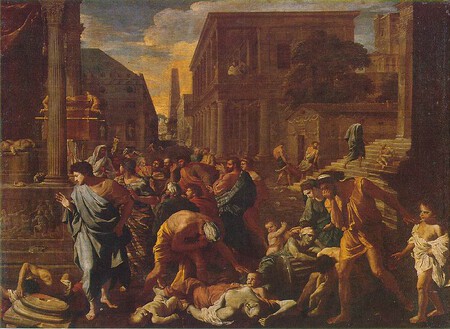
The consequences of 536 were catastrophic. Historian Miles Pattenden of the University of Oxford elaborated on the results of these volcanic eruptions, stating, "A volcanic winter resulted in agricultural collapse, leading to widespread hunger and conflict." It wasn’t just the climate that turned ominous; by 541, the bubonic plague swept through, igniting the Plague of Justinian and wreaking havoc on the Byzantine Empire.
The fog of despair symbolized by 536 continued to loom for years, but not all regions suffered equally. While parts of the world plummeted into chaos, the Arabian Peninsula experienced increased precipitation and set the stage for the rise of new power dynamics.
As we probe into the shadows of our past, it becomes evident that the year 536 AD stands as a grim reminder of nature’s formidable power and humanity’s vulnerabilities.
Despite the adversity presented in 2025, it is essential to remember how far humanity has come since that singularly awful year, fostering resilience and hope for a better future.