
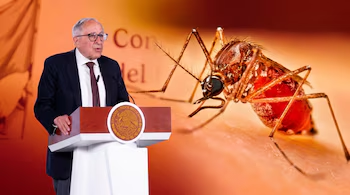
Progress in Combating Dengue in Mexico
In a significant development for public health, David Kershenobich, Mexico’s Secretary of Health, has announced ambitious plans to combat the spread of dengue fever in the country. The federal government aims to reduce dengue cases by 50% by 2030, employing a multifaceted approach involving vaccination and innovative mosquito control strategies.
Current Dengue Situation
From January to May 2023, over 2,136 cases of dengue have been registered in Mexico, with 1,140 classified as having warning signs. Tragically, there have been four reported deaths due to the disease across various states, including Veracruz, Tabasco, Michoacán, and Oaxaca. While recent years have witnessed significant outbreaks, health authorities are focused on implementing preventive measures to curb further transmission.
Strategic Goals
Kershenobich emphasized that the overarching goal is to reduce new cases of dengue, Zika, and chikungunya by 50% by the target year of 2030. He expressed optimism about surpassing this goal, citing effective preventive actions already in place. Among these is an information campaign dubbed “The five steps to a home without mosquitoes,” designed to educate the public on minimizing mosquito breeding sites.
Preventive Measures
To combat dengue effectively, officials have encouraged the public to adhere to several practical strategies, including:
- Covering water tanks and buckets to prevent mosquitoes from breeding.
- Cleaning up clutter where water can accumulate.
- Regularly washing and turning over items that could hold stagnant water.
- Maintaining clean yards by cutting back weeds and disposing of unused objects.
These preventive measures have shown promising results, contributing to lower case numbers.
Innovative Mosquito Control: Wolbachia Bacteria
One of the most innovative approaches involves the development of mosquitoes infected with Wolbachia bacteria. This bacteria has been proven to disable the dengue virus within the mosquito population. Initial trials in states like Yucatán and Baja California Sur have yielded encouraging results, with Yucatán reporting only nine cases of dengue so far.
Kershenobich announced the expansion of Wolbachia-based programs into additional regions, including Tabasco, Oaxaca, Morelos, Aguascalientes, Chiapas, and Jalisco. He highlighted that shifting the entire mosquito population to this new strain could potentially eradicate dengue, revealing that other countries have successfully eliminated the disease within three years using similar innovative methods.
Conclusion
The multipronged strategy being rolled out in Mexico sets a promising stage for combatting dengue fever. With a clear target in sight, ongoing public health efforts, and promising mosquito control technologies, there is a strong chance the country can significantly reduce the burden of this debilitating virus by 2030. Public cooperation and continued investment in health initiatives will be crucial in realizing these ambitious goals.