
Increasing Defaults in Appliance Loans
Recent data reveals a disturbing trend in the sector of non-financial credit providers (PNFC), particularly among businesses selling household appliances. In February 2026, defaults in this sector reached a staggering 44.3% of irregular loans, marking a significant increase of 15.3 percentage points since August 2025.
Total Portfolio Irregularity
The overall irregularity rate in the PNFC’s loan portfolio hit 26.9% as of February 2026, climbing 9.7 percentage points from the previous August and a dramatic 17.4 percentage points when compared to historical lows of February 2025. This rise emphasizes a growing trend of payment delays and defaults across the board.
Analysis by Loan Type
An analysis of different types of assistance, such as personal loans and credit cards, shows alarming increases in delinquency rates. Personal loans saw a spike of 12.7 percentage points, reaching an irregularity level of 34.1% between August 2025 and February 2026. Similarly, credit card irregularity rose by 7.4 percentage points, maintaining a delinquency rate of 19.4%.
The financial system as a whole also felt the impact of these payment delays, with the overall irregularity of loans to families increasing from 6.6% to 11.2% in the last six months, while personal loans ended at 13.8%.
Sector-Specific Findings
Within the different segments of the PNFC, most exhibited increases in irregularity rates, except for the Leasing & Factoring segment, which is primarily targeted towards legal entities and secured loans.
The category of “Other Credit Card Issuers” reported a delinquency rate of 20.7% in February 2026, marking an 8.4 percentage point rise since August 2025. The Fintech sector also faced challenges with a rate of 26.2%, following a 6.6 percentage point increase.
Alarming Statistics
Even more concerning is a group labeled as Rest, comprising firms without specific characteristics, which recorded an eye-watering irregularity rate of 58.4%, reflecting a jump of 20.3 percentage points.
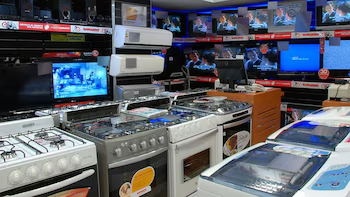
Among these, the appliance sales segment is notably one of the hardest hit, with non-performing loans exceeding the sector’s average significantly.
The Broader Impact of Defaults
According to a report by consulting firm 1816, based on data from the Central Debtors of the BCRA (CENDEU), delinquencies on loans extended to families by non-financial entities continued to escalate in April. The irregularity index hit 31.5%, compared to 30.7% in March, indicating that financial assistance from non-financial entities accounts for nearly 17% of total loans to families.
Currently, around 5.3 million individuals are facing at least one irregular credit situation, which constitutes about 26.7% of all credit holders. This represents a concerning trend that suggests a widespread financial strain on households.
Future Implications
Additionally, a portion of the PNFC portfolio is categorized as “with special monitoring,” which pertains to loans that are 30 to 90 days overdue. This group, while not yet officially classified as irregular, poses a heightened risk of bad debt. In February, this segment accounted for 5.9% of the total portfolio, reflecting a slight uptick in risk awareness.
As 2024 unfolds, the financial landscape signifies a contraction in regular balances, marking the first such occurrence since early 2024, amplifying concerns over future economic stability.