
Prospects of a Deal with the Gulf Clan
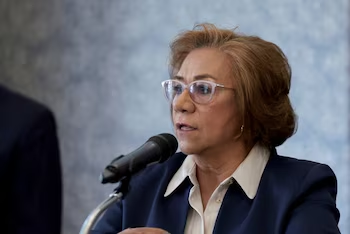
The Colombian Government, led by Foreign Minister Rosa Villavicencio, has indicated that an agreement with the Gulf Clan, also known as the Gaitanista Army of Colombia (EGC), could be finalized before the end of President Gustavo Petro’s term in August 2026. This statement reflects a growing optimism regarding negotiations with one of the country’s most powerful criminal organizations.
Signs of Willingness from Gulf Clan
Villavicencio emphasized that the Gulf Clan has shown a clear interest in advancing discussions to deactivate their illicit activities. “There is evidence that they do want to reach an agreement; it is very possible that a decision could be made before the government ends,” she stated in an interview with EFE Agency.
Nature of the Negotiations
The negotiations, which commenced in September this year in Qatar, are characterized as sociopolitical conversations rather than traditional peace talks. The goal is not merely a peace agreement but a socio-legal understanding that focuses on the submission of its members to justice, allowing for the deactivation of drug trafficking, illegal mining, and human trafficking operations.
Key Details and Expectations
During her discussions, Villavicencio has made it clear that the Colombian government is keen on negotiating with groups that display a genuine willingness to engage. “You cannot have indefinite tables to talk and not finalize anything,” she asserted, highlighting the urgency to reach tangible outcomes.
Strategic Cessations of Operations
The Gulf Clan has reportedly ceased operations in strategic regions such as Darién, a hotspot for human trafficking along the Panamanian border. This cessation indicates a potential shift towards compliance, as highlighted by the Foreign Minister, who noted that human trafficking is nearly as lucrative as cocaine. This renewed posture opens doors for reintegration of Gulf Clan members into civilian life through mutually beneficial agreements.
Next Steps in the Dialogue Process
Villavicencio anticipated that “a second round could be held in Qatar,” possibly in the coming month, where specific agreements will be established. The Colombian government aims to achieve a process that fosters trust, promoting crop substitution programs, and providing support for alternative livelihoods.
Government’s Broader Strategy and Implications
The broader strategy focuses on collaborating with groups that have shown willingness to negotiate peace and to deactivate criminal structures. The ultimate goal is to facilitate a transition of these members into legitimate societal roles, potentially reshaping the landscape of organized crime in Colombia.
Conclusion
As Colombia navigates this complex situation, the steps taken in negotiations with the Gulf Clan may serve as a model for future interactions with other criminal organizations. If successful, it can pave the way for de-escalation of violence and a shift towards formal societal integration for former members of these groups.