
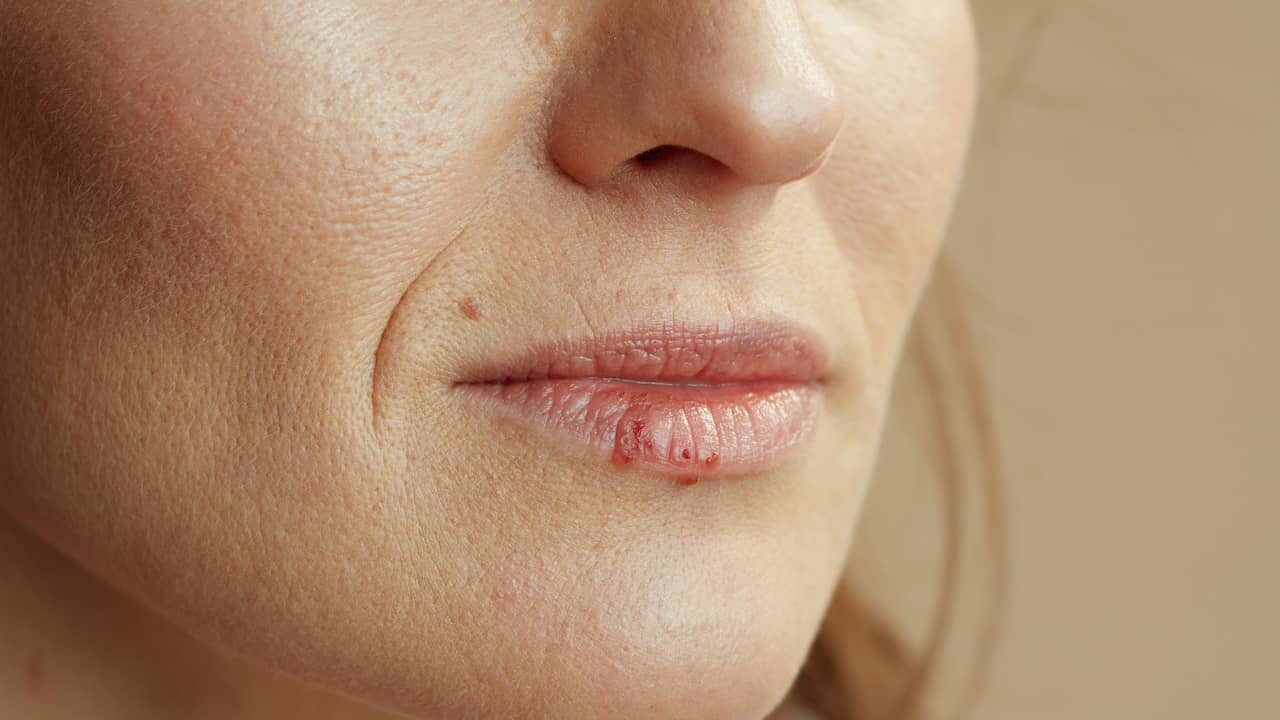
It itches, it burns, and it’s highly visible… The cold sore is both embarrassing and stubborn. But where does it come from exactly? Most importantly, how can it be gone quickly?
Picture this: a significant meeting, a weekend at the beach, or a particularly stressful week, and suddenly, that tiny invader appears at the corner of your lips. The cold sore, also known as herpes labialis, is not only painful and unattractive but also contagious. Contrary to popular belief, this is not a rare or shameful condition; roughly 90% of adults in France carry the virus that causes it, even if they do not always exhibit visible symptoms.
The cold sore is caused by a very common virus – herpes simplex virus type 1 – which can remain dormant within the body for years. However, something as simple as fatigue, sunburn, or a moment of stress can trigger it. The result is a painful blister and an unattractive crust for several days. The good news? There are solutions available to limit its duration and prevent recurrences.
Cold Sore: A Tiny Virus That Causes Great Woes
The cold sore is caused by the Herpes simplex virus type 1 (HSV-1). Once contracted, this virus remains in the body for life, lying dormant in the nerve ganglia. It can reactivate due to fatigue, stress, a cold, sunlight exposure, or even during menstrual cycles.
Its first appearance may feel like a simple sore throat or gingivitis, but once it reactivates, the virus triggers a cluster of painful blisters on the lips or around the mouth. But don’t worry; this infection is common and has nothing to do with personal hygiene. Anyone can experience it, even healthy individuals.
While the virus is considered contagious, it doesn’t mean it spreads easily. Nearly 90% of adults are already carriers of HSV-1, often without visible symptoms. Those who aren’t can be exposed without ever contracting it, depending on their immunity, frequency of contact, and the stage of the outbreak – with open blisters being the riskiest.
SEE ALSO: Aloe Vera Guide: Health and Beauty Benefits of This Wonderful Plant
The Signs That Signal an Outbreak
Before a cold sore even becomes visible, you may experience tingling, itching, or a burning sensation on your lip. This is the perfect time to act!
Signs typically include:
- Small clusters of blisters
- A yellowish crust after a few days
- A healing period of 7 to 10 days, sometimes longer
How to Get Rid of It Quickly
The key is to intervene at the first signs of tingling, before the cold sore erupts. Here are the most common options:
- Antiviral creams (such as acyclovir or penciclovir), available at pharmacies without a prescription. They slow the virus’s progress when applied early.
- Hydrocolloid patches: Discreet and protective, these promote healing and reduce contagion.
- Oral antiviral medications require a prescription for recurring or particularly bothersome outbreaks.
- Natural remedies: Tea tree essential oil (in very small quantities), honey, or lemon balm extract can help dry out the sore.
Can Diet Play a Role?
Absolutely, and this aspect is often underestimated! Certain foods can trigger cold sores, while others may help prevent them.
Foods to watch out for are those rich in arginine, an amino acid that the virus uses to replicate. Arginine is found in chocolate, nuts, seeds, dried fruits, and some shellfish. Additionally, acidic foods (like tomatoes, citrus, and vinegar) can irritate the lips and weaken the skin. Don’t forget alcohol, which compromises the immune system.
On the other hand, focus on foods high in lysine (such as eggs, dairy products, and fish) and vitamins (C, B, zinc) that boost the body’s defenses and enhance resistance to outbreaks. For vitamin C, prioritize kiwis, red peppers, strawberries, broccoli, or citrus fruits consumed in moderation if you’re sensitive to acidity.
What About Sun Exposure and Lip Sunscreens?
Sunlight is another common trigger, especially among those prone to recurrences. To prevent summer outbreaks, consider using specific lip sunscreens: these are enriched with UV filters and sometimes antivirals, forming a protective barrier against harmful rays.
SEE ALSO: 6 Symptoms of a Weak Immune System
Tips to Avoid Contagion and Complications
The cold sore is highly contagious, especially when the blisters are open. However, being contagious does not mean it transmits every time. In fact, most adults are already carriers of the virus, often unknowingly since it can remain inactive throughout their lives. Some, despite exposure, may never catch it due to good immunity or lower sensitivity to the virus. To prevent spreading it to others (or to other areas of your face), follow these simple guidelines:
- Avoid kissing or close contact
- Do not share glasses, utensils, towels, or lip balm
- Wash your hands after touching the area
- Avoid makeup on the lesion (this aggravates irritation)
- Do not pop or scratch the blisters (risk of superinfection or scarring)
- Avoid aesthetic treatments (waxing, manicures, etc.) during the outbreak
- Avoid using cortisone without medical advice
If Recurrences Occur Frequently…
If you experience more than 4 outbreaks a year, consult your doctor. A long-term antiviral treatment may be considered. There are also specific sunscreens for the lips that can be helpful if sunlight is your main trigger.
The cold sore may always reappear unexpectedly, but it isn’t inevitable. The better you understand it, the more you can anticipate it — responding promptly to its early signs, boosting your immune system, and adopting good hygiene practices can reduce its duration, frequency, and impact on daily life. Don’t hesitate to consult a healthcare professional if outbreaks become too frequent or troublesome. The key? Prevention, prompt action, and kindness to oneself. The cold sore can indeed be frustrating, but it is manageable with the right tools.