
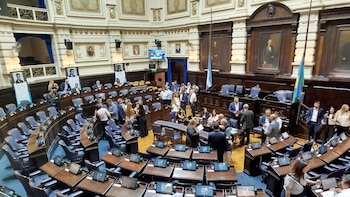
The upcoming legislative election on September 7 in the province of Buenos Aires is poised to be a locally focused event, yet its implications will resonate across the nation. Governor Axel Kicillof has orchestrated a separation of this contest from the national calendar, but despite this, the leading political parties are strategically positioning themselves for the more significant electoral showdown of 2027 . As such, the focus is not only on securing provincial representation but also on contingency preparations to define the future of political alliances.
This election transcends local legislature control; it serves as a litmus test for political strength, aligning alliances, and showcasing leadership in Argentina’s largest electoral district. The stakes are high as midnight on July 19 approaches, wherein political factions are deeply immersed in continuous deliberations, striving to finalize their respective lists of candidates. This intricate process will inevitably yield winners and losers across the political spectrum, establishing new dynamics in the province’s legislative landscape.
On the specified date, 23 deputy seats will be renewed across various sections, including the second , third , sixth , and eighth . Likewise, 23 senator positions will also come up for grabs in the first , fourth , fifth , and seventh sections, along with the deliberative councils in 135 municipalities . Notably, the First (north-west zone) and Third (southern GBA) sections together encompass an impressive 46% of registered voters, while the Fifth section, centered around Mar del Plata , plays a pivotal role in local politics.
The elections’ importance is universally acknowledged by all political entities, leading to intense scrutiny of potential candidates who carry substantial national Profiles —notably well-known mayors and officials. All candidates are under close evaluation, with backgrounds reviewed and political strategies meticulously analyzed. The atmosphere is dense with levels of secrecy as alliances fluctuate and negotiations progress.
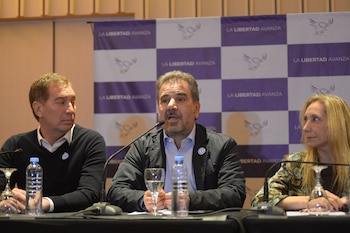
Negotiations in the La Libertad Avanza front are led by key figures such as Cristian Ritondo , Diego Santilli , and Guillermo Montenegro on the PRO side. They are joined by Sebastián Pareja , associated with Karina Milei , indicating the diverse political affiliations converging in these elections. Figures like Montenegro, the current mayor of Mar del Plata , are eyeing the Senatorial position for the Fifth section, while Diego Valenzuela , the Mayor of Tres de Febrero , targets the First district.
Adding to the intrigue, national deputy Alejandro Finnocchiaro is deliberating his next steps, with his current term as a deputy expiring in December. Diego Santilli is also weighing his options, as he may prefer to focus on the national elections in October. Meanwhile, Nahuel Sotelo , Secretary of Religion, is reported to be a potential candidate from La Libertad Avanza .
The political landscape is further shaped by names like Martiniano Molina , former mayor of Quilmes , and Christian Gribaudo , the former Boca presidential candidate. Both are eager to participate, despite their ineligibility to renew their existing provincial posts. A total of 10 seats are at stake for the PRO in this election, amplifying the stakes for political parties involved.
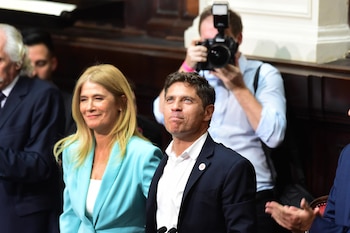
The FRETE PATRIA coalition, comprised of Kicillof ‘s Renovating Front and La Cámpora , is contemplating candidates such as Gabriel Katopodis , a prominent provincial official, and influential mayors like Federico Achával , Leonardo Nardini , Mariel Fernández , and Juan Andreotti , among others. Some insiders even speculate about the potential candidacy of Máximo Kirchner for the populous Third section.
As the prospects of mayors leading ballots loom, the crucial question is whether they would abandon their positions should they be elected or become yet another instance of testimonial candidates . Adding to this complexity, the “We are Buenos Aires” alliance is considering notable names like former Chamber of Deputies President Emilio Monzó , a key figure during Mauricio Macri ‘s presidency, along with Radical Facundo Manes . However, their candidacies for the upcoming October elections have also been mentioned.
September 7 promises to be more than a routine mid-term election; it represents a critical juncture. It is expected to gauge the viability of Peronism , assess the effectiveness of the PRO and La Libertad Avanza , and examine Milei’s economic ideologies within the province. As discussions continue and lists are finalized, the political landscape in Buenos Aires awaits its significant transformation.