
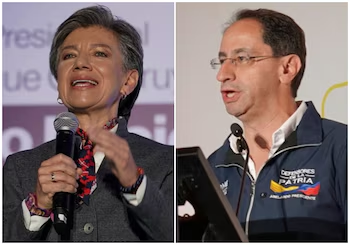
Claudia López’s Critique of José Manuel Restrepo Amid Misogyny Controversy
The recent remarks by Claudia López, the former mayor of Bogotá and a current presidential candidate, have ignited intense discussions surrounding misogyny and respect for female journalists in Colombia. Her criticism of José Manuel Restrepo, the vice-presidential candidate allied with Abelardo de la Espriella, highlights the challenges faced by women in political spaces.
The Incident and the Backlash
The controversy centers on Abelardo de la Espriella, who has faced backlash for his inappropriate behavior towards female journalists María Lucía Fernández and Laura Rodríguez during the campaign. De la Espriella’s alleged acts of harassment have not only put him in the spotlight but have also opened up a broader dialogue about the treatment of women in politics. Social media platforms have amplified the scrutiny, leading to calls for accountability among his associates, particularly Restrepo.
Claudia López’s Accusations
During a recent forum organized by the Colombian Association of Capital Cities, López didn’t hold back in addressing Restrepo for his silence regarding De la Espriella’s actions. She stated, “The harassment of journalists by a presidential candidate is regrettable… and it is even more regrettable that his vice-presidential formula does not have the spirit to come out and reject him.” López emphasized that women are skeptical of verbal commitments that lack genuine action, saying, “Women DO NOT believe their false speeches.”
Noteworthy Incidents
Notably, the controversial actions attributed to De la Espriella include an incident on Caracol News where he remarked he was “ignorant” of the difference between ethics and morality. Moreover, during a program titled Piso 8, he allegedly displayed an inappropriate image and made sexual innuendos towards journalist Laura Rodríguez, including an unsettling zoom on his private parts.
Restrepo’s Response
In response to López’s criticisms, Restrepo asserted that his campaign remains committed to respect for women and the press. He pointed out the campaign’s proposals aimed at supporting women’s rights, arguing that few contenders could match their dedication in this area. López, however, questioned the authenticity of these proposals, setting the stage for a fierce counterpoint as the election date approaches.
The Importance of Social Infrastructure
Beyond the immediate controversy, López expanded the debate to encompass broader social issues. She argued for the inclusion of social infrastructure in political discussions, emphasizing that projects like hospitals and care blocks are crucial for equity. “Everyone is thinking about roads, subways. We have to make care blocks, hospitals,” López reiterated, advocating for a more comprehensive approach to governance that prioritizes social needs.
Abelardo de la Espriella’s Apology
In light of the growing criticism, De la Espriella attempted to address the backlash by issuing an apology. He claimed that his remarks made during the Piso 8 program were not intended to be taken maliciously. Despite this attempt to mitigate the controversy, public sentiment seems to have intensified against him, reflecting the enduring challenges women face in the political arena.
Conclusion
The exchange between Claudia López and José Manuel Restrepo underscores the urgent need for accountability in political discourse, particularly regarding gender issues. As the election approaches, the response to these allegations will likely influence voter perception and the broader conversation about women’s rights in Colombia.