

Samsung’s Remarkable 19-Year Reign in the Television Market
For an impressive 19 years , Samsung has dominated the global television market, boasting the title of the largest television manufacturer in the world. The South Korean giant first seized this leadership from LG in 2006, which itself had taken the crown from Sony a few years earlier. This shifting landscape has seen South Korea’s television industry rise to prominence, akin to Japan’s previous dominance. However, this scenario is starting to show signs of evolution.
Current Market Dynamics
The *television industry * is undergoing a significant transformation. In 2022, TCL eclipsed LG to become the world’s second-largest television manufacturer. Meanwhile, Hisense matched TCL’s market share and subsequently outpaced them in 2023. LG is not the only South Korean company feeling the heat from its Chinese counterparts; Samsung’s share has also diminished. Data from Counterpoint indicates that while Samsung enjoyed a 17% market share three years ago, it has now slipped to 16% in 2023 , maintaining these figures through 2024. This trend is concerning.
Chinese Competitors on the Rise
Samsung may still hold the top position, but the numbers reveal a clear trajectory for the market. They experienced a 3.3% decline in units shipped during the first half of the year, in stark contrast to TCL and Hisense, which saw growth at 6.3% and 2.6% , respectively. Both TCL and Hisense had approximately 10% market share three years ago, but by the end of 2024, their shares increased to 14% and 12% . The issue for Samsung lies in the fact that these rivals are gaining traction in the premium television segment, which is critically profitable.
In the premium television market, Samsung’s share fell dramatically from 41% in 2022 to 29% by the end of 2023 . In contrast, TCL and Hisense made substantial gains, outperforming Samsung in unit shipments but earning slightly less revenue, indicating an influx of more affordable televisions. This industry shift is troubling for Samsung, as profitability in this segment is vital.
Minilad Technology Challenges
According to analyst Bob O’Brien from Counterpoint, Samsung’s decline can be attributed to consumer choice. “Consumers are increasingly choosing between a smaller OLED TV or a larger Miniled television,” O’Brien states. Up until 2024, Samsung led the market in Miniled technology with its Neo QLED models. However, it was recently surpassed by both TCL and Hisense, placing Samsung fourth in unit distribution and third in revenue.
The OLED Market Transformation
Samsung’s breakthrough into the OLED market signifies a crucial shift. Historically, LG dominated this arena with its WOLED matrices, selling panels to brands like Panasonic, Philips, and Sony. However, in 2022, Samsung introduced QD-OLED technology, incorporating nanoparticles that enhance brightness, durability, and color range. This innovation not only elevated Samsung’s market standing but also resulted in Sony opting for Samsung as a supplier, showcasing the competitive nature of the television sector.
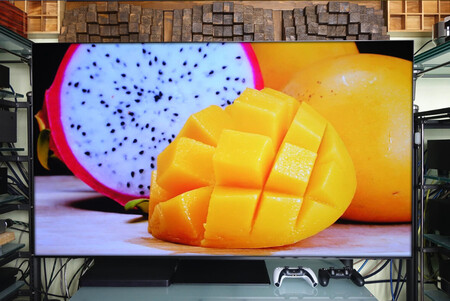
<span>Samsung’s QD-OLED technology has revolutionized the television market.</span>Emerging Threats from China
However, new challenges loom as Chinese manufacturer BOE, a major player in the OLED panel industry, is set to enter the TV components market. BOE is investing $9 billion in a new facility in Chengdu aimed at producing panels ranging from 55 to 95 inches . Samsung’s past dominance, especially in OLED sales, may soon face pressure with this entry.
TCL Surges Ahead of Samsung
In a groundbreaking shift, Samsung suspended LCD panel production in 2022, transferring its patents to TCL’s subsidiary, CSOT. LG followed suit, selling its LCD division to CSOT as well. While the OLED market continues to grow, LCD panels still dominate , holding over 88.45% market share globally. Both TCL and BOE have firm positions, especially in this lucrative segment.
Political Support and Backlash
Fortunately for Samsung and LG, the South Korean government is extending subsidies, which could offer some relief amidst these changes. Furthermore, lawmakers in the United States are advocating for BOE to be placed on a blacklist. If this proposal gains traction, BOE could lose access to the lucrative U.S. market, significantly impacting its ability to compete.
Overall, while Samsung has established a solid grip on the television market for over 19 years, mounting pressures from both competitors and evolving market dynamics illustrate the necessity for constant adaptation.